Introduction to Advanced Laser Treatments
Overview of Laser Treatments for Skin and Scars
Laser treatments are a cornerstone of modern dermatology, offering versatile solutions for skin rejuvenation and scar management. These procedures utilize concentrated light energy to target various skin concerns such as wrinkles, pigmentation issues, acne scars, and vascular lesions. Advanced laser systems like the Cynosure® Palomar Icon™ and Fraxel® enable tailored treatments that accommodate different skin types and conditions, providing non-invasive alternatives with minimal downtime.
Basic Mechanism of Laser Skin Rejuvenation and Scar Reduction
Laser skin treatments work primarily by vaporizing damaged outer skin layers and stimulating collagen production in deeper tissues. This collagen remodeling fosters the regeneration of healthier, firmer skin, improving texture, tone, and elasticity. For scars, fractional lasers create micro-injuries in scar tissue, promoting healing and reducing appearance over multiple sessions. Nonablative lasers, on the other hand, heat the underlying skin without destroying the surface, encouraging gradual rejuvenation with fewer side effects.
Significance of Advanced Lasers in Dermatology
Advanced laser technologies have revolutionized dermatologic care by enhancing precision, safety, and treatment outcomes. Fractional and combination laser modalities optimize results by balancing efficacy with reduced recovery time and risk. The evolution of devices like CO2, erbium, and pulsed dye lasers has expanded the range of treatable skin concerns while improving patient comfort. These innovations empower dermatologists to provide highly personalized, science-backed aesthetic procedures emphasizing safety and long-lasting skin health improvements.
Understanding the Science Behind Laser Skin Rejuvenation and Scar Reduction
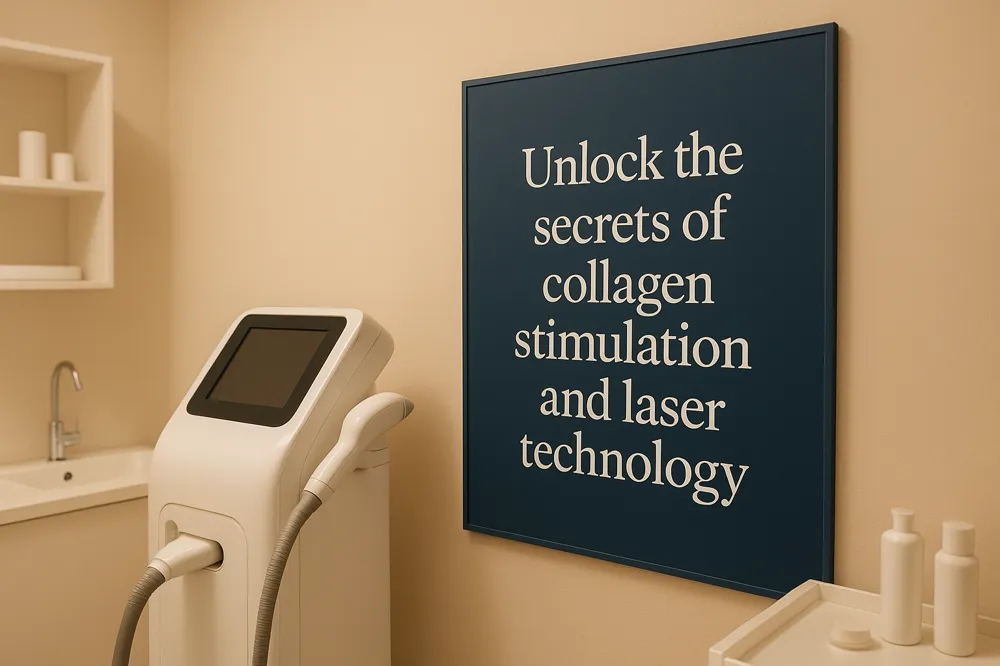
How do lasers stimulate collagen production?
Laser skin treatments overview work by delivering concentrated pulses of light energy into the skin, which vaporize damaged outer layers and induce controlled injury to deeper layers. This prompts the body's natural healing response, stimulating fibroblasts to produce new collagen and elastin. Collagen remodeling helps restore skin firmness, smooths wrinkles, and improves texture and tone. Over several months, this regeneration leads to healthier, more youthful skin.
What are the differences between ablative and nonablative lasers?
- Ablative lasers remove the skin's top layers, causing more dramatic results but requiring longer recovery and bearing higher risks such as scarring or pigmentation changes. Examples include CO2 laser resurfacing and Erbium laser treatment. They are often used for deep wrinkles, scars, and significant sun damage.
- Nonablative lasers heat the underlying skin without damaging the surface, offering subtle improvements with shorter downtime and fewer side effects. They are suitable for mild to moderate skin concerns, such as redness, fine lines, and pigment issues.
What is the role of fractional laser technology in targeted skin renewal?
Fractional laser technology delivers laser energy in precise micro-columns, treating portions of the skin while leaving surrounding tissue intact. This enhances safety by promoting quicker healing and reduces downtime compared to traditional full-field resurfacing. Fractional lasers—both ablative and nonablative—are effective for treating scars, wrinkles, and pigmentation irregularities through focused collagen stimulation.
Does laser skin rejuvenation really work?
Yes, laser skin rejuvenation treatments effectively reduce wrinkles, scars, and uneven pigmentation by stimulating collagen production and promoting natural skin repair. Results improve gradually over months following treatment. The choice between ablative, nonablative, or fractional lasers depends on individual skin concerns and tolerance for downtime. Multiple sessions may be required for optimal outcomes, and careful pre- and post-care ensures safety and enhances results.
| Aspect | Ablative Laser | Nonablative Laser | Fractional Laser |
|---|---|---|---|
| Skin impact | Removes outer layers | Heats deeper layers | Treats microscopic zones |
| Recovery time | Longer (>1 week) | Shorter (minimal) | Moderate (about 1 week) |
| Suitable for | Deep wrinkles, scars | Mild lines, redness | Scars, pigmentation |
| Risk of side effects | Higher | Lower | Moderate |
| Collagen stimulation level | High | Moderate | High and targeted |
Types of Laser Treatments for Facial Scar Reduction and Skin Renewal
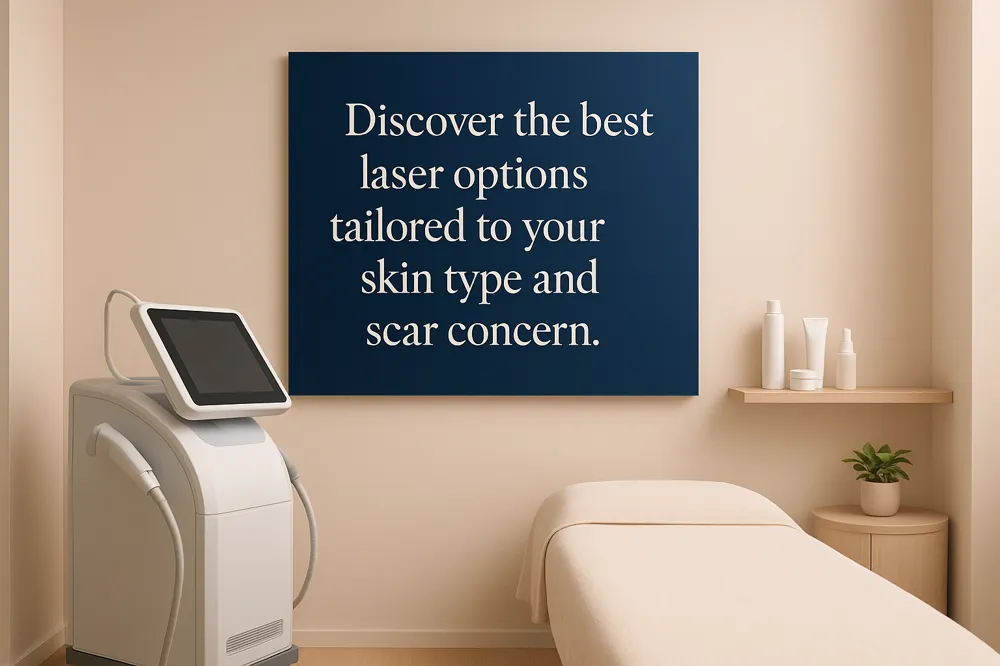
What are the different types of laser treatments available for the face?
Several laser treatments cater to facial scar reduction and skin renewal, distinguished mainly by their mechanism and invasiveness.
Ablative Lasers: CO2 and Erbium:YAG
Ablative lasers such as CO2 and Erbium:YAG remove the outermost layers of the skin with high precision. CO2 lasers are highly effective for deep wrinkles, scars, and pigmentation issues but come with longer recovery times of up to two weeks and a greater risk of complications. Erbium:YAG lasers offer a more refined and superficial treatment with faster healing periods (about one week), which suits a wider range of skin types, especially those with darker skin tones. See more about Laser resurfacing technologies.
Nonablative Lasers: Fraxel, Pulsed Dye Laser, IPL
Nonablative lasers include Fraxel (a fractional erbium glass laser), Pulsed Dye Laser (PDL), and Intense Pulsed Light (IPL). These lasers work beneath the skin’s surface by stimulating collagen production without vaporizing skin layers, leading to minimal downtime. PDL targets red pigmentation in scars, effectively reducing inflammation and redness, while IPL treats pigmentation and uneven skin tone. Learn about Laser therapy for scar tissue.
Fractional Laser Technology
Fractional lasers deliver energy in microscopic columns, leaving surrounding tissue intact. This promotes faster healing and reduces side effects compared to traditional full-field ablative lasers. Fractional CO2 lasers are very effective for deep or hypertrophic scars, whereas nonablative fractional lasers offer gentler treatments with fewer risks and shorter recovery. The fractional approach balances efficacy and safety for a broad range of skin concerns. More details on Fractional CO2 laser benefits.
Comparison of Laser Types Based on Scar Depth and Skin Type
| Laser Type | Best For | Recovery Time | Suitability Based on Skin Type |
|---|---|---|---|
| CO2 Ablative | Deep wrinkles, scars | Up to 2 weeks | Lighter skin tones; not ideal for very dark skin |
| Erbium:YAG Ablative | Superficial to moderate scars | ~1 week | Suitable for darker skin tones |
| Fractional CO2 | Hypertrophic, deep scars | About 1 week | Most skin types, with controlled side effects |
| Nonablative Fraxel | Mild to moderate scars | Minimal | Broad skin types, good for sensitive areas |
| Pulsed Dye Laser | Red, inflamed scars | Minimal | All skin types, especially vascular lesions |
| IPL | Pigmented scars, uneven tone | Minimal | Wide range of skin tones |
Choosing the appropriate laser depends on individual scar characteristics, skin tone, desired downtime, and treatment goals. Consulting a board-certified dermatologist ensures personalized and safe care with optimal outcomes.
Fractional CO2 Laser: The Gold Standard for Deep Scar and Skin Rejuvenation
What is the most advanced laser treatment for skin rejuvenation and scar reduction?
The fractional CO2 laser benefits, exemplified by advanced devices like the Lumenis Ultrapulse Encore Ablative Fractional Resurfacing, is recognized as the gold standard for treating deep scars and enhancing Laser skin rejuvenation treatments. This technology precisely removes targeted outer skin layers while stimulating robust collagen production beneath the surface.
Mechanism of fractional CO2 laser
This laser works by creating microscopic columns of thermal injury into the skin, vaporizing damaged tissue and triggering a controlled healing process. The Fractional laser technology approach preserves surrounding healthy skin, which accelerates recovery and reduces side effects compared to traditional resurfacing methods.
Effectiveness on deep, hypertrophic, and textured scars
The fractional CO2 laser excels in improving deep and hypertrophic scars, including those with complex textures. It remodels scar tissue through collagen stimulation, promoting smoother, firmer skin. Clinical study on acne scar lasers report significant scar improvement, often visible within weeks and continuing to enhance over several months.
Collagen remodeling and skin tightening benefits
Beyond scar treatment, this laser induces new collagen growth, improving skin elasticity and tightening. This results in reduction of wrinkles, sun damage, and skin irregularities, offering comprehensive skin renewal for a more youthful appearance. See more on Collagen growth from laser treatment and Tighten skin with laser resurfacing.
Typical recovery and side effect profile
Recovery usually involves redness, swelling, and mild peeling for around one to two weeks. Though more intensive than non-ablative options, the fractional CO2 laser has a favorable safety profile when performed by experienced dermatologists. Side effects such as Hyperpigmentation and hypopigmentation or scarring are rare with proper care and patient selection. Learn about Post-treatment care and precautions for laser therapy and possible complications.
Overall, the fractional CO2 laser combines cutting-edge technology with personalized treatment plans to deliver safe, effective, and lasting improvements in challenging skin concerns.
Optimizing Treatment for Acne Scars and Hyperpigmentation with Laser Therapy
What laser treatment is best for acne scars and hyperpigmentation?
Treating acne scars and hyperpigmentation effectively requires choosing the right type of Laser treatments for acne scars based on scar depth and skin condition. For deep or hypertrophic acne scars, Fractional CO2 lasers and Erbium:YAG lasers excel by precisely removing damaged skin layers and stimulating strong collagen remodeling. These ablative lasers deliver significant improvement in skin texture and firmness, but they involve longer recovery times and carry higher risks of swelling or pigmentation changes.
Best lasers for different acne scar types
- Deep scars: Fractional CO2 laser is highly effective for deep scars, producing visible results typically after one session, with 3-6 days downtime.
- Superficial scars: Erbium:YAG laser provides a gentler approach with minimal thermal damage, suitable for delicate facial areas and faster healing.
- Red or inflamed scars: Pulsed Dye Laser (PDL) treatment can reduce redness and inflammation effectively.
Role of Erbium:YAG and fractional lasers
The Erbium YAG laser for superficial scars laser, being less aggressive, suits patients with superficial scars or those with darker skin tones due to lower risk of pigment alteration. Fractional lasers—both ablative and nonablative—target microscopic skin columns, leaving surrounding tissue intact for faster healing. This technology allows treatment customization and balances efficacy with safety.
Use of nonablative fractional lasers for mild/moderate scars
For patients seeking less downtime, non-ablative fractional lasers like Fraxel Dual are advantageous. They stimulate collagen production without vaporizing the skin surface, offering subtle yet progressive scar improvement and hyperpigmentation reduction over multiple sessions. This modality is often combined with topical treatments for optimal results.
Combination therapies for pigmentation issues
Pigmentary concerns accompanying acne scars, like hyperpigmentation and uneven tone, respond well to combo therapies. Intense Pulsed Light (IPL) therapy for pigmented scars, laser treatments targeting melanin or blood vessels, and adjunctive radiofrequency or microneedling enhance skin rejuvenation and pigment normalization, addressing multiple skin layers simultaneously.
By selecting appropriate laser therapies tailored to scar type and pigment issues, integrating fractional and nonablative technologies, and incorporating combination treatments, patients can achieve significant aesthetic improvements with attention to safety and recovery.
| Laser Type | Target Usage | Key Benefits | Downtime |
|---|---|---|---|
| Fractional CO2 | Deep acne scars | Strong collagen remodeling, dramatic results | 3-6+ days |
| Erbium:YAG | Superficial scars | Minimal thermal damage, faster healing | ~1 week |
| Nonablative Fractional (Fraxel) | Mild/moderate scars & pigmentation | Gradual improvement, minimal downtime | Minimal to none |
| Pulsed Dye Laser (PDL) | Red/inflamed scars | Reduces redness and inflammation | Few days |
| IPL & Combo Therapies | Pigmentation issues | Targets melanin & vascular pigmentation | Minimal |
Comprehensive Laser Modalities for Scar Reduction: Beyond Ablative Techniques
What are the best laser treatments for scar reduction and skin renewal?
Effective laser treatment for scar reduction requires a tailored approach based on scar type and skin characteristics. Fractional CO2 laser benefits stands out for deep or hypertrophic scars by stimulating collagen remodeling, resulting in improved skin texture and tightness. For scars with persistent redness or inflammation, Pulsed Dye Laser (PDL) treatment is effective in targeting blood vessels, reducing erythema, and softening scar tissue.
Erbium YAG laser for superficial scars offers a more delicate option suited for superficial scars and sensitive areas, achieving refined texture improvement with minimal downtime. Non-ablative fractional lasers like Fraxel Dual provide a less invasive means to promote natural skin regeneration and collagen production, ideal for patients seeking gradual improvement and reduced recovery.
Pulsed Dye Laser for reducing scar redness
PDL targets vascular components in scars, effectively diminishing redness and inflammation associated with hypertrophic and keloid scars. This laser modality improves scar appearance with minimal discomfort and typically requires fewer sessions for noticeable results (Laser therapy for scar tissue).
Nonablative fractional lasers to improve texture
These lasers work beneath the skin surface without ablating outer layers, stimulating collagen production gently for enhanced skin texture and reduced scar visibility. The treatment is well-suited for those looking for minimal downtime and a gradual skin renewal process (Fractional CO2 laser benefits.
Q-Switched lasers for pigment issues
Q-Switched lasers are specialized in addressing pigment abnormalities within scars, effectively reducing hyperpigmentation or hypopigmentation. This modality normalizes scar color and contributes to a more uniform skin tone (Laser modalities for scars).
Combination treatment strategies for hypertrophic and keloid scars
A multidisciplinary approach often combines ablative and nonablative lasers—such as fractional CO2 with PDL or nonablative fractional lasers—to address vascularity, texture, and pigmentation comprehensively. This personalized strategy maximizes scar improvement by tackling multiple scar characteristics concurrently, enhancing overall outcomes with controlled recovery (Laser revision of scars.
Selecting a board-certified dermatologist is essential to design a customized regimen that optimizes scar reduction while prioritizing safety and skin health.
Safety, Side Effects, and Post-Treatment Care for Facial Laser Procedures
What are the common side effects of laser treatment on the face?
Laser facial procedures often result in redness, swelling, dryness, itching, and peeling within the first few days post-treatment. These effects reflect the skin's healing response and typically resolve within one to two weeks depending on the treatment intensity.
How can risks and side effects be minimized?
Proper preparation is critical to minimize risks. Patients should avoid tanning, sun exposure, and certain medications or skin products before the procedure. Choosing a board-certified dermatologist or experienced provider ensures expert assessment, customized treatment plans, and careful technique, reducing complications such as scarring or pigmentation problems.
Why is sun protection important after laser treatments?
Post-treatment skin is highly sensitive and prone to burns or pigmentation changes. Rigorous sun protection with a broad-spectrum SPF 50+ sunscreen, physical sun avoidance strategies (hats, shade), and avoiding direct sunlight are essential for weeks to months after treatment to protect healing skin and sustain results. Sun protection for laser-treated scars plays a crucial role in this phase.
What are typical recovery timelines?
Recovery depends on the laser type and intensity. Non-ablative and fractional lasers usually require a week or less of mild downtime, while ablative lasers such as CO2 may involve swelling and peeling lasting up to two weeks. Patients should follow personalized care instructions including moisturizing, avoiding picking skin, and using recommended topical ointments to support healing. For detailed guidance see Recovery time after laser treatment.
| Aspect | Details | Recommendations |
|---|---|---|
| Side effects | Redness, swelling, peeling, pigmentation | Expect 1-2 weeks resolution; consult for risks |
| Preparation | Avoid tanning, sun, certain meds/products | Medical consultation before laser treatment, skin assessment |
| Sun protection | Use SPF 50+, avoid direct sunlight | Critical post-treatment for months (Sun protection after laser) |
| Recovery timeline | 1 week non-ablative/fractional; up to 2 weeks ablative | Follow aftercare plans, skin moisturizing (Post-treatment care after laser therapy) |
Understanding these care protocols ensures a safer laser treatment experience and optimizes skin rejuvenation outcomes.
Treatment Planning and Session Frequency for Effective Laser Scar Removal
How many sessions are typically required for laser scar removal?
The number of Typical number of laser treatment sessions depends on the severity and type of scar as well as the specific laser technology used. Generally, most patients undergo 3 to 6 sessions spaced several weeks apart. This spacing allows collagen remodeling and healthy skin regeneration to occur gradually, optimizing the final results.
What are the typical session intervals and timeline for visible results?
Patients typically wait 3 to 6 weeks between sessions to allow sufficient healing time. Visible improvements often manifest progressively over the course of a few months, with continued enhancement up to 6 months post-treatment. This extended timeline reflects the skin’s natural collagen production and remodeling processes stimulated by the laser therapy.
Are different lasers or adjunctive treatments combined to enhance healing?
Combining various laser modalities or integrating adjunctive treatments can enhance outcomes. For example, Fractional CO2 laser benefits, pulsed dye lasers, and nonablative fractional lasers may be used in a treatment plan tailored to the patient’s scar characteristics. Adjunctive therapies such as microneedling with radiofrequency or Picosure laser treatments may complement traditional Laser skin resurfacing, promoting comprehensive skin regeneration and improved scar appearance.
Why is consistent follow-up and patient expectation management important?
Consistent follow-up is critical to monitor healing, manage side effects, and adjust treatment plans as needed. Patients should understand that Laser revision of scars is a gradual process requiring patience and adherence to post-treatment care, including sun protection and moisturizing. Realistic expectations and compliance with dermatologist guidance are essential to achieving optimal and lasting results.
Emerging Technologies and Non-Invasive Laser Alternatives for Skin Rejuvenation
What is the best treatment for skin rejuvenation with minimal downtime?
For those seeking effective skin rejuvenation without significant recovery time, non-invasive laser and energy-based treatments offer promising solutions. Nonablative lasers, such as Clear + Brilliant fractional laser, and Intense Pulsed Light (IPL) therapy for pigmented scars improve skin tone, texture, and pigmentation with minimal to no downtime. These treatments gently stimulate collagen production, reduce fine lines, and address sun damage, making them attractive for patients desiring subtle yet noticeable enhancements.
Nonablative lasers and IPL for minimal downtime skin renewal
Nonablative laser therapies heat deeper skin layers without removing the outer skin surface. This approach reduces risks like scarring and pigmentation changes while promoting healthy collagen remodeling. IPL uses broad-spectrum light to target pigmentation disorders and vascular lesions, also offering skin tone evening benefits. Both technologies allow patients to resume daily activities shortly after treatment with only mild redness or swelling expected.
Ultrasound and radiofrequency as adjuncts for collagen stimulation
Beyond light-based devices, ultrasound and radiofrequency therapies are emerging adjunct technologies. Procedures like Ultherapy® use focused ultrasound waves to penetrate deep skin layers, stimulating natural collagen regeneration and providing firming and lifting effects. Radiofrequency devices gently heat dermal tissues to induce collagen denaturation and renewal, improving skin elasticity with minimal discomfort.
Combination therapies enhancing results with reduced side effects
Combining various modalities—such as nonablative lasers with radiofrequency or ultrasound—can optimize rejuvenation outcomes. This multimodal approach leverages complementary mechanisms to enhance collagen production, improve skin texture, and reduce pigmentation with fewer side effects and faster recovery than traditional ablative lasers.
Advances catering to diverse skin tones and types
Recent technological advancements have broadened treatment applicability across a wide range of skin tones and types. Devices equipped with longer wavelengths (e.g., Nd:YAG lasers) safely treat darker skin without causing hyper- or hypopigmentation. Customized settings tailored to individual skin characteristics ensure efficacy while minimizing risks, expanding access to laser rejuvenation for diverse populations.
Selecting the Right Laser Treatment: The Role of Expert Evaluation and Customization
Why is it important to choose board-certified specialists for laser scar treatment?
Choosing a board-certified dermatologist or experienced specialist is crucial for laser scar treatment success. The skill and knowledge of the practitioner directly impact safety, minimize risks, and optimize results. An expert can properly diagnose scar types and recommend the most effective laser modality tailored to each patient's skin and scar characteristics.
How are skin type, scar features, and health history assessed before treatment?
Before laser therapy, a thorough medical consultation before laser treatment evaluates skin type, scar texture, pigment, and thickness, as well as overall health and history of skin conditions or medications. This assessment guides appropriate laser selection and settings, reducing the risk of complications like pigmentation changes or delayed healing.
How is laser treatment customized to individual needs and goals?
Laser modalities range from ablative CO2 laser resurfacing and erbium lasers to non-ablative fractional and pulsed dye lasers. For example, fractional CO2 laser benefits are effective for deep scars but involve longer downtime, while erbium lasers suit superficial scars with faster recovery. Parameters such as pulse intensity and session frequency are adjusted to balance efficacy with safety tailored to each patient’s goals and skin responses.
What role do lifestyle factors and care planning play in treatment success?
Pre-treatment preparation includes avoiding sun exposure, quitting smoking, and managing medications that affect healing. Post-treatment care involves diligent sun protection for laser-treated scars, moisturizing, and sometimes antiviral medication to prevent complications. This integrated approach promotes optimal healing, reduces side effects, and enhances the longevity of laser results.
Does laser treatment effectively reduce scars?
Yes, laser treatments significantly improve scar appearance by stimulating collagen, promoting healthy skin regeneration, and enhancing texture. Complete scar removal is rare, but early, expertly customized laser treatment for scar reduction achieves substantial cosmetic improvements and can alleviate scarring symptoms.
| Aspect | Importance | Details |
|---|---|---|
| Specialist Expertise | Critical for safety and success | Choosing a board-certified dermatologist offer tailored care |
| Patient Assessment | Guides laser choice and settings | Skin type, scar depth, medical history reviewed |
| Laser Customization | Matches treatment to scar and skin types | Ablative vs. non-ablative, session planning |
| Lifestyle & Care Integration | Optimizes healing and outcomes | Sun protection, medication management, care plan |
| Treatment Effectiveness | Significant improvement, not full removal | Benefits of laser treatment for scars improve texture and tone |
Conclusion: Embracing Advanced Laser Therapies for Lasting Skin Renewal
Harnessing the Benefits of Laser Treatments for Skin Renewal
Laser therapies represent a transformative approach in aesthetic dermatology, offering significant improvements in scar appearance and overall skin rejuvenation. By stimulating collagen production and facilitating healthy skin regeneration, advanced laser treatments reduce wrinkles, minimize scars, and even out pigmentation. These procedures leverage sophisticated technologies—such as fractional CO2, erbium, and pulsed dye lasers—to safely target a range of skin concerns with customizable precision.
Personalized Expert Care is Essential
Optimal treatment outcomes rely heavily on selecting skilled, board-certified dermatologists who tailor therapeutic plans to individual skin types, scar characteristics, and medical history. Thoughtful pre-treatment consultations and preparation enhance safety and result durability. Patients benefit from personalized laser protocols, integrating the most effective laser devices with tailored post-care regimens.
Adherence to Care Protocols Ensures Lasting Results
Commitment to prescribed post-treatment care—including meticulous sun protection, skincare regimens, and healthy lifestyle choices—plays a crucial role in achieving and maintaining desired skin improvements. Multiple treatment sessions may be needed, and patience is vital as full benefits often manifest gradually over several months.
Advanced laser therapies stand as a scientifically grounded and safe avenue to rejuvenated, smoother skin. With expert guidance and dedicated care, individuals can embrace lasting skin renewal and enhanced quality of life.