Why a Barrier‑First Approach Matters
Maintaining a robust skin barrier is the foundation of every successful aesthetic outcome. The stratum corneum’s lipid “mortar” prevents transepidermal water loss, shields against pollutants, and preserves the acid mantle that keeps harmful microbes at bay. When this barrier is intact, actives such as antioxidants, peptides, and retinoids penetrate efficiently, delivering the full promised benefits without irritation. Conversely, a compromised barrier renders even gentle formulas ineffective and can trigger flare‑ups. For residents of Troy, Michigan—where winter heating dries indoor air and summer humidity spikes—the environment constantly challenges barrier stability. Personalized, barrier‑first regimens, informed by objective TEWL and corneometry measurements performed at Iconic Laser, allow clinicians to match cleansers, ceramide‑rich moisturizers, and broad‑spectrum SPF to each individual’s unique skin type and climate‑driven needs, maximizing safety and results and and long‑term skin health.
The Skin Barrier: Structure, Function, and Signs of Damage
 The skin barrier—principally the stratum corneum—acts like a brick‑and‑mortar wall: tightly packed corneocytes (the bricks) are sealed by a lipid matrix of ceramides, cholesterol, and free fatty acids (the mortar). Inside each cell, natural moisturizing factor (NMF) draws and holds water, keeping the barrier hydrated. When this structure is compromised, transepidermal water loss rises, producing dryness, tightness, flaking, redness, stinging, and heightened sensitivity. Such signs often precede more serious concerns like inflammation, hyperpigmentation, or acne flare‑ups. Restoring barrier health hinges on gentle, pH‑balanced cleansing and moisturizers rich in ceramides, hyaluronic acid, glycerin, and niacinamide—ingredients proven in clinical studies to reduce TEWL by up to 30 %. At Iconic Laser in Troy, Michigan, we begin every aesthetic protocol with a barrier analysis (corneometry, TEWL) to tailor product selection and protect the skin’s protective armor before any active treatment.
Assessing Your Skin: Quizzes, In‑Office Tools, and Self‑Evaluation
 Understanding your skin’s unique needs begins with a quick, science‑backed quiz. A personalized skin‑care quiz gathers details on type, concerns, lifestyle and goals, then instantly generates a customized routine that targets fine lines, hyperpigmentation, acne or dryness. Iconic Laser uses the quiz to pair at‑home products with medical‑grade treatments such as laser resurfacing or microneedling.
In‑office, clinicians employ barrier‑analysis tools—corneometers, TEWL meters, pH probes—to quantify hydration, lipid loss and acidity. These objective measurements reveal whether the stratum corneum is compromised and which lipids (ceramides, cholesterol, free acids) need replenishment.
The quiz results and device data are translated into a three‑step regimen: a gentle pH‑balanced cleanser, a barrier‑supporting serum or moisturizer rich in ceramides, niacinamide or hyaluronic acid, and broad‑spectrum SPF 30+. Adjustments are made seasonally and reassessed monthly to keep the barrier strong and the skin radiant.
By linking quiz insights with clinical measurements, Iconic Laser crafts a personalized plan that evolves with your skin, ensuring product synergy and safe integration of procedures.
Custom Brands, AI, and Prescription‑Strength Options
 Personalized skincare is now anchored by three standout brands. Agency by Curology delivers dermatologist‑crafted, prescription‑strength actives such as tretinoin and niacinamide in a custom cream, making it the most comprehensive option. Ro Custom Rx focuses on high‑potency retinoid serums at an affordable price, while PROVEN uses an AI engine that evaluates up to 47 personal factors—including climate, lifestyle, and sensitivities—to formulate a three‑step routine (cleanser, SPF day moisturizer, night cream) with ceramides, niacinamide, squalane and gentle actives. For barrier repair, top clinicians recommend products that combine ceramides, cholesterol, fatty acids and humectants: Dr. Jart+ Ceramidin Cream, Prequel Barrier Therapy Cream, and La Roche‑Posay Cicaplast Baume B5. Custom skin‑care products are created after a detailed skin‑analysis questionnaire or in‑office corneometry, allowing dermatologists to prescribe bespoke moisturizers, serums and eye creams that contain exact actives—niacinamide, peptides, or low‑strength retinoids—while eliminating irritants. These personalized, AI‑driven, prescription‑grade solutions complement in‑office treatments at Iconic Laser in Troy, Michigan, delivering consistent barrier support and long‑term results.
The Ordinary: Simple, Effective Steps for Beginners and Advanced Users
 Three‑step routine (Prep → Treat → Seal)
- Prep: Start with a gentle cleanser that respects the skin barrier. The Ordinary’s Squalane Cleanser removes makeup and impurities without stripping lipids, leaving the stratum corneum ready for actives.
- Treat: Apply water‑based serums first (e.g., Niacinamide 10% + Zinc 1% for oil control or Hyaluronic Acid 2% + B5 for hydration), followed by anhydrous serums (e.g., Multi‑Peptide + HA for anti‑aging). Introduce one active at a time and limit frequency to avoid irritation.
- Seal: Lock in moisture with Natural Moisturizing Factors + HA, a ceramide‑rich moisturizer that restores lipid gaps, reduces TEWL, and supports the acid mantle. In the morning, finish with a broad‑spectrum SPF 30+ (e.g., UV Filters SPF 45 Serum) to protect the barrier from UV‑induced damage.
Layering principles & safety tips
- Apply from thinnest to thickest texture.
- Keep actives pH‑compatible; avoid layering high‑strength acids or retinoids on compromised skin.
- Patch‑test new products for 48 hours and introduce them gradually.
- Use lukewarm water and avoid over‑exfoliation.
Answers to the questions
- The Ordinary skincare routine steps: Prep (cleanse), Treat (targeted serums), Seal (moisturizer + SPF). Follow the thin‑to‑thick order, patch‑test, and introduce actives one at a time.
- The Ordinary skincare routine for beginners: Cleanse with Squalane Cleanser, treat with Multi‑Peptide + HA Serum, seal with Natural Moisturizing + HA, and protect with UV Filters SPF 45 Serum in the morning.
Barrier‑Repair Strategies: From Daily Care to Overnight Boosts
 Improving the facial skin barrier begins with a simplified routine: use a gentle, fragrance‑free, sulfate‑free cleanser and lukewarm water, then apply a ceramide‑rich moisturizer that also contains cholesterol, fatty acids, niacinamide and hyaluronic acid while the skin is still damp. Limit exfoliation to a mild leave‑on formula and avoid high‑strength retinoids or acids until the barrier feels comfortable. Protect the repaired barrier with broad‑spectrum SPF 30+ every morning, and consider an overnight mask or ointment packed with ceramides and occlusive agents for extra sealing. Natural, home‑based repair relies on staying hydrated, using a humidifier in dry indoor air, and eating omega‑3‑rich foods such as salmon, walnuts and flaxseed to supply essential fatty acids. For product‑free support, minimize hot showers, wear protective clothing, and prioritize sleep and stress‑reduction, allowing the skin’s own lipid synthesis to restore the acid mantle. Consistency over two‑to‑four weeks yields noticeable reduction in dryness, redness and sensitivity.
Integrating In‑Office Aesthetic Treatments with Home Care
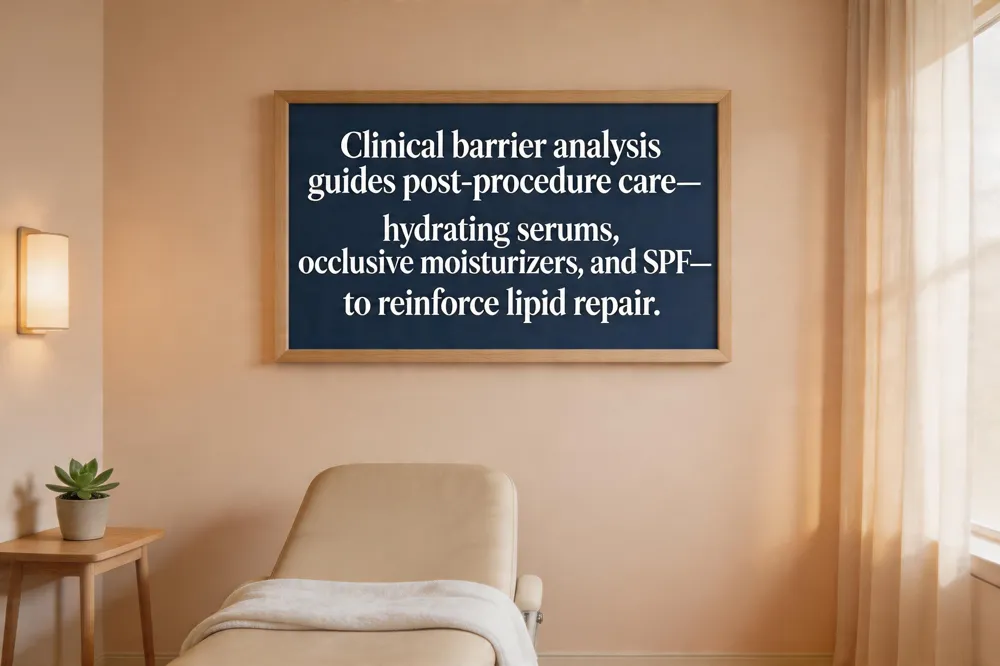 A clinical barrier analysis—using corneometry, TEWL meters, and pH checks—pinpoints lipid loss, hydration deficits, and acid‑mantle disruption, allowing clinicians to prescribe products that exactly match the skin’s needs. For instance, a low ceramide score leads to a ceramide‑rich moisturizer, while elevated TEWL suggests adding a humectant‑rich serum before broad‑spectrum SPF.
Procedures that reinforce barrier repair include gentle laser resurfacing, LED light therapy, and micro‑needling with serum infusion; each creates micro‑channels that improve ingredient penetration while the post‑procedure protocol focuses on occlusive moisturizers and antioxidant serums to rebuild the lipid matrix.
AI‑driven platforms at Iconic Laser combine skin‑type quizzes, environmental data, and device readings to generate a personalized regimen. The system flags ingredient incompatibilities and suggests optimal layering—cleanser → pH‑balanced toner → niacinamide/ceramide serum → moisturizer → broad‑spectrum SPF.
Skincare routine maker with products: An interactive tool builds a step‑by‑step regimen based on skin type, age, and concerns, recommending compatible cleansers, serums, moisturizers, and sunscreen while avoiding unsafe ingredient combinations.
Skincare routine checker: This digital evaluator reviews your current product list, order, and frequency, highlighting conflicts (e.g., acids with retinoids) and offering tailored layering advice for morning and evening.
Skincare routine maker free: Free builders like The Ordinary’s Regimen Builder let you input skin data and receive a personalized plan; a professional clinic can then refine it with clinical analysis.
Personalized Skin Solutions, Inc: Founded in 1993, the practice offers customized facials (MicroFusion, Bio‑Lift) and a proprietary home‑care line, emphasizing safety, efficacy, and results‑driven protocols.
Seasonal, Environmental, and Lifestyle Impacts on the Barrier
 Across the United States, climate swings dramatically—from the dry, low‑humidity winters of Michigan to the hot, humid summers of the South. Low ambient humidity and indoor heating raise transepidermal water loss (TEWL), leaving skin tight and prone to irritation, while high UV index and pollution accelerate lipid oxidation and disrupt the acid mantle. Humidity in coastal regions can be protective, but sudden changes still stress the barrier.
Lifestyle habits that bolster barrier health include drinking ample water, eating omega‑3 foods, avoiding hot showers, and limiting harsh exfoliants. Choose fragrance‑free, pH‑balanced cleansers and layer ceramide‑rich moisturizers with humectants such as hyaluronic acid or glycerin. Apply SPF 30+ and consider antioxidant‑rich serums.
How to protect skin barrier: Start with a gentle, non‑stripping cleanser, follow with a ceramide‑cholesterol‑fatty‑acid moisturizer, limit aggressive actives, and finish with SPF 30+ every morning.
How to improve skin barrier on face: Simplify the routine, use lukewarm water, incorporate niacinamide and hyaluronic acid, and add in‑office hydration treatments (LED, hydrating facial) while maintaining sunscreen.
Putting It All Together: A Step‑by‑Step Blueprint for Troy Residents
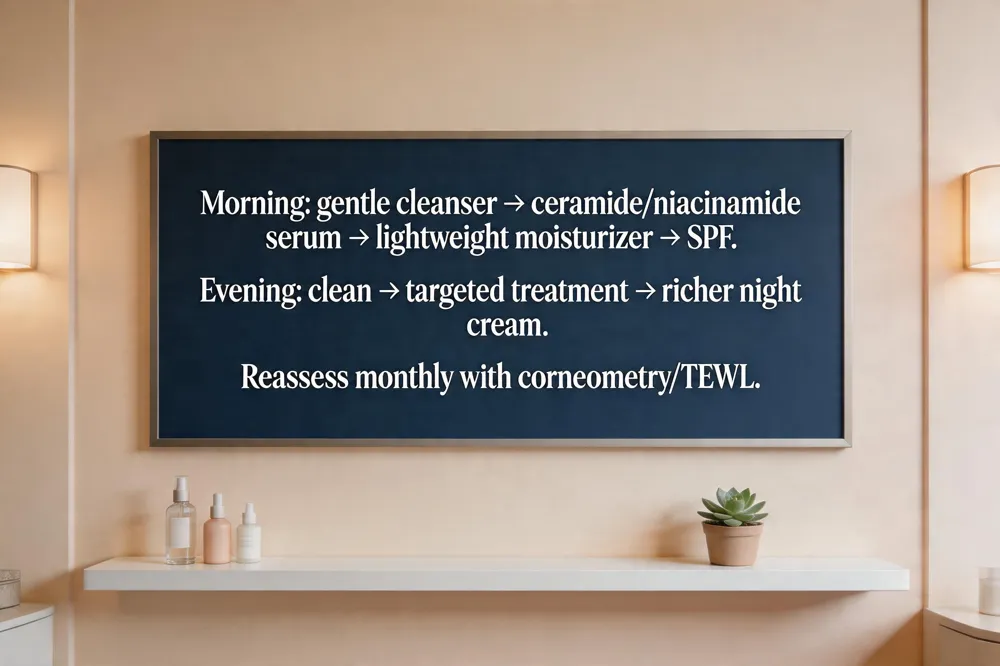 Morning routine: Start with a gentle, pH‑balanced cleanser that respects your skin type (gel for oily, cream for dry/combination). Pat the skin slightly damp, apply a barrier‑supporting serum—ceramide‑rich or niacinamide—to boost lipid repair, then lock in moisture with a lightweight moisturizer containing hyaluronic acid and ceramides. Finish with broad‑spectrum SPF 30+ to shield the newly fortified barrier.
Evening routine: Cleanse again with a sulfate‑free formula, follow with a targeted treatment (vitamin C for brightening, a peptide for collagen, or a low‑strength retinol on alternate nights) while the skin is still moist. Seal with a richer ceramide‑based night cream that provides occlusion and hydration.
Monthly reassessment & seasonal tweaks: Use a non‑invasive barrier analysis (corneometry or TEWL) at Iconic Laser to gauge hydration, pH, and lipid loss. Adjust moisturizers for Michigan’s dry winters (add occlusives) and switch to lighter textures in humid summer. Re‑evaluate concerns quarterly, updating actives and SPF strength as needed for optimal, personalized care.
Your Path to a Resilient, Radiant Complexion
A barrier‑first approach puts the stratum corneum at the center of every regimen: gentle pH‑balanced cleansing, ceramide‑rich moisturizers, humectants such as hyaluronic acid, and daily broad‑spectrum SPF protect the lipid matrix, reduce transepidermal water loss, and create a stable platform for actives. Because skin conditions shift with season, stress, hormones and exposure, a one‑time plan is rarely sufficient; regular reassessment of hydration, TEWL, and pH ensures that products stay in sync with the skin’s evolving needs. Icon Laser in Troy, Michigan offers in‑office barrier analysis using corneometry and TEWL probes, allowing clinicians to fine‑tune formulations and recommend medical‑grade actives tailored to your unique profile. Book your professional barrier assessment today and lock in lasting health and radiance.