Why Dual‑Wavelength Lasers Are Changing Aesthetic Medicine
Selective photothermolysis is the scientific foundation of modern laser aesthetics: each wavelength is chosen to match the absorption peak of a specific chromophore, allowing precise thermal injury while sparing surrounding tissue. Dual‑wavelength platforms pair a short‑wave green laser (≈532 nm or 585 nm) that is strongly absorbed by oxyhemoglobin with a near‑infrared beam (≈1064 nm) that penetrates deeper and is preferentially taken up by melanin. This combination lets clinicians treat superficial telangiectasias, rosacea erythema and and epidermal pigment in one pass, then follow with deeper coagulation of larger vessels or dermal melasma without switching devices. For patients, the result is fewer appointments—often 30‑40 % fewer sessions—shorter downtime, and a lower risk of post‑inflammatory hyperpigmentation, especially in Fitzpatrick III‑VI skin. Clinics benefit from a single, FDA‑cleared system that expands treatable indications, improves clearance rates (up to 80 % for mixed‑depth lesions), and delivers a clear return on investment while maintaining the highest safety standards.
How Dual‑Wavelength Lasers Work
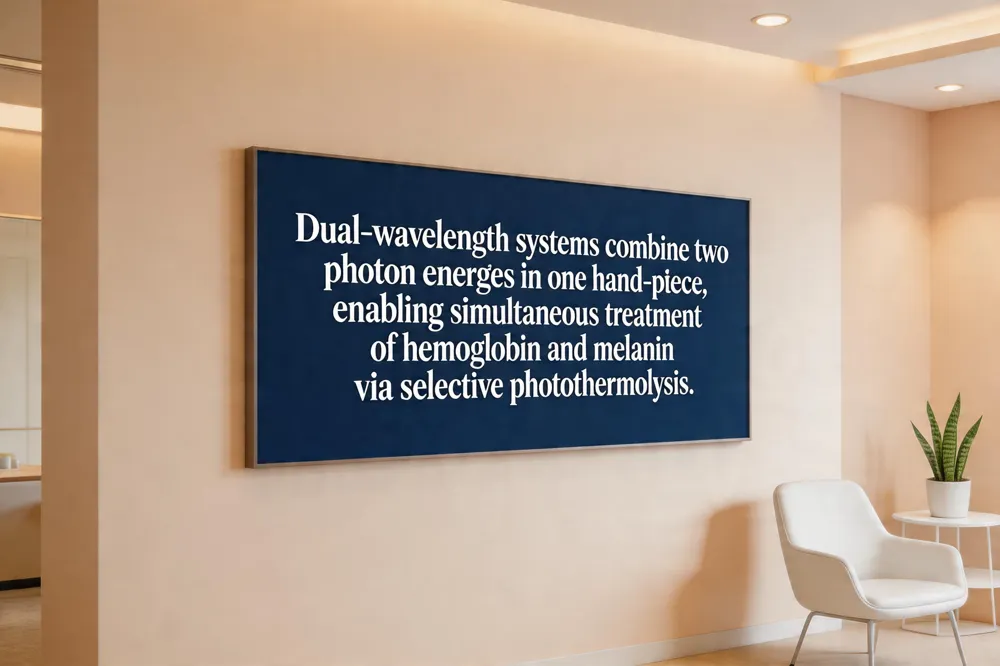 Dual‑wavelength laser systems deliver two distinct photon energies in a single hand‑piece, allowing clinicians to treat separate chromophores—hemoglobin and melanin—simultaneously. This approach follows the principle of selective photothermolysis, where laser energy is absorbed preferentially by the target chromophore, heating it to a temperature that coagulates the vessel or fragments pigment while sparing surrounding tissue.
Typical wavelength pairs include 532 nm (KTP) with 1064 nm (Nd:YAG) for superficial red vessels and deeper vascular lesions, and 595 nm (pulsed dye) with 1064 nm for fine telangiectasias plus larger veins. Device specifications often feature pulse durations ranging from 5 ms to 20 ms, spot sizes from 0.5 mm to 3 mm, and integrated cooling (cryogen spray or contact cooling) to protect the epidermis and enhance patient comfort.
What is a dual wavelength laser? Unlike traditional single‑wavelength lasers, a dual‑wavelength laser system combines two lasers—often a green 532 nm for superficial melanin/hemoglobin and a near‑infrared 1064 nm for deeper targets—delivered through one platform for customized protocols.
Dual wavelength laser hair removal uses two diode wavelengths (e.g., 800 nm on a compact hand‑piece and a larger‑spot 800 nm head) on a single device, enabling precise treatment of delicate areas and rapid coverage of larger zones with continuous cooling for safety.
Laser hair removal near me – In Troy, Michigan, Iconic Laser offers FDA‑cleared dual‑wavelength hair‑removal technology performed by certified clinicians in a medical‑grade setting.
Can fractional laser remove melasma? While fractional CO₂ lasers cannot cure melasma, they can significantly diminish the appearance of dark spots when used appropriately, especially in combination with other modalities.
Beyond vascular and pigment indications, dual‑wavelength platforms are employed for skin rejuvenation, collagen remodeling, and adjunctive treatment of acne scarring, providing a versatile, cost‑effective solution for comprehensive aesthetic care.
Clinical Efficacy for Vascular Lesions
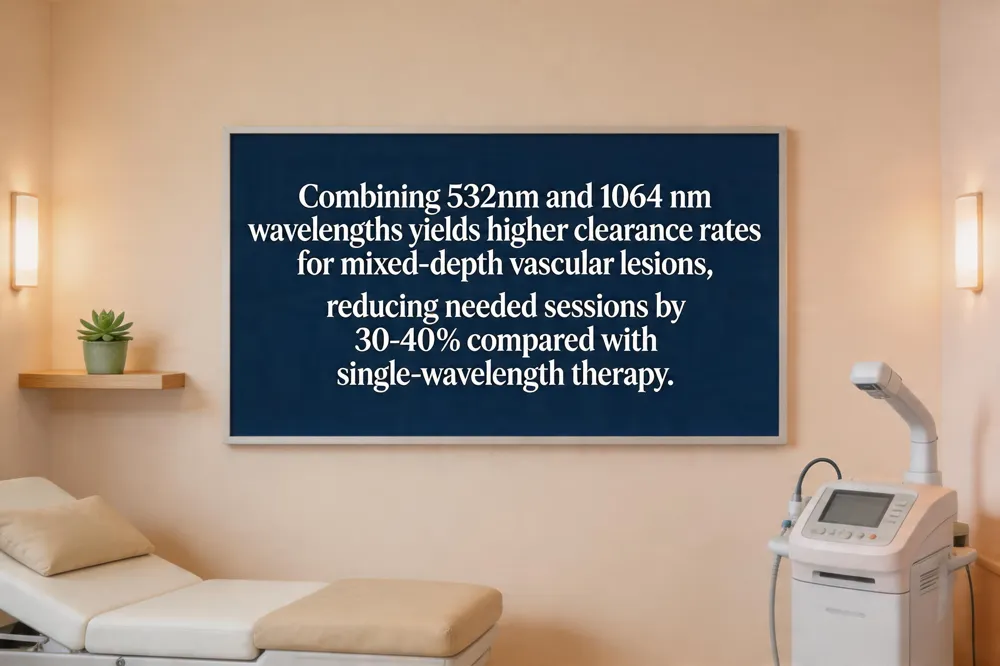 Dual‑wavelength platforms (e.g., 532 nm KTP + 1064 nm Nd:YAG) treat telangiectasias, rosacea, spider veins, and port‑wine stains by selective photothermolysis of oxyhemoglobin. Short‑pulse 532 nm absorbs superficially (papillary dermis) for fine vessels, while 1064 nm penetrates several millimeters to coagulate deeper feeder vessels. Clinical studies (PMID 32371774) show higher clearance rates for mixed‑depth lesions versus single‑wavelength therapy, and a 30‑40 % reduction in required sessions (see multi‑mode digital sources). Typical protocols use low‑fluence 1064 nm followed by 532 nm for surface cleanup, spaced 4‑6 weeks apart; 3‑5 sessions are common for optimal results.
Cost considerations: vascular laser treatment at our Troy clinic starts at $350 – $750 for small facial areas and $750 – $1,500 for extensive zones. A $150 consultation fee applies, plus a $1 per pulse fee after a $175 base and a refundable $75 deposit. Prices are customized after evaluation.
Insurance: Most insurers classify these procedures as cosmetic, so they are generally not covered unless a lesion is medically necessary (e.g., large hemangioma). Patients should expect out‑of‑pocket payment.
FAQ highlights: V beam laser sessions range $150‑$300 (small) to $300‑$600 (full‑face); under‑eye veins respond well to Nd:YAG with minimal downtime; typical treatment series is 2‑4 sessions; before‑and‑after outcomes show marked reduction in redness and blue‑purple lines within 4‑6 weeks. For personalized care, schedule a free consultation with our board‑certified dermatologists.
Treating Pigmentation and Melasma
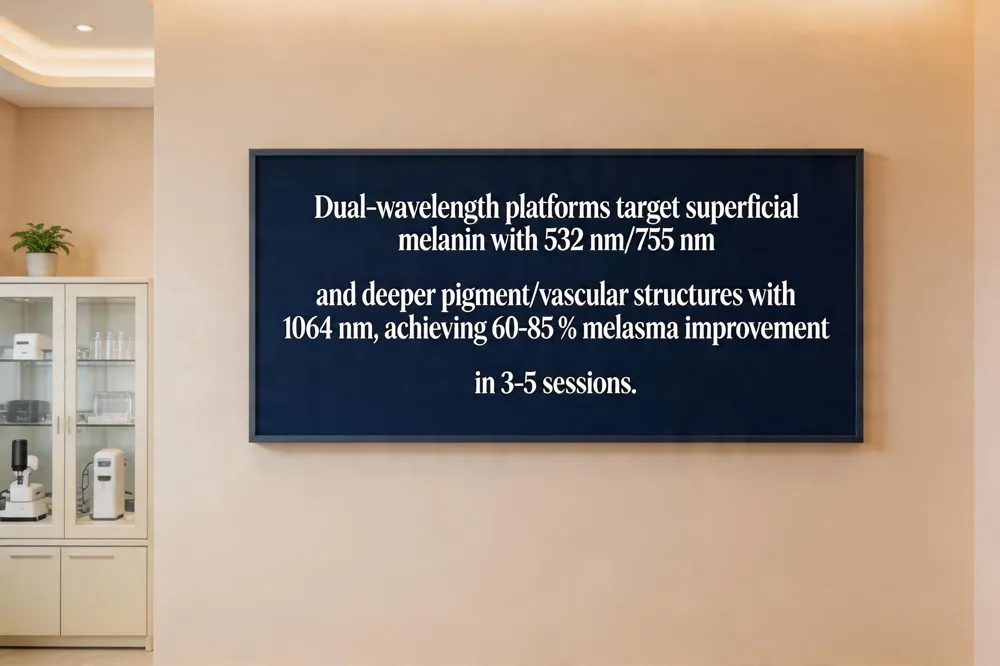 Melanin absorbs light most efficiently at 532 nm (green) and 755 nm (alexandrite), while deeper dermal pigment and vascular structures respond best to 1064 nm (Nd:YAG). Dual‑wavelength platforms combine a short‑pulse 532 nm or 755 nm channel for superficial sun spots, lentigines, and melasma with a longer‑pulse 1064 nm channel that penetrates several millimetres to coagulate deeper vessels and darker pigment. Clinical trials (e.g., PMID 32371774) report 70‑80 % clearance of telangiectasias and 60‑85 % improvement in melasma after 3‑5 sessions spaced 4‑6 weeks apart, with a 30‑40 % reduction in total visits versus single‑wavelength protocols.
Safety is high when providers use built‑in cooling (cryogen spray or contact cooling) and test spots; most patients feel a brief pinching or rubber‑band sensation and experience only mild erythema, swelling, or transient darkening that resolves within 48 hours. Topical numbing creams and post‑procedure sunscreen (SPF 30+) further enhance comfort and prevent post‑inflammatory hyperpigmentation, especially in Fitzpatrick III‑VI skin.
Cost varies by clinic and treatment area: a single facial pigment session in Michigan typically ranges $150‑$250, while larger zones or full‑face protocols may reach $500. Package discounts and a3‑session menus can lower per‑visit fees to $150‑$180. Most patients achieve optimal results after 1‑3 sessions for superficial spots and 3‑5 for deeper melasma, with annual touch‑ups to maintain the bright, even complexion.
Combined Vascular & Pigment Protocols and Clinic Benefits
 Dual‑wavelength laser platforms enable simultaneous treatment of facial redness and hyperpigmentation by delivering a short‑pulse 532 nm (or 585‑595 nm) energy for superficial hemoglobin and melanin, followed by a longer‑pulse 1064 nm Nd:YAG pulse for deeper vascular and pigmented lesions. Clinicians can fine‑tune fluence and pulse duration for each wavelength, allowing low‑fluence 1064 nm to coagulate deep vessels and higher‑fluence 532 nm to clean up surface telangiectasias without excess thermal spread. Clinical studies (e.g., PMID 32371774) report higher clearance rates for mixed‑depth lesions and a 30‑40 % reduction in required sessions versus sequential single‑wavelength therapy, translating into a strong return on investment for clinics by consolidating two devices into one platform and increasing patient throughput.
Iconic Laser reviews – Yelp users consistently award five‑star ratings, praising the clean environment, expert technicians, and effective GentleMax Pro results across skin tones.
Laser skin rejuvenation Troy Michigan reviews – Clients of clinics such as Skin Works Laser + Esthetics and Rose Laser and Skin Care cite noticeable improvements in texture and tone after just a few sessions.
Laser skin rejuvenation Troy Michigan price – Treatments range from $250‑$800 for small areas and $1,200‑$3,500 for full‑face resurfacing, with financing options and complimentary consultations commonly offered.
Best laser skin rejuvenation Troy Michigan – L’Atelier MedSpa (Dr. Andrew Compton) and Envee Aesthetics (ProFractional resurfacing) are highlighted for advanced fractional technology, board‑certified physicians, and comprehensive after‑care.
LightRx laser skin rejuvenation Troy Michigan – LightRx offers FDA‑cleared fractional resurfacing, customizable plans, and complementary modalities such as Venus Viva RF, with a free consultation at 3332 Rochester Rd, Troy, MI.
Patient Experience, Safety and Practical Considerations
 Consultation and customized treatment planning – In Troy, Michigan clinics such as LightRx Medspa and Iconic Laser begin every dual‑wavelength laser session with a free, in‑depth consultation. A board‑certified dermatologist or trained aesthetic professional evaluates Fitzpatrick skin type, lesion depth and medical history, then designs a protocol that may sequence a low‑fluence 1064 nm Nd:YAG pass for deeper vessels followed by a 532 nm KTP pass for surface cleanup. This personalized approach maximizes clearance rates (clinical studies show up to 80 % telangiectasia reduction) while minimizing overtreatment.
Cooling technologies and pain management – Modern dual‑wavelength platforms integrate dynamic cooling devices, contact cooling, or cryogen spray. These systems protect the epidermis, reduce thermal diffusion and keep patient discomfort to a mild “sunburn‑like” sensation. Studies report a 20 % drop in pain scores with newer devices such as the Vbeam Pro.
Post‑procedure care, sun protection, and downtime – After treatment, patients typically experience transient erythema and mild edema that resolve within 24‑48 hours. Broad‑spectrum SPF 30+ sunscreen, gentle moisturizers and avoidance of intense heat for 48 hours are essential to prevent post‑inflammatory hyperpigmentation, especially in Fitzpatrick III‑VI skin. Most return to normal activities the same day.
Financing, insurance, and overall value – Dual‑wavelength laser sessions range from $250–$800 for small zones and $1,200–$3,500 for full‑face resurfacing. Clinics frequently offer interest‑free financing and package discounts. Vascular laser procedures are considered cosmetic and are not covered by standard health insurance, though rare medically necessary cases may be reimbursed.
Local reviews and cost insights – Troy patients consistently award high marks to laser skin‑rejuvenation providers: Skin Works Laser + Esthetics holds a perfect 5‑star rating from over 1,400 reviews, noting visible texture improvements after a few sessions. Iconic Laser receives a flawless 5‑star Yelp rating, with clients praising the GentleMax Pro laser’s safety and results.
Laser hair removal near you – Iconic Laser in Troy offers FDA‑cleared laser hair removal with personalized plans (6–8 sessions spaced 4–6 weeks) for lasting reduction across body areas.
Insurance coverage for vascular laser – Vascular lasers such as V‑Beam are classified as cosmetic; thus, insurance generally does not cover them unless the lesion poses a functional medical issue.
Embracing the Future of Skin Rejuvenation
Dual‑wavelength laser platforms unite a short‑pulse 532 nm (or 585‑595 nm) vascular beam with a deeper‑penetrating 1064 nm Nd:YAG line, enabling simultaneous treatment of superficial redness, telangiectasias and deeper veins while also clearing epidermal and dermal pigment. By delivering two chromophore‑specific pulses in a single hand‑piece, clinicians can tailor fluence, spot size and pulse duration to each lesion, reducing overall sessions by 30‑40 % and minimizing downtime. Patients benefit from a streamlined, evidence‑based protocol that respects individual skin type and Fitzpatrick classification, with built‑in cooling and test‑spot safety checks. Empowered by clear information about mechanism, safety and expected outcomes, you can make confident decisions about your skin health. Schedule a personalized consultation at Iconic Laser in Troy, Michigan, to explore a custom dual‑wavelength plan today. Our board‑certified team will guide you through every step.