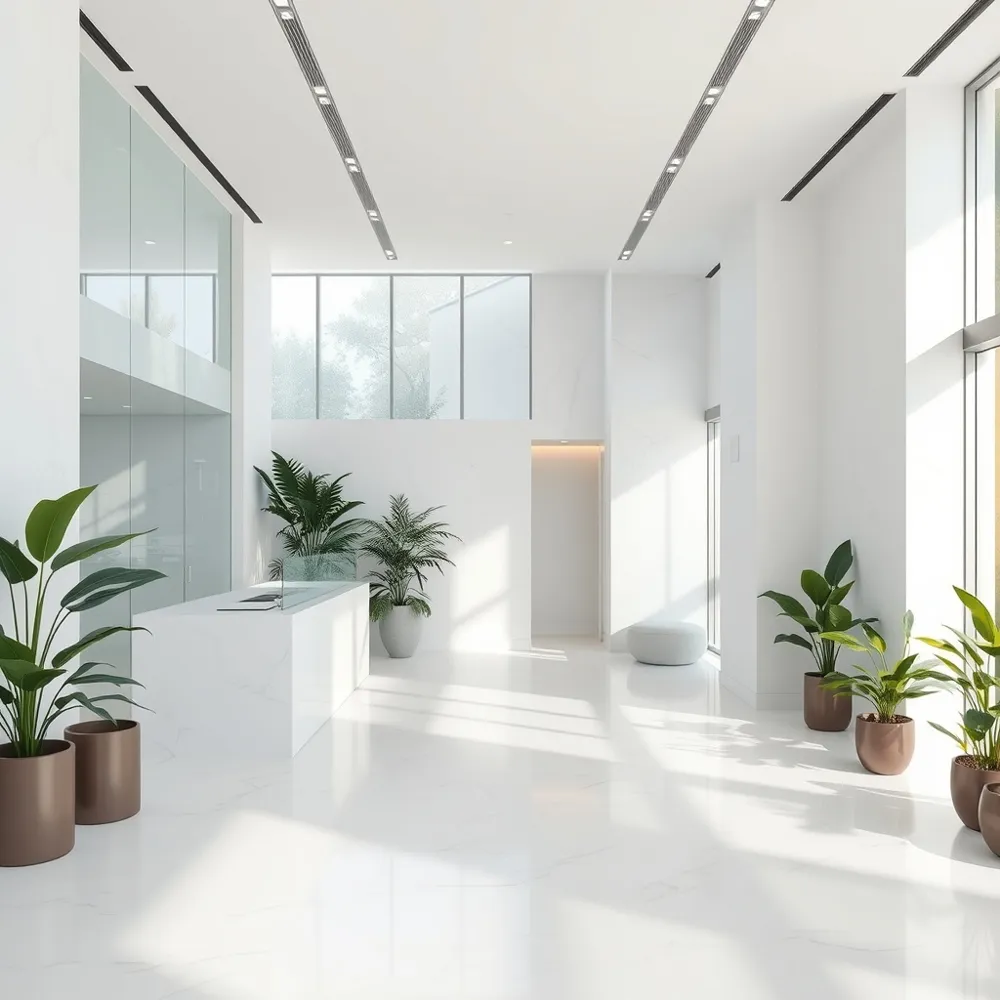
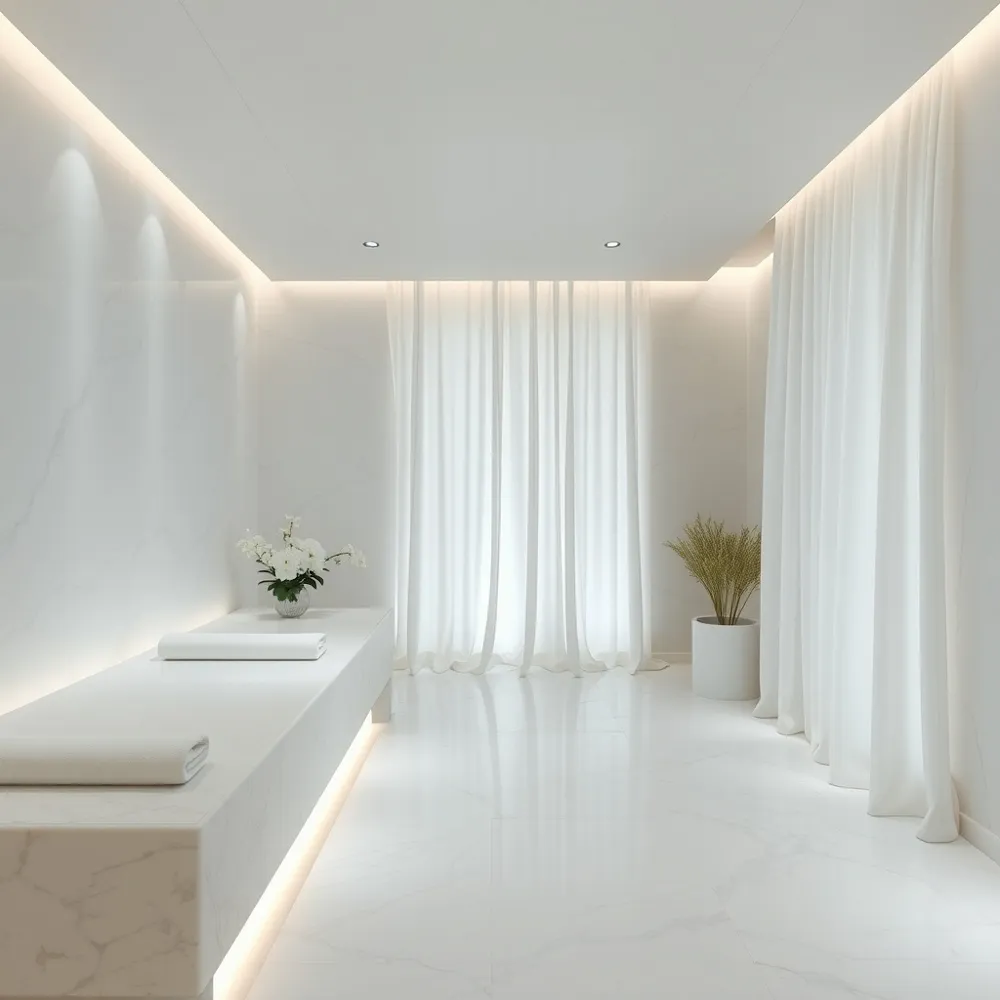
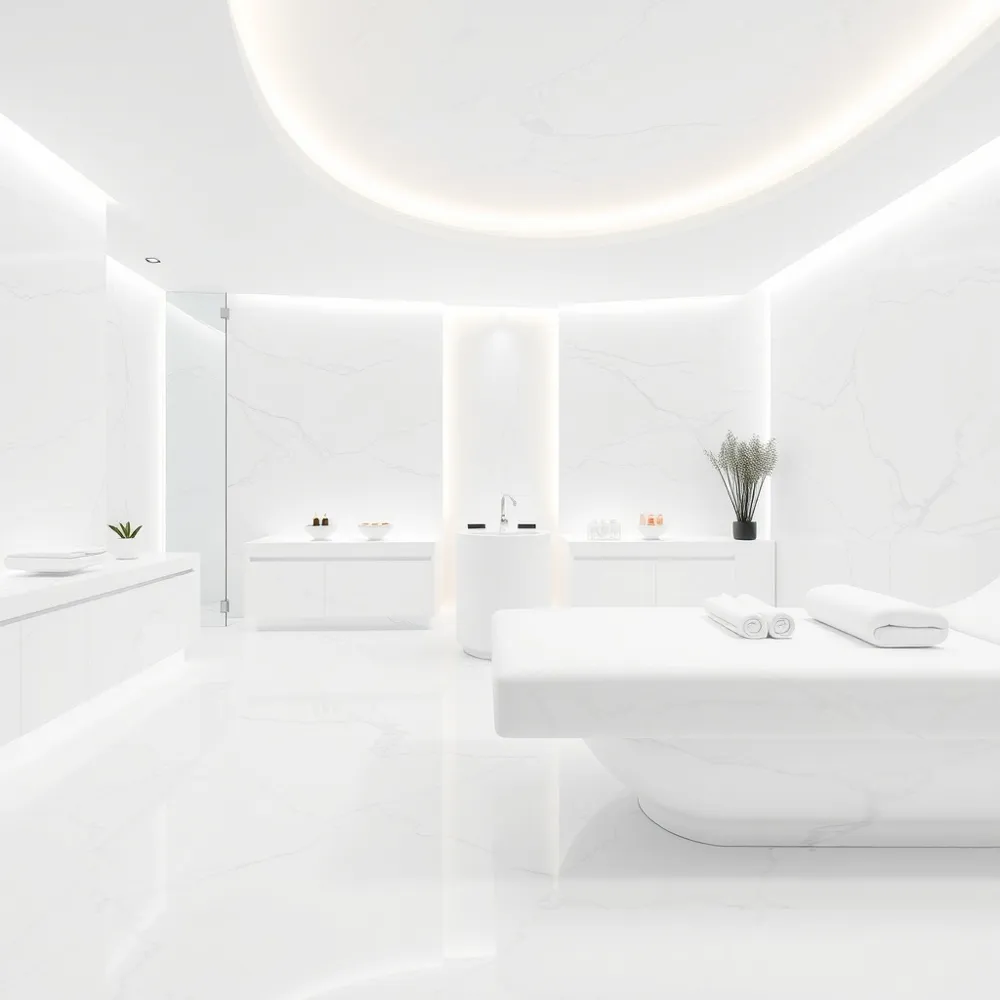
Why Multisensory Design Matters in Luxury Aesthetic Rooms
Patient anxiety and perceived pain determine satisfaction in cosmetic procedures. Clinical trials show that inhaling lavender or bergamot lowers cortisol and anxiety scores by up to 30 %, while low‑frequency ambient music or nature soundscapes cut heart rate and perceived pain by 15‑30 %. Combining evidence‑based aromatherapy with calibrated soundscapes creates a multisensory environment that activates the parasympathetic nervous system, improving heart‑rate variability and speeding recovery. Clinics now market holistic wellness, integrating programmable diffusers, biophilic décor, and adjustable lighting to give patients a sense of control. This sensory‑controlled setting not only enhances comfort but also shortens post‑procedure healing time, boosting Net Promoter Scores and repeat visits.
Sonic Serenity: The Most Comforting Sounds for Relaxation
Sonic Serenity – Key Sound Elements
| Sound Type | Example Sources | Typical Volume (dB) | Primary Benefits |
|---|---|---|---|
| White Noise | Fan, air‑conditioner | 35‑45 | Masks equipment beeps, creates constant hum |
| Pink Noise | Soft rain, distant ocean waves | 35‑45 | Natural texture, soothing |
| Brown Noise | Light waterfall, wind through trees | 35‑45 | Deep grounding, reduces anxiety |
| Nature Recordings | Forest rain, ocean surf, gentle wind | 35‑45 | Evokes safety, lowers cortisol |
| Ambient Music (low‑frequency) | 40‑60 Hz tones | 35‑45 | Enhances parasympathetic response |
Acoustic calibration ensures the level is sufficient to mask disruptive sounds while allowing clear clinician‑patient communication.
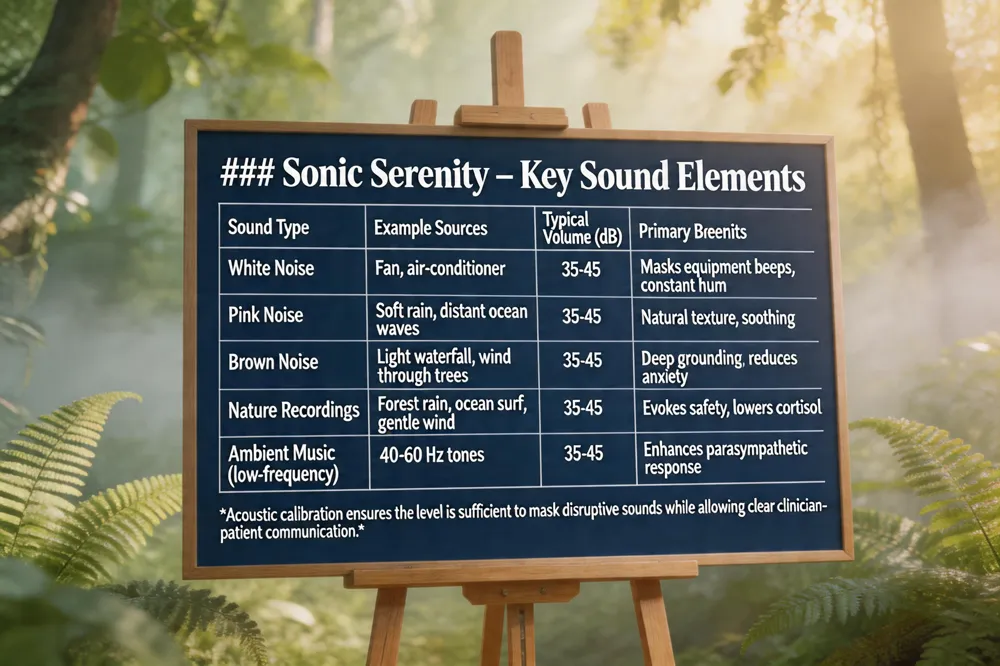 In a medical aesthetic clinic, soothing auditory background helps mask equipment noises and creates a calm atmosphere. Gentle white noise such as a fan or air‑conditioner provides a consistent low‑volume hum that blends into the environment. Pink and brown noise—like soft rain, distant ocean waves, or a light waterfall—add a natural texture that many patients find comforting. Real nature recordings of rain in a forest, ocean surf, or gentle wind through trees further enhance relaxation and evoke a sense of safety. Playing these sounds at a moderate volume (typically 35‑45 dB) throughout treatments reduces anxiety, improves heart‑rate variability, and supports a premium, wellness‑focused experience. Acoustic calibration ensures the sound level is loud enough to mask disruptive beeps but quiet enough for clear clinician‑patient communication. By integrating white, pink, and brown noise with nature recordings, luxury aesthetic rooms can create a multisensory environment that lowers cortisol, eases procedural stress, and elevates overall patient satisfaction.
The 30/50/20 Rule: Crafting Balanced Aromatherapy Blends
30/50/20 Aromatherapy Blend Guide
| Note Type | % of Total Blend | Example Oils | Role in Blend |
|---|---|---|---|
| Top‑note | 30 % (≈3 drops in a 10‑drop blend) | Bergamot, Lemon, Chamomile (to‑top) | Light, uplifting, quick evaporation |
| Middle‑note | 50 % (≈5 drops) | Lavender, Geranium, Chamomile | Therapeutic core, body, character |
| Base‑note | 20 % (≈2 drops) | Sandalwood, Cedar, Vetiver | Deep, grounding, longest linger |
Practical 10‑drop example: 3 drops lavender (middle), 5 drops chamomile (middle‑to‑top), 2 drops sandalwood (base) – calming, skin‑friendly aroma.
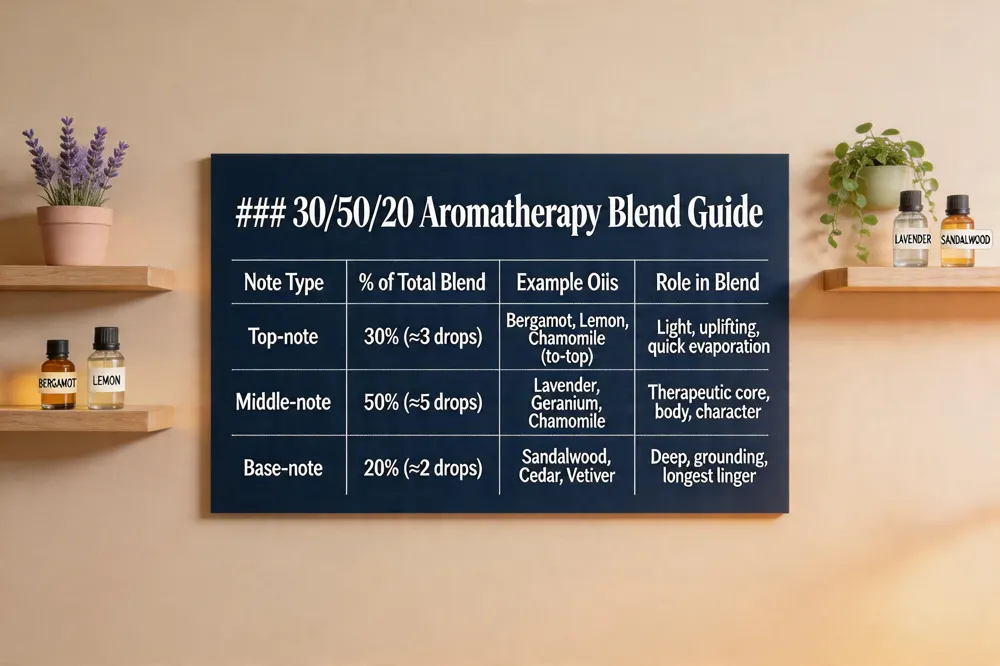 The 30/50/20 rule is a simple guideline for creating balanced essential‑oil blends by dividing the formula into three scent‑note categories. It calls for roughly 30 % top‑note oils, which are light, uplifting aromas that evaporate quickly; 50 % middle‑note oils, the “heart” of the blend that provide body and character; and 20 % base‑note oils, the deep, grounding scents that linger longest. For a 10‑drop blend, use 3 drops of top notes, 5 drops of middle notes, and 2 drops of base notes.
Top‑note, middle‑note, base‑note classification – Top notes (e.g., bergamot, lemon) give an immediate fresh scent; middle notes (e.g., lavender, geranium) create the therapeutic core; base notes (e.g., sandalwood, cedar) anchor the blend and extend its wear time.
Practical 10‑drop example – 3 drops lavender (middle), 5 drops chamomile (middle‑to‑top), 2 drops sandalwood (base) yields a calming, skin‑friendly aroma.
Synergy for skin‑care safety – Proper ratios prevent any single oil from overwhelming the skin, reducing irritation risk while allowing anti‑inflammatory and antimicrobial benefits to act synergistically.
Customization for client preferences – Adjust the top‑note proportion for a brighter opening or increase the base note for a more grounding experience, always keeping the 30/50/20 balance to maintain safety and efficacy.
The 5 P’s of Patient Satisfaction in a Clinic Setting
The 5 P’s – Patient‑Centric Checklist
| P | Description | Key Actions | Sensory Tools |
|---|---|---|---|
| Pain | Assess and mitigate discomfort | Use lavender aromatherapy, low‑frequency soundscapes | Lavender oil, calming music |
| Position | Ensure ergonomic seating/reclining | Adjustable chairs, cushions | N/A |
| Potty | Prompt, private restroom access | Dedicated staff check | N/A |
| Periphery | Optimize environment | Adjustable lighting, temperature, ambient sounds/scents | Nature recordings, diffusers |
| Pump | Verify device safety | IV/infusion set checks | N/A |
Systematic attention to each element improves satisfaction scores and speeds recovery.
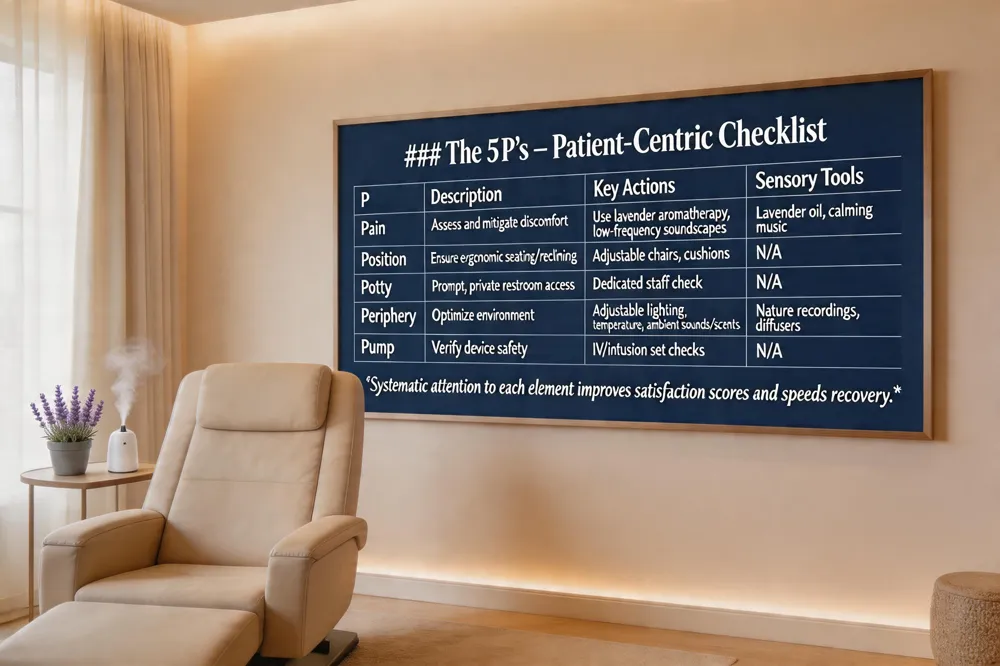 The 5 P’s of patient satisfaction in a clinic setting are Pain, Position, Potty, Periphery, and Pump. Clinicians first assess pain and use evidence‑based, non‑pharmacologic tools—such as lavender aromatherapy or low‑frequency soundscapes—to keep discomfort low. Next, they verify position, ensuring the patient is comfortably seated or reclined and can be adjusted with ergonomic supports. The potty component addresses restroom needs promptly and privately, reducing anxiety and interruptions. Periphery covers the immediate environment: adjustable lighting, temperature control, and calming ambient sounds or scents create a soothing atmosphere that has been shown to lower cortisol and heart rate, thereby enhancing overall comfort. Finally, staff perform pump and device safety checks, confirming that IVs, infusion sets, and any therapeutic devices are functioning correctly and safely. By systematically attending to each of these five elements, clinics create a holistic, patient‑centered experience that improves satisfaction scores, reduces procedural stress, and supports faster recovery.
The 4 C’s of Primary Care Translated for Aesthetic Clinics
The 4 C’s – Aesthetic Clinic Translation
| C | Primary‑Care Concept | Aesthetic‑Clinic Application | Example |
|---|---|---|---|
| First‑Contact Access | Easy entry to care | Same‑day/online booking, smooth intake | Online portal for instant appointments |
| Comprehensiveness | Full range of services | Non‑invasive, science‑backed treatments | Laser resurfacing, aromatherapy, soundscapes |
| Coordination | Integrated care pathways | Collaboration with dermatologists, surgeons | Syncing scent diffusers with procedural protocols |
| Continuity | Ongoing patient relationship | Digital dashboards, follow‑up, personalized sensory environments | Tailored aromatherapy blends for repeat visits |
Embedding the 4 C’s creates a holistic, continuous aesthetic care experience.
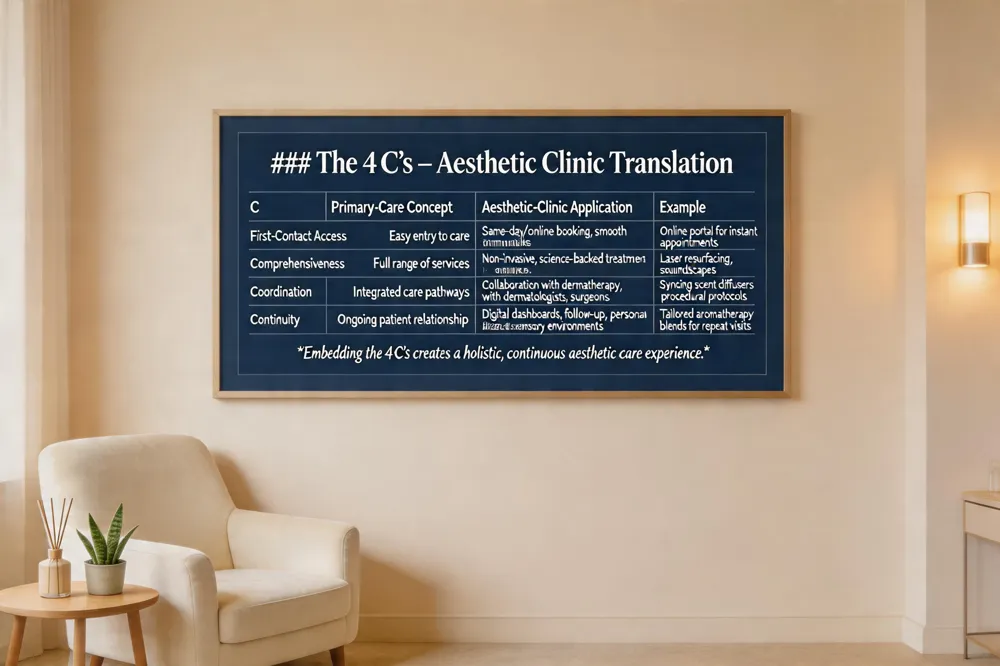 The four Cs of primary care are first‑contact access, comprehensiveness, coordination, and continuity of care. In an aesthetic clinic, first‑contact access means offering easy, same‑day or online booking and a welcoming intake process for new patients. Comprehensiveness is reflected in a full suite of non‑invasive, science‑backed services—laser skin resurfacing, micro‑needling, injectable fillers, and wellness‑focused treatments such as aromatherapy and therapeutic soundscapes—that address a patient’s whole aesthetic health. Coordination involves seamless referrals and collaboration with dermatologists, plastic surgeons, and allied specialists to ensure safe, integrated treatment plans; for example, a clinic may sync programmable scent diffusers and low‑frequency ambient music with procedural protocols to reduce anxiety and pain, as documented in multiple clinical trials. Continuity is achieved by building long‑term relationships, tracking outcomes over time with digital dashboards, and providing ongoing maintenance, follow‑up care, and personalized sensory environments that boost satisfaction scores and promote faster recovery.
Aromatherapy Meets Manicure & Pedicure: A Sensory Upgrade
Sensory Upgrade – Manicure & Pedicure Workflow
| Treatment Step | Essential‑Oil Blend | Dilution / Concentration | Intended Effect |
|---|---|---|---|
| Hand/Foot Soak | Lavender (2‑3 drops) or Tea‑Tree (2‑3 drops) | 2‑3 drops per litre of warm water | Anxiety reduction, antimicrobial action |
| Cuticle‑Oil | Jojoba base + 1‑2 drops rosemary or peppermint | 1 % v/v carrier oil, 1‑2 drops oil per 10 mL | Circulation boost, cooling sensation, mood elevation |
| Massage | Lavender + Bergamot (1:1) | 0.5 % v/v total oil in carrier | Limbic activation, deep relaxation |
| Diffuser | Ultrasonic diffuser 1 m away | 0.5‑1.0 mL hour⁻¹, indoor concentration <0.1 % (v/v) | Personalized spa‑like ambience |
Safety guidelines ensure concentrations stay below irritation thresholds.
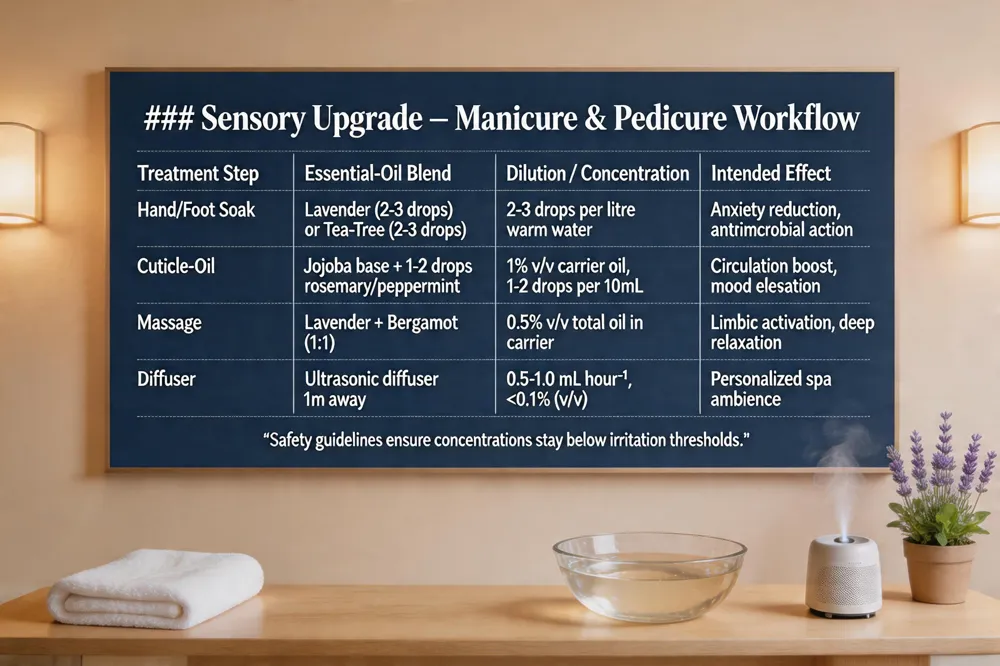 Aromatherapy is woven into manicures and pedicures by adding therapeutic essential‑oil blends to each step of the treatment.
Essential‑oil infused hand/foot soaks – Warm water is enriched with 2–3 drops of lavender for anxiety reduction, tea‑tree for its documented antimicrobial activity, or eucalyptus for respiratory comfort. Clinical studies show lavender inhalation lowers cortisol and perceived pain, while tea‑tree’s anti‑inflammatory properties support skin health.
Cuticle‑oil blends with carrier oils – A base of jojoba or sweet almond oil (1 % v/v) carries 1–2 drops of rosemary to stimulate circulation, peppermint for a cooling sensation, or ylang‑ylang for mood elevation. Proper dilution prevents irritation, aligning with FDA and NCCIH safety guidelines.
Massage aromatherapy techniques – During the hand‑massage phase, clinicians use a customized blend (lavender + bergamot) massaged into the skin and cuticles, activating the limbic system and enhancing relaxation. Low‑frequency ambient music (40‑60 Hz) can be paired to amplify parasympathetic response.
Diffuser placement and concentration control – Ultrasonic diffusers are positioned at a 1‑meter distance from the client, delivering 0.5–1.0 mL hour⁻¹ of essential oil, keeping indoor concentrations below 0.1 % (v/v) and avoiding respiratory irritation. A programmable system allows scent intensity to be adjusted per client preference, creating a personalized, spa‑like ambience that improves overall satisfaction scores.
Clinical Aromatherapy & Soundscape Integration: Ensuring Comfort Throughout Aesthetic Care
Integrated Comfort – Aromatherapy & Soundscape
| Component | Implementation | Safety Parameters | Expected Outcome |
|---|---|---|---|
| Aromatherapy | Inhalation of lavender, chamomile, bergamot | Dilution 0.5‑2 mg/m³ (≈0.5‑1 % carrier) | Lower cortisol, heart rate, perceived pain |
| Soundscape | Low‑volume ambient music, nature sounds | 35‑45 dB, sound‑absorbing panels | Reduced procedural stress, improved HRV |
| Communication | Clear step‑by‑step explanations | Documentation of sensitivities | Enhanced patient trust, reduced anxiety |
| Positioning | Ergonomic cushions, supportive recline | N/A | Physical comfort, better procedural access |
| Monitoring | Real‑time vitals, GABA‑activity oils | FDA/ASCO‑compliant oil grades | Safe, efficacy‑driven environment |
Combining these elements creates a personalized, non‑invasive experience that boosts satisfaction and clinical outcomes.
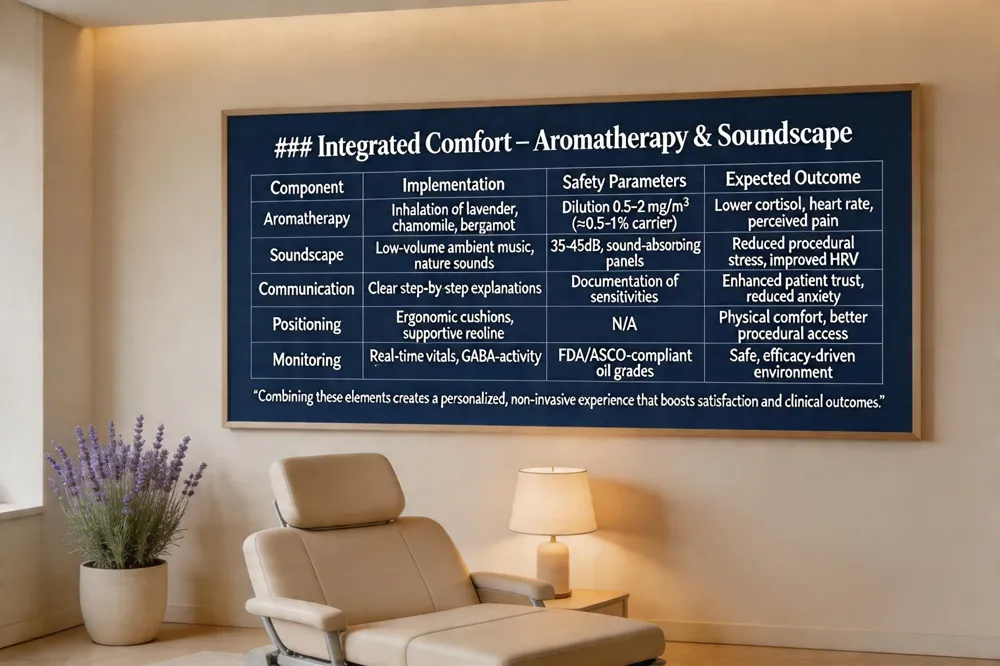 Clinicians can ensure patient comfort by creating a private, dignified environment and explaining each step in clear, reassuring language. Gentle positioning, supportive cushions, and the use of topical anesthetics or mild sedation reduce physical discomfort, while continuous communication lets the provider address pain or concerns promptly. Evidence‑based symptom management shows that inhalation of therapeutic‑grade essential oils—particularly lavender, chamomile, and bergamot—lowers cortisol, heart rate, and perceived pain, making them valuable adjuncts for pre‑procedure anxiety and intra‑procedure discomfort. Soundscape design further enhances this effect: low‑volume ambient music, nature sounds (rain, ocean waves), and sound‑absorbing panels mask equipment hum and lower heart‑rate variability, contributing to a calmer atmosphere. Essential oils that boost GABA activity, such as lavender, basil, and chamomile, directly promote relaxation by modulating GABA_A receptors. Safety protocols require dilution of oils to 0.5–2 mg/m³ (≈0.5–1 % carrier oil), use of hypoallergenic, pharmaceutical‑grade preparations, and documentation of patient sensitivities to meet FDA and ASCO guidelines. By integrating empathetic communication, precise positioning, aromatherapy, and curated soundscapes within a regulated framework, aesthetic clinics deliver a personalized, non‑invasive experience that improves satisfaction and clinical outcomes.
A New Standard of Comfort in Luxury Aesthetic Care
Luxury aesthetic clinics now differentiate themselves by creating a multisensory environment—soft, adjustable lighting, calibrated scent diffusers, and curated soundscapes—that patients perceive as a boutique‑like sanctuary. Clinical trials show that combined lavender aromatherapy and low‑frequency music reduce cortisol, lower pain scores by up to 30%, and boost satisfaction by 15‑20%. Looking ahead, programmable, pharmaceutical‑grade diffusers linked to AI‑driven sound platforms will personalize scent intensity and auditory content in real time, further enhancing comfort and brand loyalty for patients and staff everywhere.