

Why Sterility Matters in Modern Aesthetic Medicine
Patient trust and clinical reputation
A clinic's reputation is built on visible cleanliness and invisible safety protocols. Patients in the Troy, MI area seek confidence that every surface, instrument, and provider meets hospital-grade standards. Routine environmental monitoring—such as surface swab cultures and ATP testing—verifies that cleaning protocols are effective. Documented infection control policies and sterilization logs, required by OSHA, demonstrate a clinic's commitment to transparency and reduce liability.
Infection risk in minimally invasive procedures
Even micro-wounds from needle insertions can introduce bacteria into subcutaneous tissue, muscle, or bone. The CDC recommends alcohol-based hand rubs for at least 20 seconds before and after patient contact. Skin disinfection before injectables is essential, as most surgical site infections originate from the patient's own bacteria. Anti-microbial mouthwash should be used before lip filler injections to address the mouth's 500–650 microbial species.
Regulatory expectations (CDC, OSHA, FDA)
| Standard | Requirement | Practical implementation |
|---|---|---|
| CDC | Environmental cleaning with EPA-registered hospital disinfectants; HEPA filtration with ≥12 air changes/hour | Disinfect high-touch surfaces between patients; maintain ventilation logs |
| OSHA | Documented sterilization log; quarterly infection-control training | Record autoclave parameters; train staff on PPE donning/doffing |
| FDA | Single-use devices (needles, syringes, cannulas) must not be reused | Discard sharps immediately into puncture-proof containers |
Impact of sterility on treatment outcomes
Proper sterilization reduces the risk of vascular occlusion, nodules, and allergic reactions. The American Society of Plastic Surgeons notes that smoking compromises sterility and healing by constricting blood vessels and delaying tissue repair. Clinics in Troy, Michigan must comply with Michigan Department of Health and Human Services guidelines for medical waste handling, ensuring that infection control procedures directly support optimal aesthetic results.
Core Infection‑Control Standards for Aesthetic Practices
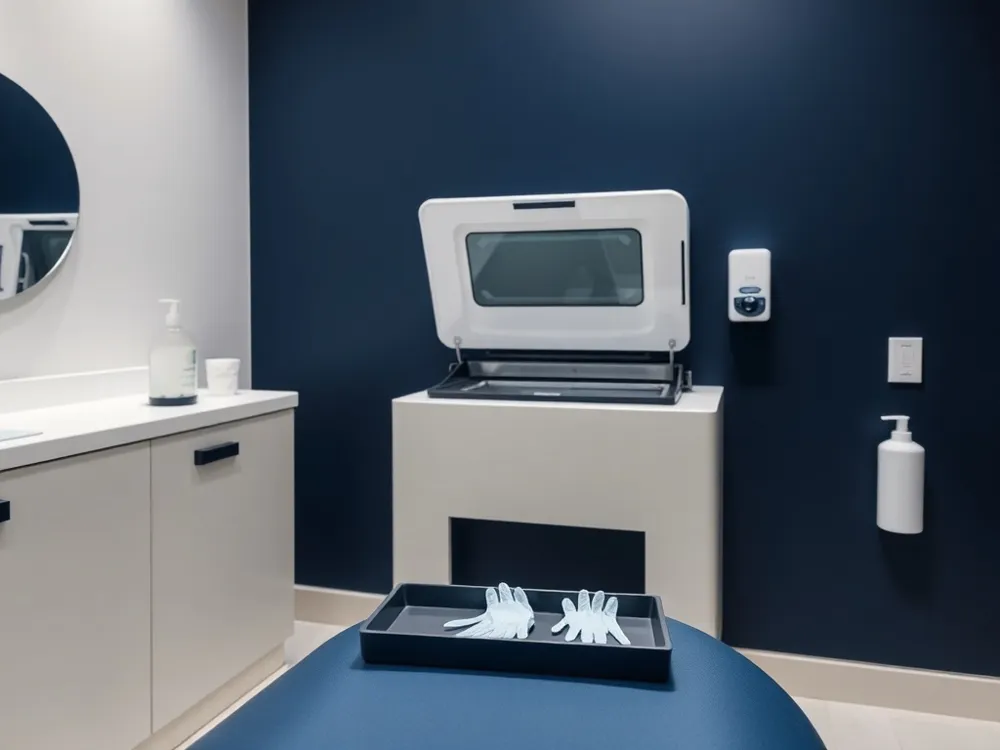 Best practices for ensuring sterile environments in aesthetic clinics begin with rigorous hand hygiene and glove protocols. The CDC advises an alcohol‑based hand rub for at least 20 seconds before and after each patient contact, and gloves must be changed between patients and when moving from a contaminated to a clean area. Validated autoclave cycles—minimum 121 °C for 30 minutes—process reusable instruments, with a documented sterilization log that records temperature, pressure, indicator results, and maintenance dates to satisfy OSHA requirements. Single‑use devices such as needles, syringes, and micro‑cannulas are never reused and are discarded immediately in puncture‑proof containers to prevent sharps injuries and cross‑contamination. Environmental cleaning employs EPA‑registered hospital‑grade disinfectants on all high‑touch surfaces between appointments, adhering to manufacturer‑specified contact times. Treatment rooms are equipped with HEPA‑filtered ventilation systems delivering at least 12 air changes per hour, reducing airborne microbial load. Aseptic technique is the disciplined set of practices that prevents pathogenic microorganisms from entering sterile fields—through hand hygiene, sterile barriers, patient and equipment preparation, and controlled environments. Sterile surgery eliminates all microbes from the operative field, whereas aseptic surgery focuses on minimizing pathogen introduction while allowing some benign flora to remain. Both approaches rely on stringent hand hygiene, PPE, and environmental controls, but sterile surgery demands more comprehensive sterilization of all items contacting the wound.
Clinic‑Specific Excellence: Iconic Laser & Iconic Medical Spa
Iconic Laser reviews: What do patients say?
Iconic Laser in Troy, Michigan, holds a 4.0‑star average on Yelp and a strong 4.8‑star rating on Google. Clients frequently highlight Dr. Patel’s expertise, noting significant improvements in skin texture and hyperpigmentation after just one session. Positive feedback points to reasonable pricing, thorough explanations, and effective results for procedures like laser hair removal, CO2 laser, and non‑surgical jawline lifts. Some Yelp reviews, however, mention a cluttered office environment and discomfort during certain treatments, such as the Evoke machine feeling too hot. Overall, the majority of clients report high satisfaction with the clinic’s advanced technology and personalized care.
Iconic Medical Spa: What services are available at this Troy location?
Iconic Medical Spa, located at 2888 E Long Lake Rd, Suite 160 in Troy, offers a comprehensive suite of FDA‑cleared dermatological and cosmetic treatments. Services include laser hair removal, IPL photofacials, nonsurgical body sculpting, Botox®, dermal fillers, and a variety of medical‑grade facials such as the Iconic Signature HydraFacial®, brightening, acne, and anti‑aging treatments. Add‑on specialty services—dermaplaning, microdermabrasion, microneedling, chemical peels, oxygen infusion, and Reiki‑Shamantic healing—allow clients to customize their rejuvenation experience. All procedures are performed by board‑certified physicians and licensed aestheticians. The spa is wheelchair‑accessible and ADA‑compliant, operating by appointment only.
Clinic address: Where is Iconic Laser located?
Iconic Laser is located at 3050 West Big Beaver Road, Troy, MI 48084. This highly accessible area near I‑75 makes it easy to reach from across the metro Detroit region. The location is surrounded by shopping centers, dining options, and hotels, offering convenience for patients traveling from nearby communities. Free parking is available, and the clinic shares its address with other medical facilities, including the future Frances and Kenneth Eisenberg Troy Center for Specialty Care.
What are two common services offered at medical aesthetic practices?
Two of the most common services at medical aesthetic practices are injectable treatments and laser‑based procedures. Injectable treatments, such as Botox and dermal fillers, are widely used to reduce wrinkles and restore facial volume with minimal downtime. Laser skin resurfacing is another popular option, effectively improving skin texture, tone, and hyperpigmentation. Both are non‑surgical, highly in‑demand, and help patients achieve noticeable rejuvenation without major surgery. These treatments form the foundation of many med spa menus due to their proven results and strong patient interest.
| Facility | Location | FDA‑Cleared Services | Patient Ratings (Star Average) | Key Patient Comments |
|---|---|---|---|---|
| Iconic Laser | 3050 W Big Beaver Rd, Troy, MI | Laser hair removal, CO2 laser, nonsurgical jawline lift, body sculpting | 4.8 (Google) / 4.0 (Yelp) | “Dramatic improvement;” “thorough explanations;” “cluttered office;” “treatments can feel hot” |
| Iconic Medical Spa | 2888 E Long Lake Rd, Suite 160, Troy, MI | HydraFacial®, IPL, Botox®, fillers, microneedling, chemical peels | Not specified | “Expert in laser resurfacing;” “advanced technology;” “personalized skin‑care science” |
Regulatory Framework, Training, and Future Facility Standards
 CDC, OSHA, and FDA mandates form the backbone of infection‑control in aesthetic clinics: hand hygiene with alcohol‑based rubs for at 20 seconds, EPA‑registered disinfectants on high‑touch surfaces, and single‑use needles discarded in puncture‑proof containers. Michigan’s Department of Health adds local requirements for patient screening, sharps disposal, and a color‑coded clean‑area system. To stay compliant, clinics must conduct quarterly infection‑control training covering PPE donning/doffing, sharps safety, and spill response, and keep a sterilization log that records autoclave temperature, pressure, cycle time, and indicator results as required by OSHA. The upcoming Eisenberg Troy Center for Specialty Care (opening spring 2027) will set a new regional benchmark with HEPA‑filtered ventilation (≥12 air changes/hour), LEED‑certified design, and state‑of‑the‑art sterile processing rooms, raising expectations for all Troy‑area aesthetic practices.
University of Michigan Health in Troy is constructing the Frances & Kenneth Eisenberg Troy Center for Specialty Care at 3050 W. Big Beaver Road, a $250 million, 224,000‑sq‑ft facility slated for spring 2027, offering advanced specialty services and serving as a key referral partner for aesthetic and other medical procedures.
Environmental Controls, Air Quality, and Cleanroom Practices
Maintaining a sterile milieu begins with robust environmental controls. HEPA‑filtered ventilation systems that deliver at least 12 air changes per hour are essential to dilute airborne microbes and protect patients during aerosol‑generating procedures such as laser resurfacing or high‑speed dermabrasion (CDC, Rose MD Aesthetics). Treatment rooms can be classified as ISO 5‑7 cleanrooms, limiting particulate counts to ≤100 particles/ft³ for ≥0.5 µm particles, which further curbs contamination risk (Rose MD Aesthetics). All high‑touch surfaces must be disinfected between patients with EPA‑registered hospital‑grade disinfectants, observing the manufacturer‑specified contact time (typically 1‑10 minutes) to ensure microbial kill (Rose MD Aesthetics, CDC). Routine microbiological surveillance—monthly surface swabs and periodic air sampling—verifies that cleaning and ventilation remain effective (CDC, ACE Group). For procedures that generate splatter or aerosols, staff must wear barrier protection, including disposable gloves, gowns, surgical masks, and eye shields, to prevent cross‑contamination (CDC, Rose MD Aesthetics).
Future Landscape and Continuous Improvement
The next wave of aesthetic safety will be driven by emerging technologies and systematic patient engagement. Laser‑based procedures now require dedicated HEPA‑filtered ventilation and validated air‑change rates to curb aerosolized microbes, while newer microneedling devices are being paired with single‑use cartridge tips and low‑level disinfection protocols that include hypochlorous‑acid (HOCl) sprays—an EPA‑registered, broad‑spectrum agent that preserves skin integrity. Clinics are expanding pre‑procedure education, advising patients to cleanse with antimicrobial washes, avoid topical antibiotics 24 hours before treatment, and follow post‑care guidelines that keep the injection site clean for at least 12 hours. Telemedicine triage, combined with COVID‑19 symptom screening, now filters out high‑risk individuals before they step into the treatment room, conserving resources for those who need in‑person care. Finally, premium facilities sustain their reputation by instituting quarterly competency assessments, documenting training logs, and conducting routine microbiological surveillance—ensuring that every staff member remains current with the latest infection‑control standards.
Maintaining a Sterile Edge in Troy’s Premium Aesthetic Scene
Troy’s top-tier aesthetic clinics uphold rigorous infection‑control standards that align with CDC and OSHA guidance. They pair validated autoclave cycles, HEPA‑filtered ventilation, and single‑use disposables with advanced technologies like precision lasers and energy‑based devices. Quarterly staff training reinforces aseptic techniques, proper PPE use, and emergency response, while thorough patient screening at check‑in helps defer treatments during active infections. Looking ahead, the upcoming Eisenberg Troy Center will further elevate Troy’s reputation—its LEED‑certified design and state‑of‑the‑art surgical suites signal a continuing commitment to sterile, safe environments in medical aesthetics.