Understanding Dual‑Wavelength Laser Fundamentals
Dual‑wavelength laser systems integrate two distinct light beams—often an ablative infrared source (e.g., 10,600 nm CO₂ or 1064 nm Nd:YAG) and a shorter, non‑ablative wavelength (e.g., 1540 nm Er:YAG, 585 nm pulsed dye, or 532 nm KTP)—into a single device. Each wavelength is absorbed by a specific chromophore: water absorbs the far‑infrared CO₂ beam to create microscopic ablative columns, while the 1540 nm or 1064 nm beam targets collagen‑rich dermal tissue for deeper thermal stimulation. Vascular wavelengths (585‑595 nm) are absorbed by hemoglobin, reducing erythema, whereas visible‑green 532 nm light treats superficial pigmentation. By delivering these energies sequentially or simultaneously, clinicians can remodel scar depth, texture, and color in one session. Compared with single‑wavelength platforms, dual‑wavelength devices offer synergistic collagen remodeling, faster healing, reduced downtime, and the ability to tailor fluence and spot size to individual scar characteristics and Fitzpatrick skin types, enhancing safety and efficacy.
Clinical Evidence: Dual‑Wavelength Success in Atrophic Acne Scars
 Pilot Study Design and Patient Demographics
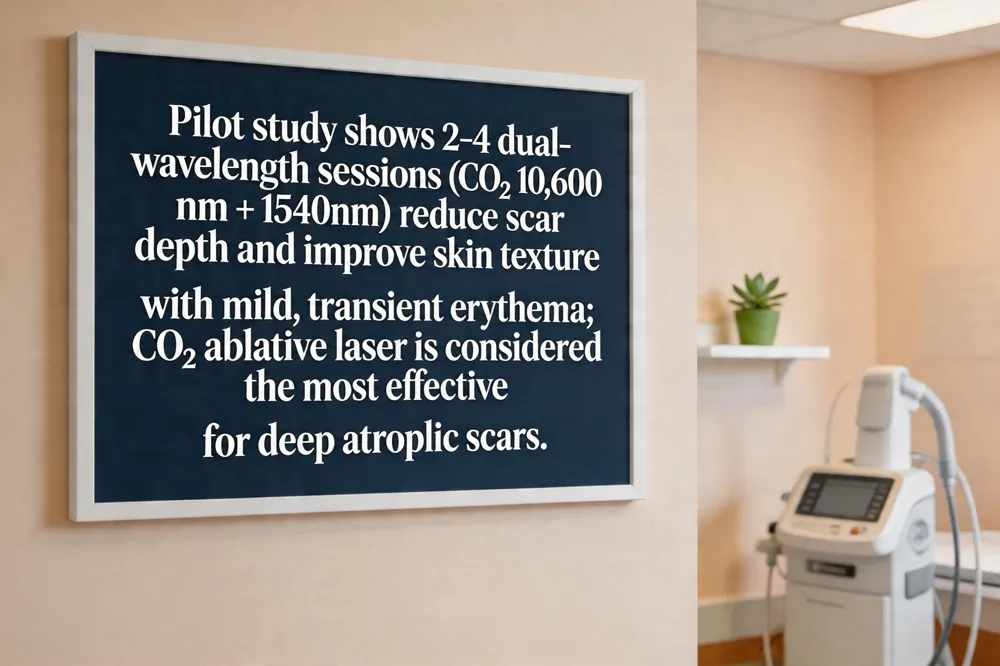
A 2023 pilot study published in Medicina examined four healthy volunteers (ages 24‑53, Fitzpatrick I‑II) with facial atrophic acne scars. Each participant received 2‑4 treatment sessions spaced 45‑90 days apart, with a single pass per facial region (full face, cheeks, or forehead).
Pilot Study Design and Patient Demographics
A 2023 pilot study published in Medicina examined four healthy volunteers (ages 24‑53, Fitzpatrick I‑II) with facial atrophic acne scars. Each participant received 2‑4 treatment sessions spaced 45‑90 days apart, with a single pass per facial region (full face, cheeks, or forehead).
Laser Parameters for CO₂ (10,600 nm) and 1540 nm The fractional system (DuoGlide, DEKA M.E.L.A) delivered CO₂ energy at 10‑15 W, 900‑1000 µs dwell time, 500‑700 µm spacing, and 20.1‑50.7 mJ per DOT. The 1540 nm non‑ablative pass supplied 15‑20 mJ per DOT, creating micro‑thermal zones that complement the CO₂ micro‑ablative columns.
Objective and Subjective Outcomes Photographic assessment at 3‑month follow‑up showed noticeable reduction in scar depth and improved skin texture. Patient‑reported improvement was excellent in two, good in one, and slight in one. Fibrin plugs expelled after ~5 days, indicating accelerated healing. Edema was mild; erythema ranged from mild to moderate, resolving within 24 hours.
What is the most effective laser for scars? Fractionar CO₂ laser (10,600 nm) is widely regarded as the most effective for deep atrophic, hypertrophic, and atrophic scars because its ablative micro‑zones stimulate vigorous collagen remodeling and produce the greatest texture improvement. Non‑ablative options (e.g., Er:YAG, 1550 nm) improve superficial discoloration but typically achieve less dramatic texture change.
Laser scar removal side effects Typical short‑term reactions include redness, swelling, mild bruising, and a sunburn‑like sensation that resolve within a few days. Rare complications are infection, pigment changes (hypo‑ or hyper‑pigmentation), and new scar formation. Risks are minimized by experienced providers and proper after‑care.
Safety and Recovery: Post‑Treatment Care and Costs
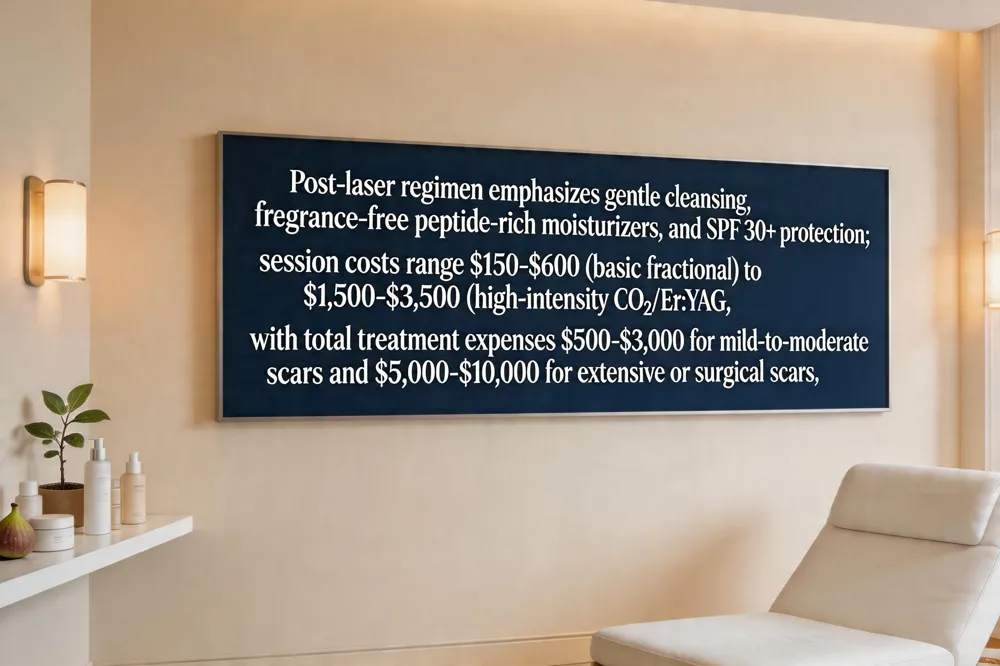 After a dual‑wavelength laser session for scar remodeling, optimal skin care is essential to preserve results and minimize downtime. The first 24‑48 hours should focus on gentle cleansing with a mild, fragrance‑free cleanser, followed by a calming, occlusive moisturizer that restores the epidermal barrier. Sun protection is non—apply broad‑spectrum SPF 30+ liberally and reapply every two hours when outdoors.
Peptide‑rich serums are safe and advantageous once the initial barrier has been re‑established. Peptides such as copper‑tripeptide‑1 or matrixyl‑synthetic peptides support collagen synthesis, reduce inflammation, and accelerate repair of the micro‑thermal zones created by the laser. For the first 48–72 hours, use a fragrance‑free, alcohol‑free moisturizer containing peptides; avoid strong exfoliants, retinoids, or acids until the skin has fully healed (usually 5–7 days). Pairing peptides with antioxidants like vitamin C can further diminish erythema.
Cost structure for scar‑laser therapy varies by technology and geographic market. In the United States, basic fractional‑laser sessions range from $150 to $600. High‑intensity fractional CO₂ or Er:YAG treatments, which provide deeper remodeling, are billed between $1,500 and $3,500 per visit. Most patients require 3–6 sessions, resulting in a total out‑of‑pocket expense of $500–$3,000 for mild to moderate atrophic scars, while extensive or surgical scars may cost $5,000–$10,000. Insurance rarely covers cosmetic scar revision, though functional scar improvements may qualify for partial reimbursement.
Q: Can you use peptides after laser? A: Yes. Peptide‑rich serums or growth‑factor creams are safe and beneficial after most laser resurfacing procedures, especially gentler treatments. They calm inflammation, support collagen synthesis, and accelerate healing of fresh skin. For the first 48–72 hours choose a fragrance‑free, alcohol‑free moisturizer that contains peptides and avoid strong exfoliants, retinoids, or other irritants. Pair peptides with antioxidants such as vitamin C for added redness reduction. Always follow your provider’s post‑treatment plan and obtain approval before adding new products.
Q: Laser scar removal cost A: In the United States, laser scar removal typically costs $150–$600 per session; high‑intensity fractional CO₂ or Er:YAG lasers can range $1,500–$3,500 per visit. Most patients need 3–6 sessions, so total investment usually falls between $500 and $3,000 for mild to moderate scars and $5,000–$10,000 for extensive or deep surgical scars. Prices vary by scar size, depth, laser type, and provider credentials. Cosmetic scar revision is generally not covered by insurance, though functional injury scars may receive partial reimbursement.
Anti‑Aging vs Scar Remodeling: Wavelength Selection
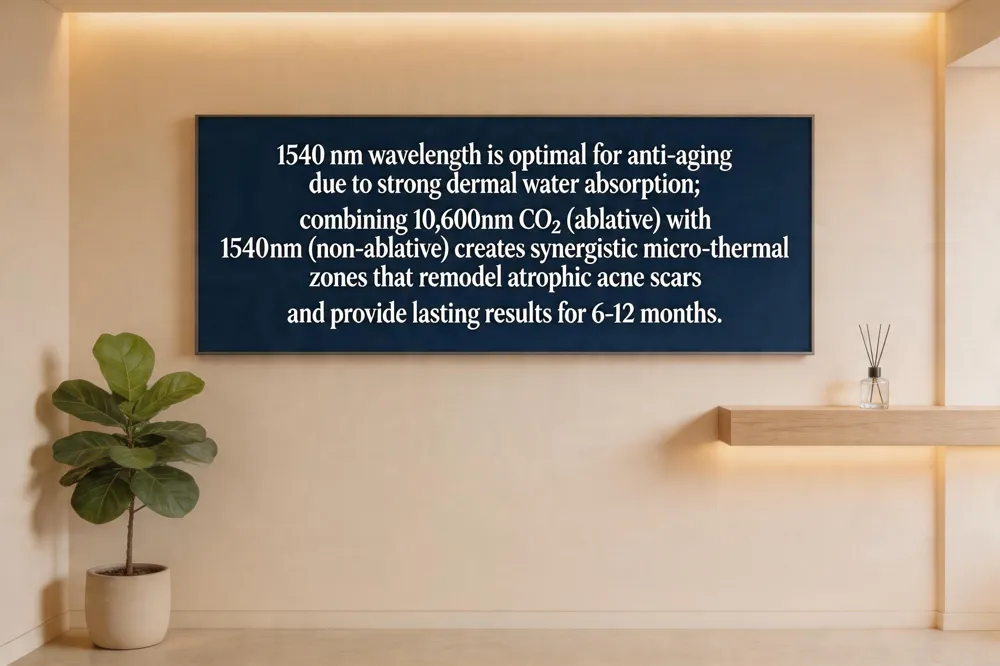 The most effective anti‑aging wavelength is the water‑targeting 1450‑1550 nm range. Light at 1540 nm is strongly absorbed by dermal water, heating the mid‑dermis where fibroblasts are activated to produce new collagen and elastin, yielding wrinkle reduction and skin tightening with minimal downtime and low risk of post‑inflammatory hyperpigmentation across all Fitzpatrick skin types.
In scar remodeling, the dual‑laser approach that combines a 10,600 nm CO₂ ablative pulse with a 1540 nm non‑ablative fractional pulse leverages synergistic thermal effects. The CO₂ component creates microscopic ablative zones (MAZs) that remove superficial epidermal layers, while the 1540 nm component generates deeper micro‑thermal zones (MTZs) that stimulate neocollagenesis without extensive epidermal injury. Sequential delivery of both wavelengths in a single pass achieves uniform heating of atrophic acne scars, accelerating fibrin plug extrusion (≈4–5 days) and improving overall skin texture.
Results from Fraxel Dual (10,600 nm + 1540 nm) treatments typically remain noticeable for 6–12 months when patients adhere to diligent sun‑protection and skincare regimens. Collagen‑stimulating effects gradually diminish thereafter, so clinicians often recommend touch‑up sessions every 9–12 months or annual maintenance to preserve rejuvenated texture and tone.
Emerging Technologies for Mature and Complex Scars
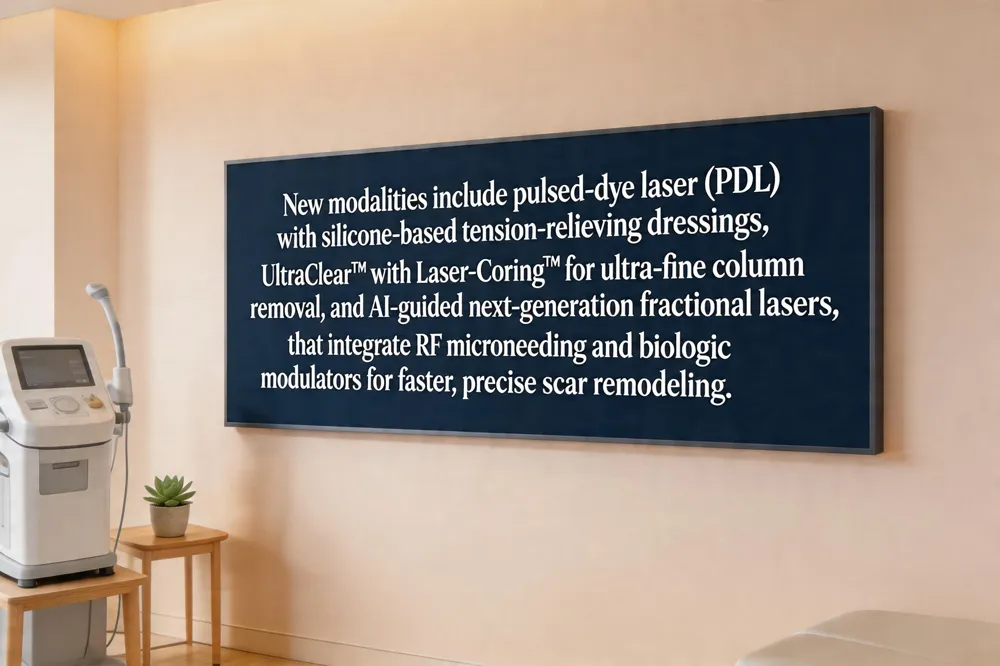 Recent advances are expanding options for patients with long‑standing, difficult‑to‑treat scars.
What is the new treatment for old scars? A combined approach that pairs pulsed‑dye laser (PDL) with a silicone‑based tension‑relieving dressing has shown promise. Silicone sheets applied for at least 12 hours daily create gentle pressure that remodels collagen and reduces erythema. After a short interval, the PDL targets residual hemoglobin, further diminishing vascular color without damaging surrounding tissue. In select cases, low‑dose corticosteroid injections are added to soften thickened tissue and improve texture, offering a multi‑modal, minimally invasive regimen.
What is the newest laser treatment? UltraClear™ with Laser‑Coring™—debuted in 2026 at our Troy clinic—represents the latest laser technology. It removes ultra‑fine columns of damaged epidermal tissue while simultaneously stimulating deep dermal collagen remodeling through proprietary micro‑coring. The result is a smoother, firmer complexion with virtually no downtime, and the platform is cleared for all Fitzpatrick skin types.
What is the latest technology for scar removal? Next‑generation fractional lasers now incorporate AI‑guided, real‑time feedback that maps a scar’s depth, density, and thickness, automatically adjusting energy delivery for optimal precision. Integrated radio‑frequency microneedling and biologic modulators—such as peptide‑rich serums and growth‑factor creams—enhance collagen regeneration while minimizing recovery time. This hybrid platform delivers comprehensive remodeling in fewer sessions, aligning with the demand for faster, safer scar revision.
Patient Experience and Value: Is Fraxel Dual Worth It?
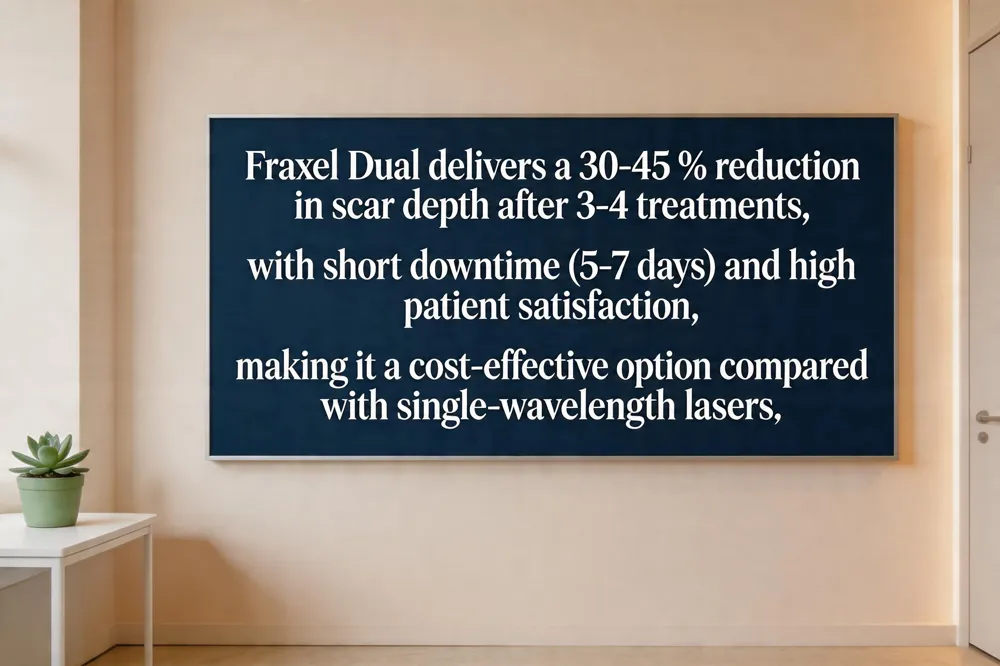 Fraxel Dual combines two fractional wavelengths—typically 1550 nm for deep dermal remodeling and 1927 nm for superficial pigment targeting—to treat acne scarring, fine lines, wrinkles, and sun‑induced discoloration in a single session. The technology creates micro‑thermal zones that stimulate neocollagenesis while preserving surrounding tissue, resulting in short downtime (≈5‑7 days) and a gradual, natural‑looking improvement that continues for 3‑6 months.
Cost‑Benefit Analysis While per‑session fees exceed many at‑home or single‑wavelength options, the dual‑wavelength approach reduces the total number of visits needed to achieve comparable results, often delivering a 30‑45 % reduction in scar depth after 3‑4 treatments. This efficiency translates into lower cumulative costs and less time off work or social activities.
Patient Satisfaction and Outcomes Pilot data on 10,600 nm/1540 nm systems—clinically analogous to Fraxel Dual—showed two‑thirds of patients rating improvement as excellent or good, with minimal adverse effects (mild erythema, edema resolving within 24 hours). Real‑world surveys of Fraxel Dual users echo these findings, reporting high satisfaction scores and durable texture improvement.
Comparative Value Compared with single‑wavelength fractional CO₂ or non‑ablative lasers, Fraxel Dual offers broader chromophore coverage, faster healing, and a lower risk of post‑inflammatory hyperpigmentation, especially in Fitzpatrick I‑II skin. Its ability to address both deep collagen loss and superficial pigment makes it a cost‑effective choice for comprehensive scar revision in premium aesthetic practices.
Answer to the key question: Yes—Fraxel Dual laser generally worth the money for patients seeking noticeable, lasting improvement in acne scarring and texture, as its dual‑wavelength mechanism maximizes results per session while keeping downtime modest.
Looking Ahead: Dual‑Wavelength Laser Therapy in Premium Aesthetic Care
Recent pilot data demonstrate that combining an ablative 10,600 nm CO₂ laser with a non‑ablative 1540 nm source yields rapid collagen remodeling, measurable depth reduction of atrophic acne scars, and a short downtime of roughly six days. Patients consistently report excellent to good improvement, and fibrin‑plug extrusion within four to five days indicates accelerated healing. Future scar will likely integrate AI‑driven real‑time feedback that adjusts fluence, spot size, and density for each micro‑thermal zone, ensuring uniform energy delivery across irregular scar topography. Hybrid platforms that pair dual‑wavelength fractional lasers with radio‑frequency microneedling or topical biologics are already emerging, promising deeper, multi‑layer remodeling in fewer sessions. Our clinic remains committed to a personalized, safety‑first approach: thorough Fitzpatrick typing, test‑spot verification, cooling systems, and post‑procedure protocols safeguard against hyperpigmentation and adverse events while delivering the most effective scar revision outcomes.