From the Treatment Room to the Cloud – A New Safety Paradigm
Patients in Troy, Michigan, are increasingly seeking fast, predictable results from laser resurfacing, hair restoration, and injectable aesthetic treatments. They arrive informed, having researched specific devices and procedures online, and expect a level of precision and safety that matches their expectations. Premium clinics such as Troy Medical, P.C., Skin Clique, and Rose MD Aesthetics already differentiate themselves with board-certified staff and advanced treatment platforms. The next competitive edge, however, is a digital safety net that watches every pulse, temperature rise, and injection pressure the instant it happens.
Implementing a Real-Time Safety Net
Real-time monitoring transforms a standard treatment room into a data-rich, responsive environment. For laser procedures, this begins with a digital version of the pre-treatment time-out recommended by the Association of Surgical Technologists (AST). Instead of a paper checklist, a software platform verifies laser power output, eyewear optical density (OD), plume evacuator status, and interlock integrity before the laser can be activated. Throughout the session, thermal cameras on the handpiece or in the room continuously map skin temperature, automatically triggering an audible alert or a system shutdown if the thermal threshold is exceeded, preventing burns before they occur. For injectable sessions, real-time monitoring uses similar principles. A unified platform can track syringe pressure, volume delivered, and even integrate Doppler or ultrasound imaging to confirm needle placement and product distribution, minimizing the risk of vascular occlusion or asymmetry.
Three Core Benefits: Safety, Precision, and Compliance
Real-time monitoring delivers three interconnected core benefits. The first is an enhanced layer of protection against the most common laser hazards. Continuous power output checks ensure the device remains within its calibrated limits, preventing unexpected energy spikes. Sensors that map the Nominal Hazard Zone (NHZ) can alert staff the moment a person enters a danger area, while real-time plume-evacuation monitoring with particle sensors protects against airborne contaminants. The second benefit is immediate procedural feedback that lets the clinician fine-tune energy delivery for uniform outcomes. By watching the thermal profile of the skin or the tissue response to fractional resurfacing in real-time, the practitioner can adjust fluence, pulse duration, or handpiece speed on-the-fly, reducing the risk of uneven results or complications. The third benefit is the creation of a data-rich record that satisfies OSHA, ANSI, and FDA audit requirements. Every beam-on event, power setting, interlock failure, and patient vital sign is logged automatically, replacing manual documentation with an immutable, timestamped digital trail. This record also feeds into AI-driven treatment planning tools, which can analyze past session data to recommend optimal parameters for future procedures.
Building a Comprehensive Monitoring Framework
Successful integration of real-time monitoring follows a structured approach. It is not a single device but a system that combines multiple sensors with a central dashboard. A premium clinic would deploy the following components:
| Monitoring Component | What It Tracks | Real-World Action Triggered |
|---|---|---|
| Thermal Imaging Camera | Skin surface temperature, heat distribution | Automatic laser shutdown if temperature exceeds safe threshold (e.g., 43°C for resurfacing) |
| Power Output Sensor | Laser pulse energy and fluence | Alert if power drifts outside calibrated range; logs for audit |
| Room Interlock & Access Sensors | Door status, personnel movement into NHZ | Warning lights, audible alarm, and automatic beam shutter activation |
| Plume Evacuation Monitor | Airflow rate, filter saturation | Visual alert to change filter or adjust wand position |
| RFID-Scanned Eyewear Reader | Correct eyewear type, OD, and condition (cracks) | Prevents laser activation until proper eyewear is verified for each team member |
| Syringe Pressure/Volume Sensor | Injection force, volume delivered, aspiration status | Warning if tip resistance suggests intravascular placement |
The data from these sensors flows into a central software dashboard. This dashboard provides the clinician with a live, color-coded overview of the session’s safety status. It can also generate automatic compliance reports for the Laser Safety Officer (LSO), supporting annual audits and continuous quality improvement.
From Compliance to Competitive Advantage
In a market where patients are both knowledgeable and discerning, real-time monitoring offers a powerful differentiator. Visible monitoring tools—such as a large display showing the thermal map of the face or a real-time power output graph—demonstrate a clinic’s commitment to safety and technological leadership. This transparency builds patient confidence, as do 86% of patients who reported that a VISIA skin analysis helped them understand their initial skin concern, according to studies. Beyond patient trust, the data generated by real-time systems supports clinical decision-making. Machine learning models, similar to those used in laser-based manufacturing (e.g., Support Vector Machines trained on multi-sensor features), can be trained on the clinic’s own data to predict which energy settings yield the best results for each skin type. This closes the loop between real-time monitoring and long-term personalized care, turning every session into a learning opportunity for the practice.
A Step-by-Step Implementation Guide
To move from conventional practice to a fully monitored treatment environment, a clinic can follow this phased plan:
- Audit Current Equipment: Identify the laser and injectable platforms in use. Determine their Class (IIIb or IV), available port configurations, and existing sensor outputs.
- Select a Monitoring Platform: Choose a modular system that can interface with existing devices. Start with passive, non-invasive sensors (e.g., thermal camera, power meter) before adding active controls.
- Integrate with Workflow: Embed the monitoring dashboard into the existing time-out and documentation process. Train staff to respond to alerts and to interpret the live data during procedures.
- Establish a Digital Audit Trail: Configure the platform to automatically log all monitored parameters. Assign the LSO as the data owner, responsible for monthly reviews and annual reports.
- Expand with AI: Once a sufficient dataset (e.g., 30 days of treatment logs) is collected, begin training simple machine-learning models to identify patterns that correlate with optimal outcomes.
By following this roadmap, a clinic in Troy can transition from relying on periodic, manual safety checks to a continuous, intelligent safety net. This paradigm shift—moving from the treatment room to the cloud—ensures that every laser pulse and every injection is guided by data, delivering the predictable, safe results that today’s patients demand.
Laser Diodes and the Physics Behind the Beam
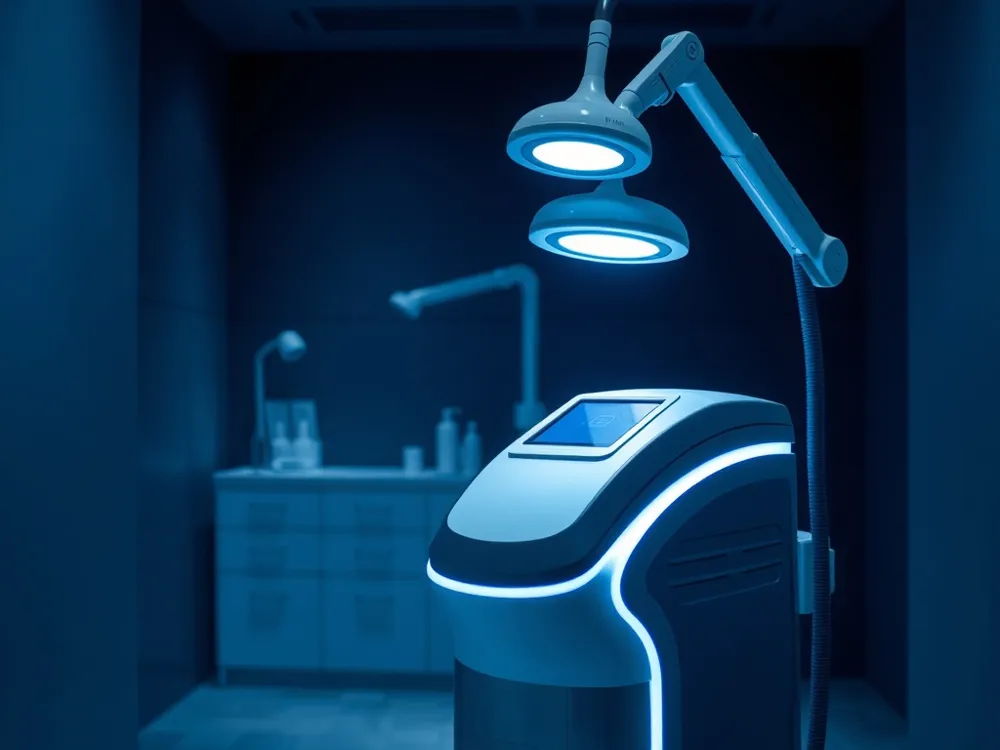
Laser Diodes: The Semiconductor Engine of Aesthetics
At the heart of many modern aesthetic devices lies the laser diode. This semiconductor device, akin to a light-emitting diode, creates lasing conditions at its p-n junction when directly pumped with an electrical current. This solid-state design allows for compact and efficient laser sources.
From Electrical Current to Coherent Light
Applying a forward voltage injects electrons and holes into the active region. They recombine, first producing spontaneous emission and then, once the current exceeds a threshold, stimulated emission that yields coherent, monochromatic light. This process is highly efficient and controllable.
The Wavelength Advantage: Engineered Precision
Because the band-gap of the semiconductor can be engineered, laser diodes emit from the ultraviolet to the mid-infrared. This covers the precise wavelengths used for targeted treatments: hair removal (800-1064 nm), vascular lesions (532 nm), and fractional resurfacing (CO₂ at 10.6 µm). This precision is key for safety and efficacy.
Enabling Speed and Safety in the Clinic
Their compact size, high wall-plug efficiency, and rapid modulation (MHz-level) make them the engine of most modern aesthetic platforms. This capability extends to advanced systems, from Q-switched picosecond devices to RF-sensor-enabled temperature probes that can monitor and adjust energy delivery in real-time, ensuring consistent and safe treatments.
Laser Modeling, Simulation and the Quest for Predictable Outcomes
What is Laser Modeling and Simulation Used For?
Before a single photon reaches a patient, engineers use laser modeling and simulation to map cavity geometry, pump efficiency, and thermal lensing. These tools predict mode-hop limits, pulse width, and beam quality, allowing manufacturers to deliver a device that stays within the Maximum Permissible Exposure (MPE) envelope across the entire treatment range. This deep quantitative understanding is essential for efficient design and prototyping, optimizing everything from pump schemes to gain media before building the first physical unit.
How Simulation Improves Real‑World Stability
Simulation also reveals failure modes—for example, how a slight mis-alignment can cause a shift in beam ellipticity that would otherwise go unnoticed. A 2023 Optics Letters study showed that measuring that ellipticity in real time provides active stabilization, expanding the mode-hop-free tuning range and delivering the low-noise output required for delicate facial resurfacing. By investigating performance degradation from thermal lensing or misalignment, modeling helps clinicians avoid inconsistent energy delivery during procedures.
The Clinician’s Benefit: Consistent, Reliable Performance
Clinicians benefit indirectly: a well-modeled laser behaves consistently from the first patient of the day to the last. This reliability reduces the need for manual re-calibration and keeps the safety checklist short and trustworthy. When a device is built on a solid simulation foundation, every treatment session starts with predictable, repeatable performance—a key factor in achieving safe, effective outcomes in medical aesthetics.
The First Rule of Laser Safety – And the Rest of the Checklist
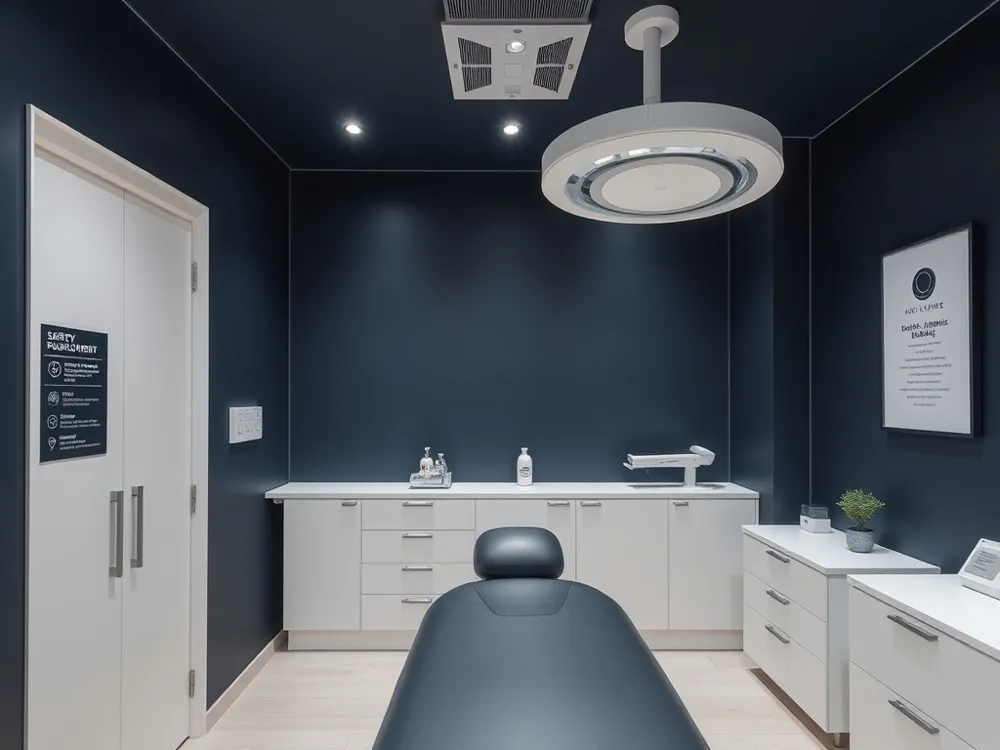
What is the first rule of laser safety?
The absolute first rule of laser safety, emphasized by the ANSI Z136.3-2024 standard, is never to look directly into any laser beam. This intrabeam exposure is considered the worst-case scenario and can cause permanent retinal or corneal damage. The objective for any clinical team is to ensure no direct exposure occurs during any procedure. While powerful, this single rule is just the first step in a comprehensive safety protocol.
What are the key safety precautions for a laser treatment session?
Key safety precautions extend far beyond eyewear. A pre‑treatment time‑out should confirm power settings, laser mode, fiber integrity, plume‑evacuator readiness, and fire‑extinguisher placement. All reflective jewelry and objects must be removed from the treatment zone. Controlled access, with warning signs on the door and locked entrances, is also paramount.
Beyond these procedural steps, a multi‑layered system of engineering, procedural, and administrative controls is essential. Engineering controls like interlocks, guarded footswitches, and emergency‑off buttons must be verified by the real‑time monitoring platform before the beam is armed. Procedural controls, such as RFID‑tagged goggles and badge readers for the Nominal Ocular Hazard Area (NOHA), are automated. If a staff member enters the NOHA without validated eyewear, an audible alarm silences the laser and alerts the Laser Safety Officer (LSO). These features ensure that compliance is actively managed, not just assumed.
| Control Type | Real‑Time Monitoring Action | Safety Outcome |
|---|---|---|
| Engineering | Verify interlock and emergency‑off button status; log each beam‑on event. | Prevents accidental firing; ensures immediate shutdown if a fault occurs. |
| Procedural | Automate NOHA access with badge readers; scan RFID‑tagged protective eyewear. | Guarantees only authorized, protected personnel are in the hazard zone. |
| Administrative | Capture all power readings and PPE verifications into a digital audit trail. | Provides a medicolegal record; satisfies OSHA’s four‑step risk‑management model and HIPAA compliance. |
Sensor Fusion: The Engine of Real‑Time Clinical Feedback
How does a multi‑sensor platform create a three‑dimensional picture of laser‑tissue interaction?
A powerful real‑time monitoring system is built by fusing data from three primary sensor types. Infrared thermal cameras capture a detailed temperature map of the skin surface. High‑speed video records dynamic events like micro‑cavitation and plume formation, which can signal over‑exposure. Finally, beam‑ellipticity sensors detect drift in the laser's injection locking, which could cause dangerous energy fluctuations. Together, these sensors build a comprehensive view of the treatment zone, allowing for immediate adjustments.
How can data from manufacturing be used to speed up clinical feedback?
To analyze these data streams in milliseconds without overwhelming the clinician, clinics can borrow advanced feature extraction pipelines from manufacturing. Algorithms like Weighted‑Fisher‑Score and Empirical Mode Decomposition distill the raw sensor data down to just nine key metrics. These are processed on a GPU in under 15 ms, enabling automatic safety actions like shutting down the laser if skin temperature exceeds a safe threshold.
How can a machine learning model detect problems before the operator?
Support Vector Machine (SVM) classifiers trained on the fused data from thermal and visual sensors can spot “defective” events—such as uneven heating or power spikes—with over 95% accuracy. This translates to a direct alert on the operator’s screen, such as “Reduce fluence by 10% – hotspot detected on the left cheek.” For independent verification of pulse frequency, RF sensor monitoring, using optical injection at 1 MHz speed, can confirm that a laser isn't double‑pulsing, a known cause of retinal injury.
How does laser Doppler imaging work?
Laser Doppler imaging (LDI) adds a layer of perfusion monitoring. It illuminates tissue with a low‑power 780 nm laser. Light scattered from moving red blood cells acquires a slight Doppler shift. This signal is processed to create a real‑time map of blood flow. Clinicians can then watch for signs of microcirculatory collapse during aggressive passes and pause before causing permanent vascular damage.
Guided Injectables – Ultrasound, Pressure Sensors and Augmented Reality
What technologies are common in real‑time monitoring of injectables?
Ultrasound‑guided injection is a primary example of real‑time monitoring. It provides live visualization of needle depth, crucial vascular structures, and the spread of filler. This direct imaging dramatically lowers the risk of vascular occlusion. When a thermal camera is integrated, the system can also warn if a laser‑assisted delivery step is heating tissue beyond safe limits.
How do robotics and augmented reality improve injection precision?
Robotic injection arms, as described by Haykal et al. (2023), advance precision. These systems read the patient’s electronic medical record (EMR), project anatomical landmarks via augmented reality (AR), and repeat the exact dosing pattern each session. This eliminates human variability and reduces waste of expensive hyaluronic acid.
How do pressure sensors and AI analysis contribute to safety?
Pressure‑sensor‑enabled syringes log injection force and volume in real time. If sudden resistance is detected, it triggers an immediate pause and visual cue on the monitor. This allows the practitioner to reassess the plane of delivery before a potential intravascular entry. AI‑driven skin‑analysis tools, like VISIA or 3D facial modeling, feed baseline data into the monitoring dashboard. The platform can then highlight early signs of hyperpigmentation or edema, prompting clinicians to adjust energy or cooling on the spot.
What role does augmented reality play for the patient?
The same AR platform can overlay predicted post‑treatment contours onto the live camera feed. This gives patients an on‑the‑spot view of expected results while simultaneously providing the practitioner with a quantitative endpoint, such as target surface temperature or filler volume.
| Monitoring System | Primary Function | Key Safety Benefit |
|---|---|---|
| Ultrasound Guidance | Visualizes needle depth & filler spread | Lowers risk of vascular occlusion |
| Robotic Injection Arm | Reads EMR, projects landmarks via AR | Eliminates human variability in dosing |
| Pressure Sensor Syringe | Logs injection force & volume | Prevents intravascular injection |
| AI Skin Analysis (VISIA) | Tracks skin response (hyperpigmentation) | Enables real‑time adjustment of fluence/cooling |
| Thermal Camera | Monitors tissue temperature | Prevents overheating during laser‑assisted delivery |
Remote Patient Monitoring – Extending the Safety Net Beyond the Chair
What benefits does remote patient monitoring offer medical professionals?
Remote patient monitoring allows clinicians to oversee a patient’s recovery long after they leave the clinic. For aesthetic practices, this capability is particularly valuable following laser resurfacing or filler sessions where healing can vary. By extending the safety net beyond the chair, professionals gain immediate insight into post-procedure progress, enabling swift, data-driven decisions that enhance outcomes and patient trust.
How does real-time data improve post-procedure care?
After a laser or injectable session, patients can upload daily photos or short videos through a secure teledermatology portal, similar to UPMC’s e-Visit platform. AI algorithms instantly assess the images for erythema, edema, or early hyperpigmentation, flagging any deviation from the expected healing curve. This automated vigilance helps staff act before minor irregularities become complications, reducing anxiety and improving satisfaction.
Can wearable sensors provide a continuous safety net?
Wearable sensors, such as temperature patches and skin-conductance bands, transmit continuous wound-healing metrics to the clinic’s dashboard. For instance, if a temperature rise exceeding 2°C is detected 24 hours post-procedure, the system automatically prompts a nurse call. This rapid response capability can prevent a delayed infection from escalating, offering peace of mind to both patient and provider.
What are the logistical and regulatory advantages?
Remote real-time monitoring reduces the need for in-person follow-ups, cutting travel time for patients in the Detroit-Metro area. This convenience improves satisfaction scores, particularly in a market where 86% of patients prefer clinics that use visual analytics, according to VISIA data. From a provider standpoint, the data feed supports rapid decision-making—allowing a physician to prescribe an anti-inflammatory cream or schedule a laser “cool-down” session before a complication escalates.
Regulatory compliance is also streamlined. Streamed data are automatically logged to meet HIPAA and FDA documentation requirements, creating a seamless audit trail that the Laser Safety Officer can review during quarterly safety meetings. By integrating remote patient monitoring, a premium medical aesthetic clinic demonstrates a commitment to science-backed, personalized care while safeguarding patient safety and building long-term loyalty.
Putting It All Together – A Practical Roadmap for Troy’s Premium Clinics
Step 1: Assign a Laser Safety Officer (LSO) – The Data Guardian
The journey begins with designating a Laser Safety Officer (LSO) , typically the medical director. This individual becomes the data owner of the monitoring platform, responsible for reviewing Nominal Hazard Zone (NHZ) calculations, approving protective eyewear optical density (OD), and signing off on software updates. The LSO ensures that the clinic’s safety program is grounded in evidence‑based standards, directly countering the complacency that can undermine laser safety.
Step 2: Deploy a Unified Monitoring Hub – The Central Nervous System
Next, the clinic installs a central workstation that acts as the system's intelligence hub. It ingests data from multiple sensors, including:
- Beam‑power meters
- Laser ellipticity sensors (for injection locking stability)
- Thermal/infrared cameras (monitoring skin temperature)
- High‑speed video (tracking tissue response)
- Plume‑particle sensors (air quality)
- Injector‑pressure transducers (for filler and neurotoxin delivery)
A pipeline using open‑source middleware (e.g., LabVIEW or Python) processes this data through a sequence of Weighted‑Fisher‑Score (WF‑FS), Empirical Mode Decomposition (EMD), Principal Component Analysis (PCA), and a Support Vector Machine (SVM) classifier. This produces a live safety dashboard with audible and visual alarms, providing a comprehensive view of the patient‑device interaction.
Step 3: Integrate the Dashboard into the Standard Operating Procedure (SOP)
The monitoring dashboard is not a passive tool; it is woven into the Standard Operating Procedure (SOP) . Before each patient, the system runs a mandatory ‘time‑out’ checklist:
- Verify laser output is below the Maximum Permissible Exposure (MPE)
- Confirm eyewear optical density (OD) via an RFID scan
- Ensure the plume evacuator wand is within two inches of the treatment site
- Lock the treatment room door
- Record baseline patient vitals
The operator cannot fire the laser until the system displays a green “Ready” flag, ensuring all safety protocols are met.
Step 4: Train the Crew using Crew Resource Management (CRM)
Technology is only as good as its operators. The clinic adopts Crew Resource Management (CRM) principles from the airline industry to train nurses, technicians, and the doctor. This promotes shared decision‑making, situational awareness, and collaborative communication. Team members practice speaking up when an alert sounds, mirroring the safety culture of aviation. Quarterly simulation drills—covering scenarios like a fire‑sensor trigger or interlock failure—keep complacency at bay and ensure a rapid, coordinated response.
Step 5: Schedule Automated Calibration & Audit Reminders
Compliance is maintained through automated calibration and audit reminders. The platform logs every power‑meter verification and triggers a quarterly laser‑output calibration as per OSHA/ANSI standards. If any reading deviates beyond 5% from baseline, the system automatically flags the device for immediate service, preventing unsafe operation.
Step 6: Leverage AI for Predictive Adjustments
The system’s intelligence extends to predictive adjustments. By feeding historical session data—including fluence, pass count, and thermal curves—into a machine‑learning model, the platform can predict the optimal fluence for a patient’s skin type. This AI model then pre‑sets the laser parameters before the clinician presses ‘Start,’ reducing guesswork and minimizing the risk of thermal injury.
Step 7: Close the Loop with Remote Follow‑Up
The monitoring cycle does not end when the patient leaves. After the session, the patient receives a secure link to upload daily images. The same AI model that guided the treatment analyzes these images, flagging any signs of post‑procedure issues like hyperpigmentation, erythema, or edema. This triggers an automated prompt for a tele‑consult within 24 hours, ensuring proactive follow‑up and high patient satisfaction.
By following this seven‑step framework, a Troy‑based aesthetic practice can transform its laser suite into a ‘smart’ environment where safety, efficacy, and patient confidence are continuously measured, logged, and improved.