Introduction to Injectable Treatments
Definition and Popularity of Injectable Cosmetic Treatments
Injectable cosmetic treatments encompass minimally invasive procedures that involve the injection of substances beneath the skin to enhance appearance. These treatments have gained immense popularity, with millions of individuals in the United States seeking such solutions annually for facial rejuvenation and contouring.
Overview of Botulinum Toxin and Dermal Fillers
The two primary categories of injectables include botulinum toxin products and dermal fillers. Botulinum toxin, commonly known by brand names such as Botox®, Dysport®, and Xeomin®, works by temporarily relaxing targeted facial muscles, thereby reducing dynamic wrinkles caused by muscle movement. Dermal fillers, often composed of substances like hyaluronic acid, calcium hydroxylapatite, and poly-L-lactic acid, restore lost volume, smooth static wrinkles, and improve facial contours by physically filling spaces beneath the skin.
Cosmetic and Medical Uses of Injectables
While primarily used for aesthetic purposes—such as smoothing forehead lines, crow’s feet, and enhancing lips and cheeks—injectables also have important medical applications. Botulinum toxin is FDA-approved to treat various medical conditions, including muscle spasms, chronic migraines, excessive sweating, and overactive bladder. Dermal fillers contribute to corrective procedures for facial contour deformities and volume restoration in patients with facial fat loss.
Convenience and Minimal Downtime of Injectable Procedures
Injectable treatments are typically performed in outpatient medical settings with trained professionals. Procedures are brief, often lasting less than an hour, require no anesthesia, and involve minimal discomfort. Patients can usually resume normal activities immediately following treatment, making injectables a convenient option for those seeking safe, effective facial rejuvenation with minimal interruption to daily life.
What Are Injectable Treatments and How Do They Work?
What are injectable treatments?
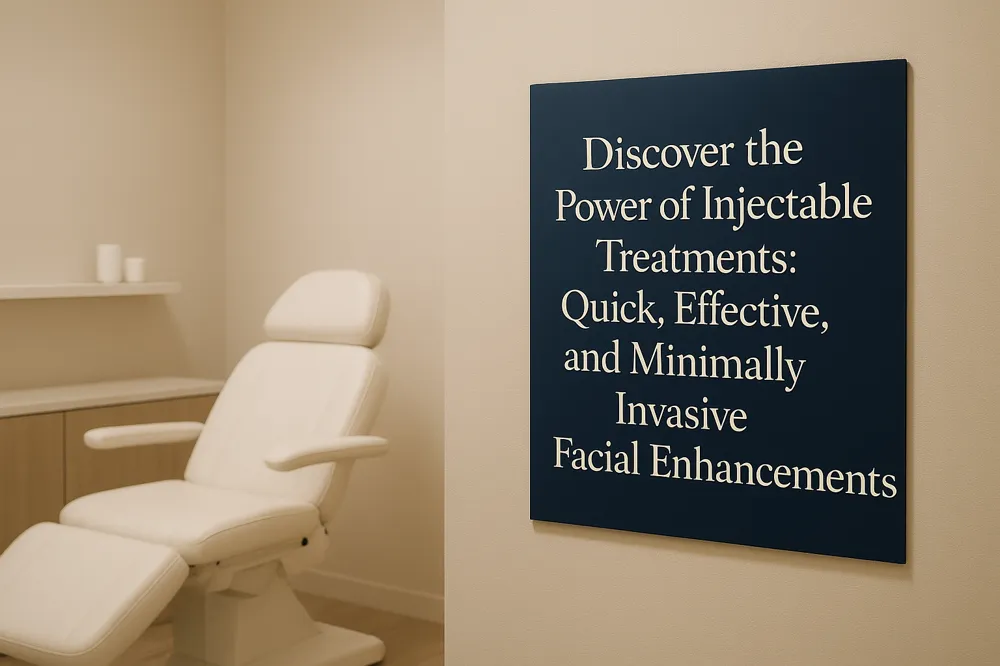
Injectable treatments encompass a range of minimally invasive cosmetic procedures designed to enhance facial aesthetics and address certain medical conditions. Millions of individuals in the United States opt for these treatments annually, drawn by their ability to deliver significant improvements with minimal disruption to daily life.
Description of injectable treatments
Two primary categories define injectable treatments: neuromodulators like Botox and dermal fillers. Neurotoxins, including well-known brands like Botox, Dysport, and Xeomin, function by temporarily relaxing facial muscles. This facial muscle relaxation smooths dynamic wrinkles—those caused by repetitive facial movements—such as crow’s feet, frown lines, and forehead wrinkles. Dermal fillers, predominantly composed of substances like hyaluronic acid (found in Juvederm and Restylane), restore volume beneath the skin. They address static wrinkles and volume loss in areas such as the cheeks, lips, nasolabial folds, and jawline, thereby improving facial contour and fullness.
Popular uses in cosmetic enhancement and medical therapy
Cosmetically, injectables are used to soften lines, restore youthful volume, and enhance facial features with immediate or gradual results depending on the product. Medically, botulinum toxin injections extend beyond aesthetics, effectively treating conditions such as excessive sweating (hyperhidrosis), chronic migraines, muscle spasms, and bladder disorders. This dual application underscores the versatility and established safety profile of these treatments when administered by qualified professionals.
General procedure and patient experience
Injection sessions are typically brief, often completed within 15 to 45 minutes depending on the treatment type and area. Most procedures require no anesthesia, involve minimal discomfort, and have little to no downtime. Patients usually begin to see results within days—neurotoxin effects develop over 3 to 7 days, whereas dermal fillers offer immediate improvement. Maintenance treatments are recommended every few months to sustain the desired outcomes, ensuring a natural, refreshed appearance over time.
Diving Deeper into Dermal Fillers: Types and Applications

What are dermal fillers and what types exist?
Dermal fillers are biocompatible substances injected beneath the skin to restore volume, smooth wrinkles, and contour facial features. These Injectable Dermal Fillers come in multiple types, tailored to different aesthetic needs and lasting durations. The most common types include:
- Hyaluronic Acid (HA) Fillers: Naturally occurring sugars that hydrate and add plumpness. Brands like Juvéderm, Restylane, and Belotero fall under this category. Effects typically last 6 to 12 months.
- Calcium Hydroxylapatite (CaHA): A mineral found in bones that provides structure and stimulates collagen production. Used in products like Radiesse®, lasting about 12 months.
- Poly-L-lactic Acid: A biodegradable synthetic that stimulates natural collagen growth, with effects extending over two years. Known by the brand Sculptra®.
- Polymethylmethacrylate (PMMA): Consists of permanent microspheres that provide lasting volume, used in Bellafill®. Results can be indefinite.
- Autologous Fat Transfer: Fat harvested from the patient's own body via liposuction and injected to restore volume. This option lasts longer but requires a surgical procedure.
Treatment areas and aesthetic benefits
Dermal fillers are versatile and widely used to address multiple facial concerns:
- Nasolabial folds and marionette lines
- Hollow or sunken cheeks and temples
- Thin or aging lips
- Under-eye hollows
- Jawline contouring and chin enhancement
- Facial asymmetry correction
These treatments help to add volume, smooth static wrinkles that are present even without facial movement, and enhance facial contours for a youthful, refreshed appearance. For more information, see Facial Rejuvenation with Fillers.
Procedure details and immediate results
The dermal filler injection process is minimally invasive and usually completed within 30 to 60 minutes at a qualified healthcare provider's office.
- Patients undergo a thorough facial assessment and mapping to precisely target treatment areas.
- Local anesthesia or topical numbing agents may be used to reduce discomfort.
- Results from fillers are immediate as they physically fill spaces beneath the skin.
- Most patients experience minimal downtime, with some mild swelling or bruising that resolves within days.
The longevity of the results depends on the filler type, injection site, and individual patient factors, with maintenance treatments required to sustain the desired effect. Detailed information about Longevity of Dermal Fillers is available.
| Type of Filler | Main Component | Typical Duration | Common Treatment Areas |
|---|---|---|---|
| Hyaluronic Acid (HA) | Natural sugar | 6-12 months | Lips, cheeks, nasolabial folds |
| Calcium Hydroxylapatite | Bone mineral | About 12 months | Deep wrinkles, hands, cheeks |
| Poly-L-lactic Acid | Synthetic collagen stim. | 2+ years | Volume loss, liquid facelifts |
| Polymethylmethacrylate | Permanent microspheres | Indefinite | Deep wrinkles, scar corrections |
| Autologous Fat | Patient’s own fat cells | Years | Volume restoration, cheeks, temples |
Choosing the right dermal filler is essential for safe, natural, and effective results and should be guided by experienced professionals familiar with facial anatomy and the properties of each filler type. For more on Choosing a Qualified Filler Provider and Safety in Facial Filler Procedures, please refer to expert resources.
The Distinctions Between Botox and Dermal Fillers

What are the differences between Botox vs Dermal Fillers?
Botox and dermal fillers are two widely used injectable treatments, but they differ significantly in how they work and the concerns they address. Botox is a neurotoxin that temporarily relaxes muscles by blocking nerve signals, making it effective for reducing dynamic wrinkles treated by Botox, caused by facial expressions, such as crow’s feet, forehead lines, and frown lines.
On the other hand, dermal fillers are gel-like substances injected beneath the skin to physically restore volume, smooth static wrinkles that appear even when the face is at rest, and enhance facial contours. Fillers are commonly made of hyaluronic acid fillers or synthetic materials that add structure to areas like cheeks, lips, and the jawline.
How do Botox and fillers differ in treating wrinkle types?
Botox targets dynamic wrinkles by relaxing the underlying muscles responsible for repetitive facial movements. This action prevents the formation and deepening of these lines over time.
Dermal fillers address static wrinkles and volume loss, filling in creases and hollow areas to create a smoother and fuller appearance.
What is the treatment longevity and typical effects duration for each?
Botox results timeline generally begin to appear within 3 to 7 days, with full effects visible by two weeks, lasting approximately 3 to 6 months. Regular treatments are needed to maintain these results.
Dermal fillers effect duration provide immediate visible improvements upon injection. The duration varies by filler type and injection site, ranging from 6 months up to 2 years, with some synthetic and fat-based fillers lasting even longer.
Which areas are commonly treated with Botox versus dermal fillers?
Botox is primarily used on the upper face to soften dynamic wrinkles, including forehead creases, glabellar lines between the eyebrows, and crow’s feet around the eyes.
Dermal fillers are frequently applied to the mid and lower face for adding volume to sunken cheeks, smoothing nasolabial folds, enhancing thin lips, and correcting under-eye hollows.
Both treatments are FDA-approved, safe when performed by qualified professionals, and are often combined to achieve comprehensive facial rejuvenation with Botox and fillers by simultaneously addressing muscle activity and volume loss.
Safety Considerations: Risks and Side Effects of Injectable Treatments
What are the risks and side effects associated with dermal fillers?
Dermal fillers are generally safe when administered by qualified healthcare providers. Common side effects include bruising, swelling, redness, pain, and itching. These typically resolve within a few days to weeks after treatment. Rare but serious complications can occur, such as accidental injection into blood vessels which may cause tissue necrosis, stroke, or even blindness. Other potential risks include inflammation, granulomas (small lumps), infection, allergic reactions, and unintentional migration or rupture of the filler material. Using FDA-approved dermal fillers products and having treatments performed by experienced professionals significantly reduce these risks. It is essential for patients to discuss their medical history and allergies with a licensed provider beforehand to ensure safe and effective treatment. See more on Dermal fillers overview and facial fillers for wrinkles.
Is Botox or dermal fillers safer?
Both Botox and dermal fillers are considered safe when applied by skilled medical professionals. Botox with over 30 years of clinical use, works by temporarily relaxing muscles to smooth dynamic wrinkles like crow’s feet or frown lines. Dermal fillers restore volume beneath the skin, improving static wrinkles and facial contours, with effects lasting months to years depending on the filler type.
While Botox might cause temporary side effects such as eyelid drooping or headache, fillers commonly cause mild swelling, bruising, and sometimes asymmetry. Serious adverse events are very uncommon for both treatments when administered correctly. The safety of either injectable depends largely on the practitioner’s expertise, proper injection technique, and use of FDA-approved products tailored to the patient’s anatomy and needs.
Choosing a board-certified medical provider who thoroughly understands facial anatomy and uses high-quality, approved injectables is critical to minimizing risks and achieving optimal aesthetic outcomes. For additional information, you can explore Botox and filler treatment differences and Dermal fillers Guide.
Choosing the Right Injectable: Brands, Longevity, and Treatment Costs

What are common brands of wrinkle relaxing facial injections and dermal fillers?
Numerous FDA-Approved Wrinkle Treatments offer wrinkle relaxing injections and dermal fillers tailored to different aesthetic needs. Popular neuromodulators for relaxing facial muscles include Botox®, Dysport®, Xeomin®, Jeuveau®, and newer options like Daxxify®. These are used primarily for dynamic wrinkles such as crow’s feet and frown lines.
For dermal fillers, hyaluronic acid-based products like Juvederm®, Restylane®, Belotero®, and the RHA Collection are the most common. They provide natural-looking volume restoration and wrinkle smoothing with effects lasting 6 to 18 months. Other fillers include calcium hydroxylapatite (Radiesse®) that offers thickness and collagen stimulation lasting roughly a year, poly-L-lactic acid (Sculptra®, which promotes collagen growth over several treatments and lasts more than two years, and polymethylmethacrylate (PMMA) fillers like Bellafill®, known for their semi-permanent results.
Choosing the right product depends on the treatment area, desired outcome, and individual anatomy. Consultation with a qualified specialist ensures selection of the most appropriate brand and formulation for personalized facial rejuvenation.
What is the duration of effects for various products?
Botox and similar neuromodulators generally produce visible results within 3 to 7 days, with effects lasting about 3 to 4 months. Some formulations like Daxxify® may last up to 9 months.
Dermal fillers provide immediate volume and contour enhancement. Hyaluronic acid fillers typically last 6 to 18 months depending on the specific product and injection site. Calcium hydroxylapatite fillers commonly last up to 12 months and also stimulate new collagen production. Poly-L-lactic acid fillers require multiple sessions but offer longer-lasting effects of up to 2 years or more. PMMA fillers are considered semi-permanent and may last several years as they contain tiny microspheres that remain under the skin.
What are the costs associated with Botox and dermal filler treatments?
Treatment costs vary based on the geographical location, the provider's expertise, the volume of product used, and treatment areas. Botox pricing typically ranges from $300 to $600 per session, calculated per unit (approximately $10 to $15 per unit) with standard doses between 30 to 40 units.
Dermal fillers are generally more costly, averaging around $682 per syringe for hyaluronic acid products. Multiple syringes may be required, depending on the treatment area and desired volume restoration. Maintenance treatments every 6 to 18 months add to ongoing costs.
Selecting a board-certified medical professional and discussing a comprehensive treatment plan help optimize both safety and budget. Many practices offer financing or promotional pricing to improve accessibility.
Why is consultation important for personalized treatment plans and budgets?
A thorough consultation allows healthcare providers to assess individual facial anatomy, skin condition, and aging patterns. It enables informed decisions about the choice of injectables, dosage, and combination treatments to achieve natural and effective results.
This personalized approach helps set realistic expectations, ensures patient safety, and aligns with personal aesthetic goals. Addressing cost concerns during consultation allows patients to plan financially and explore flexible payment options, making aesthetic treatments more approachable.
| Injectable Type | Common Brands | Effect Duration | Approximate Cost Range |
|---|---|---|---|
| Botox (neuromodulator) | Botox®, Dysport®, Xeomin®, Daxxify® | 3–6 months (up to 9) | $300–$600 per treatment |
| Hyaluronic Acid Fillers | Juvederm®, Restylane®, Belotero® | 6–18 months | ~$682 per syringe |
| Calcium Hydroxylapatite | Radiesse® | ~12 months | Comparable to HA fillers |
| Poly-L-lactic acid | Sculptra® | 2+ years (multiple sessions) | Higher due to multiple sessions |
| PMMA | Bellafill® | Several years (semi-permanent) | Higher upfront cost |
Combining Botox and Dermal Fillers for Comprehensive Facial Rejuvenation
How Botox and fillers address different aging concerns
Botox and Dermal fillers overview target separate but complementary signs of aging. Botox relaxes muscles responsible for dynamic wrinkles like forehead lines, frown lines, and crow’s feet by blocking nerve signals that cause muscle contractions. In contrast, Dermal Fillers Guide restore lost volume and smooth static wrinkles by physically filling spaces beneath the skin, addressing issues such as hollow cheeks, nasolabial folds, and thin lips. This distinction allows each treatment to focus on unique facial concerns, making them an effective duo for overall rejuvenation.
Benefits of combination treatments
Combination Botox and Fillers Treatment provides a more comprehensive solution for facial aging than either treatment alone. Botox reduces the muscular activity that causes wrinkles to form and deepen, while fillers replenish volume and contour, enhancing facial shape and symmetry. Together, these treatments can address both movement-related and volume-related aging signs, resulting in a balanced and youthful appearance. Additionally, the procedures are minimally invasive, quick to perform, and require little to no downtime, facilitating easy integration into patients’ lifestyles.
Safety and side effects when used together
Administering Botox and dermal fillers concurrently is generally safe when conducted by experienced, licensed healthcare providers familiar with facial anatomy. Although combining treatments may slightly raise the chance of mild side effects like bruising, swelling, or minor infection at injection sites, serious complications are rare. Proper technique, sterile procedures, and patient evaluation mitigate risks. It is important that providers customize treatment plans based on individual facial features and aesthetic goals to optimize safety. See more about safety of Botox and fillers and Dermal fillers dos and don’ts.
Patient outcomes and natural-looking enhancements
Patients who receive combination treatments often experience superior and harmonious facial enhancement. Understanding Botox benefits shows that Botox prevents new dynamic wrinkles by relaxing targeted muscles, while Dermal fillers for facial lines restore youthful contours and soften static wrinkles instantly. Results typically appear within days and can last several months for Botox and up to 18 months or more for fillers, depending on product selection. Expert providers ensure natural-looking outcomes by precise placement and appropriate dosing, maintaining facial expressions and avoiding an overdone appearance. This personalized approach yields high patient satisfaction and revitalized facial aesthetics.
Advantages, Disadvantages, and Emerging Trends in Injectable Treatments

What are the advantages and disadvantages of Botox and dermal fillers?
Botox and dermal fillers provide complementary solutions for facial rejuvenation with Botox and fillers with distinct benefits and limitations. Botox works by relaxing targeted muscles to reduce dynamic wrinkles, such as crow's feet and frown lines. Its minimally invasive procedure typically delivers natural-looking results lasting between 2 to 6 months, with effects beginning within days. By preventing muscle contractions, Botox also helps delay new wrinkle formation. However, maintenance treatments are needed to sustain results, and common side effects may include mild bruising or headache.
Dermal fillers restore lost volume and smooth static wrinkles by physically filling the skin beneath. They offer immediate improvement in facial contours, lip fullness, and volume loss, addressing fine lines, hollow cheeks, or marionette lines. Results from fillers generally last 6 to 12 months depending on the type used. Though effective, fillers may carry risks such as swelling, bruising, or rare complications like tissue necrosis, emphasizing the importance of experienced providers. Fillers also tend to be costlier and can require regular touch-ups.
The optimal choice depends on individual aesthetic goals—Botox is ideal for dynamic wrinkles caused by muscle movement, while dermal fillers suit volume restoration and contour enhancement. Patients must consider factors like desired outcomes, treatment duration, side effect profiles, and cost with a qualified provider.
What is bio-remodelling and how does it differ from traditional dermal fillers?
Bio-remodelling is an emerging injectable aesthetic treatment that uses hyaluronic acid fillers to hydrate and rejuvenate skin quality rather than just adding volume. Unlike traditional dermal fillers focused on filling lines or adding facial volume, bio-remodelling aims to stimulate the skin’s natural renewal, improving texture, elasticity, and tone.
This approach gently enhances the skin's health and appearance, tackling issues such as fine lines, wrinkles, and thinning without significantly altering facial volume. Bio-remodelling offers a subtle, natural look and can be integrated with traditional fillers and neuromodulators like Botox for comprehensive skincare and anti-aging benefits. For more about innovative injectable therapies, see Bio-remodelling injectable treatment.
Future outlook and evolving patient preferences
Advances in injectable treatments reflect growing patient demand for natural, minimally invasive procedures with long-lasting yet reversible results. Biostimulant fillers that promote collagen production, such as poly-L-lactic acid fillers and calcium hydroxylapatite fillers, are gaining popularity due to their regenerative effects over time. Combined treatment protocols using Botox, traditional fillers, and bio-remodelling techniques allow highly personalized facial rejuvenation strategies.
Safety, precision, and tailored approaches continue to be emphasized, with expert providers customizing treatments to harmonize facial features while ensuring minimal downtime. Ongoing innovations and increasing public awareness contribute to a dynamic landscape where injectable therapies address diverse aesthetic goals with improved efficacy and patient satisfaction.
Final Thoughts on Injectable Cosmetic Solutions
Benefits and Considerations
Both Botox and dermal fillers offer effective, minimally invasive options for facial rejuvenation. Botox alleviates dynamic wrinkles by relaxing muscles, while fillers restore volume and smooth static lines. Each treatment boasts a strong safety profile when administered by trained professionals, with results ranging from months to over a year based on the product and area treated.
Professional Consultation and Customization
Optimal outcomes rely on thorough consultation with qualified healthcare providers. Tailored treatment plans consider individual anatomy, aesthetic goals, and medical history to ensure safety and deliver natural-looking enhancements. Expertise in injection technique reduces risks and enhances patient satisfaction.
Role in Modern Dermatology
Injectables have become central to contemporary dermatological aesthetics. They provide rapid, customizable solutions for aging concerns with minimal downtime. Their versatility enables combination approaches addressing multiple facial issues simultaneously, contributing significantly to non-surgical facial rejuvenation strategies.