Why Hand Rejuvenation Matters
The dorsal hand shows both intrinsic and extrinsic aging: loss of collagen, elastin, and hyaluronic acid, compounded by chronic sun exposure, smoking, and repeated washing that thin the skin and sub‑cutaneous tissue. This volume loss reveals veins, extensor tendons, and underlying bone, giving the hands a skeletal, aged appearance that often betrays a person's true age. Injectable solutions—hyaluronic acid fillers (e.g., Restylane Lyft), calcium hydroxylapatite (Radiesse®), and poly‑L‑lactic acid—restore lost volume, improve dermal thickness, and, in the case of CaHA and PLLA, stimulate neocollagenesis for longer‑lasting skin quality. These minimally invasive, FDA‑cleared options provide immediate smoothing, high patient satisfaction, and a safe alternative to surgical lift procedures.
Understanding Hand Aging and Treatment Options
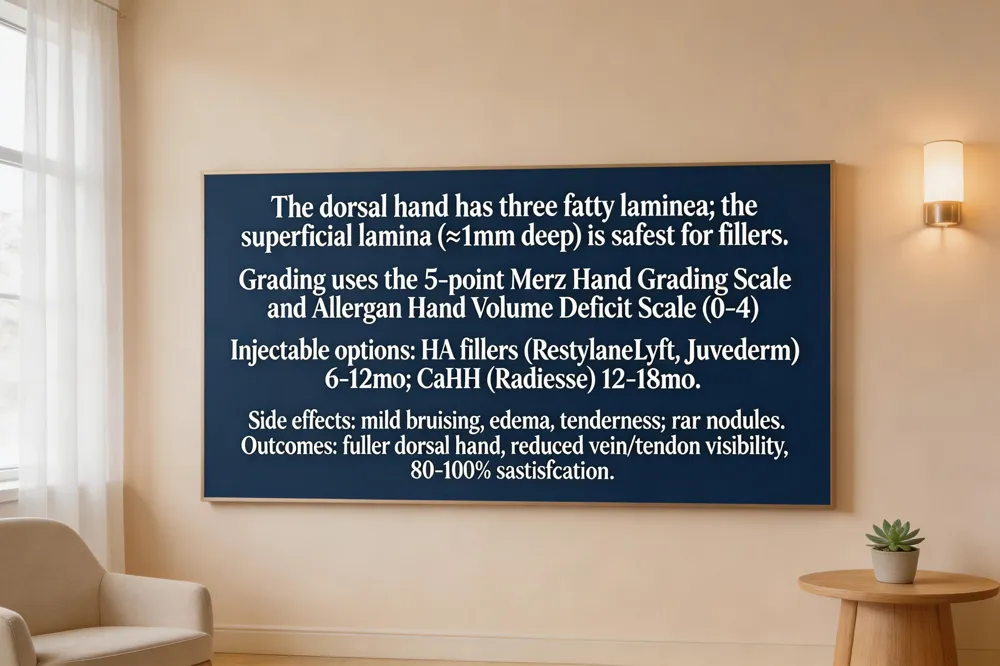 The dorsal hand is composed of three distinct fatty laminae—the superficial, intermediate, and deep layers—separated by thin fascial planes. The superficial lamina ( 1 mm below the skin) is avascular and the safest target for volumizing agents, while the intermediate lamina houses dorsal veins and sensory nerves, and the deep lamina contains extensor tendons. Hand aging is graded on the 5‑point Merz Hand Grading Scale and the Allergan Hand Volume Deficit Scale, both ranging from 0 (no loss) to 4 (severe loss), allowing clinicians to quantify intrinsic volume loss and extrinsic changes such as pigmentation and solar damage. Intrinsic factors (collagen and elastin degradation) and extrinsic factors (UV exposure, smoking, chemical irritants) together produce skin thinning, loss of dermal elasticity, and prominent veins and tendons.
Injectable treatments before and after – Hyaluronic‑acid fillers (Restylane Lyft, Juvederm Ultra) and calcium‑hydroxylapatite (Radiesse) restore soft‑tissue volume, smooth veins, and improve skin texture; results are immediate, with HA lasting 6‑12 months and CaHA up to 12‑18 months. Post‑procedure care includes moisturization, sun protection, and optional light‑based therapies.
Best injections for hands – Radiesse (CaHA) offers high viscosity, neocollagenesis, and durability (12‑18 months). HA fillers provide reversible, immediate plumping and are FDA approved for hand use.
Side effects – Transient bruising, edema, tenderness, and mild itching resolve within days; rare nodules or prolonged inflammation may occur but are uncommon.
Results – Patients achieve a fuller, smoother dorsal hand with reduced visibility of veins and tendons; satisfaction rates are high (80‑100 %).
Filler Types, Durability and Efficacy
 How long does filler in your hands last?
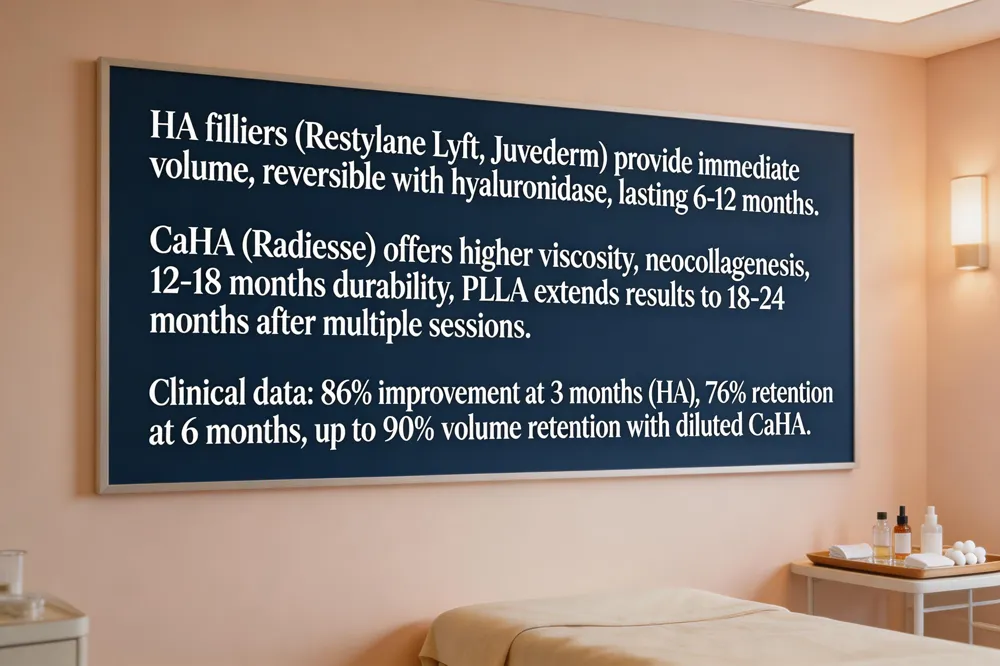
Hand rejuvenation with dermal fillers offers immediate volume and smoothing. Hyaluronic‑acid (HA) fillers such as Restylane Lyft or Juvederm typically persist 6–12 months, while calcium‑hydroxylapatite (CaHA) fillers like Radiesse often remain effective for 12–18 months or longer because they also stimulate neocollagenesis. Poly‑L‑lactic acid (PLLA) can provide results up to 18–24 months after a series of sessions. Individual metabolism, activity level, and skin quality influence exact longevity, and most clinicians schedule a touch‑up around the one‑year mark.
Restylane Lyft for hands
Restylane Lyft is the first FDA‑cleared HA filler specifically indicated for dorsal hand rejuvenation. It restores lost subcutaneous volume, masks visible veins and tendons, and provides immediate plumpness. Clinical data show 86 % of patients improve at three months and 76 % retain benefit at six months, with typical durability of 6‑12 months. The product is reversible with hyaluronidase and is usually mixed with lidocaine for comfort.
Best injectable for hand rejuvenation before and after
Calcium‑hydroxylapatite (Radiesse) delivers the most dramatic before‑and‑after transformation: immediate bulk, collagen stimulation, and durability of 12‑18 months. High‑GDA HA fillers like Restylane Lyft are also top choices, offering natural texture and easy reversibility. Both produce smooth, youthful hands within weeks of treatment.
Best injectable treatments for hand rejuvenation techniques and outcomes
Effective injectables include HA fillers (Restylane Lyft, Juvederm), CaHA (Radiesse), and PLLA. HA provides instant volume; CaHA adds collagen‑induced texture improvement; PLLA rebuilds dermal matrix over several months. Preferred techniques use a superficial lamina injection plane with a blunt cannula or fine needle, employing fanning or micro‑droplet patterns to avoid vessels and nerves. Outcomes consistently show reduced vein/tendon visibility, enhanced skin quality, high patient satisfaction, and low complication rates when performed by trained professionals.
Hand rejuvenation outcomes 2021
In 2021, HA‑treated hands achieved ~80 % patient satisfaction and retained ~70 % of volume at 12 months. Diluted CaHA showed up to 90 % volume retention and 95 % of patients improved at least one point on the Merz Hand Grading Scale. Adverse events were mild (bruising, edema) and resolved without intervention, confirming safety and efficacy of injectable hand rejuvenation.
Technique Details and Safety Protocols
 Hand rejuvenation injectable treatments near me – Iconic Laser in Troy, Michigan offers FDA‑cleared dermal fillers (Restylane® Lyft, Juvederm®, Radiesse®) performed by board‑certified physicians. Treatments restore dorsal volume, smooth veins and tendons, and improve skin texture with minimal downtime.
Hand rejuvenation near me – Our clinic combines filler injection with laser resurfacing to address both volume loss and sun‑induced pigmentation. A private, comfortable setting and personalized treatment plans ensure natural‑looking results for each patient.
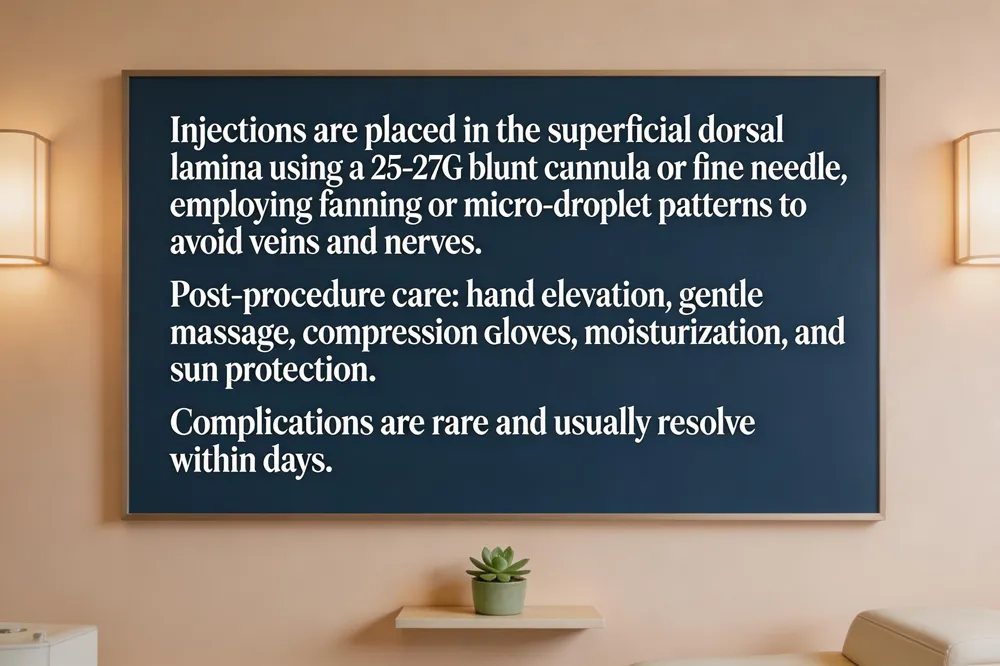
Injectable treatments for hand rejuvenation techniques and outcomes 2021 – Clinical data showed HA fillers delivering immediate volume with 70‑80 % satisfaction and only transient bruising. CaHA provided longer durability (up to 18 months) and neocollagenesis, using a blunt‑cannula fanning technique in the superficial lamina to minimize vascular injury. Volumes ranged 0.5‑1.0 mL per hand.
Hand rejuvenation outcomes 2022 – CaHA retained ~80 % of volume at 12 months and improved skin firmness; HA remained popular for rapid correction and hydration. Patient satisfaction exceeded 85 % for both fillers. The superficial dorsal lamina was the preferred plane, and blunt cannulas (25‑27 G) reduced risk of nerve or vessel compromise.
Hand filler side effects – Expected reactions include mild redness, swelling, bruising, and tenderness, resolving within days. Rare complications are palpable nodules, granulomas, or temporary numbness. Proper after‑care—hand elevation, gentle massage, and compression gloves—facilitates recovery and mitigates adverse events.
Cost, Maintenance and Patient Experience
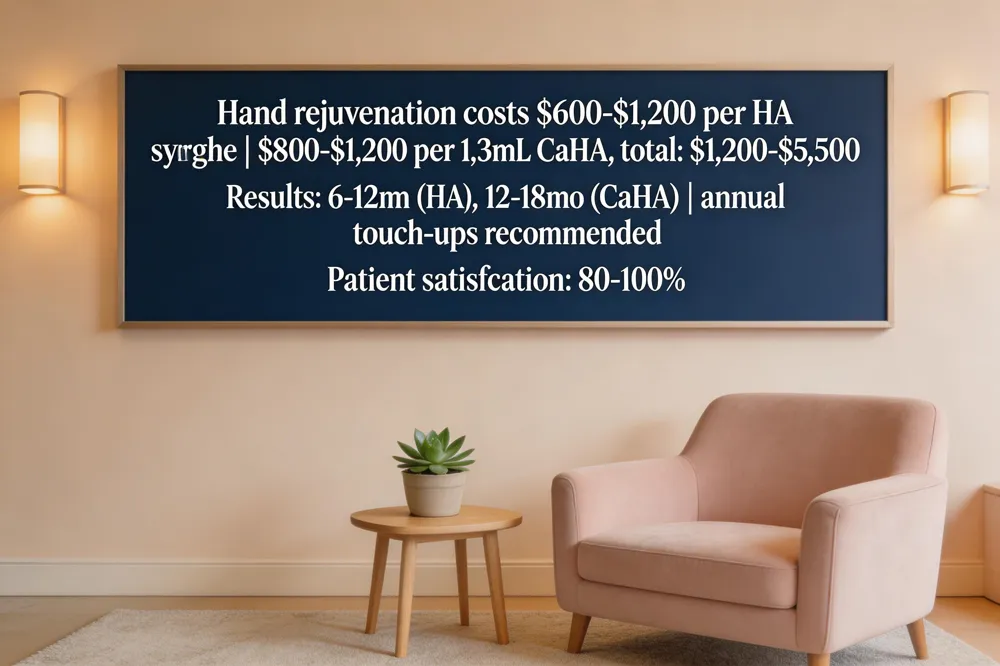 Restylane rejuvens fillers (e.g., Restylane Lyft, Juvederm) and calcium‑hydroxylapatite (CaHA) fillers such as Radiesse are the main options for hand volume restoration. In Michigan a single syringe of HA filler runs $600‑$900, typically requiring 1‑2 syringes per hand ($1,200‑$1,800 total). Restylane Lyft may cost $750‑$1,000 per syringe and often needs 1‑4 syringes, pushing the price to $1,500‑$5,500 for a full bilateral treatment. CaHA is priced similarly; a 1.3 mL CaHA syringe mixed with lidocaine costs roughly $800‑$1,200. Because these procedures are elective, insurance does not cover them, but most clinics offer financing such as CareCredit, payment‑plan options, or package discounts discussed during the initial consultation.
HA fillers provide immediate volume that generally lasts 6‑12 months, while CaHA offers a comparable duration with some studies showing durability up to 18‑24 months due to neocollagenesis. Most physicians recommend annual touch‑ups or when volume begins to wane. Patient satisfaction is high—80‑100 % in clinical series—thanks to the smooth, natural look and minimal downtime. After‑care includes hand elevation, gentle massage, icing for the first 24‑48 hours, and diligent sun protection. Transient bruising, edema, and tenderness resolve within a few days; any persistent swelling can be managed conservatively. Regular follow‑up ensures optimal results and timely maintenance.
Combining Modalities and Future Directions
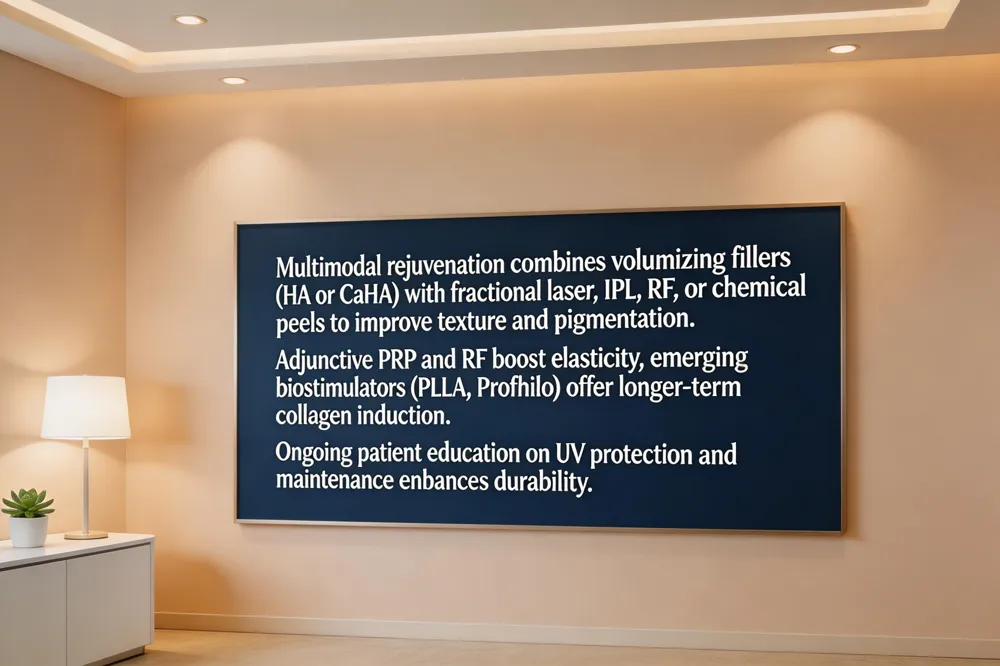 A personalized, multimodal plan yields the most natural‑looking hand rejuvenation. First‑line volumizing agents are hyaluronic‑acid fillers (Restylane Lyft, Juvederm) or calcium‑hydroxylapatite (Radiesse), injected into the superficial dorsal lamina to plump thin skin and hide veins and tendons. When combined with fractional laser, IPL or radiofrequency (RF), surface texture, sun‑induced pigmentation and collagen quality improve dramatically; laser resurfacing stimulates neocollagenesis while the filler provides immediate bulk.
Adjunctive platelet‑rich plasma (PRP) and RF can further boost elasticity and dermal thickness, especially for patients seeking natural collagen stimulation without additional volume. Emerging biostimulatory agents such as poly‑L‑lactic acid (PLLA) and Profhilo are being explored for their long‑lasting collagen‑inducing effects, though they require multiple sessions and careful dilution to avoid nodules.
Patient education emphasizes UV protection, regular moisturization, and scheduled maintenance (typically 9‑12 months for fillers, 6‑12 months for resurfacing) to sustain results.
What is the best treatment for hand rejuvenation? A customized multimodal approach—HA or CaHA filler for volume plus laser/chemical peel for texture—offers the most comprehensive, lasting outcome.
Does hand rejuvenation really work? Yes; clinical studies and before‑and‑after photos consistently show restored volume, reduced vein visibility, and smoother skin with minimal downtime.
Hand rejuvenation products include FDA‑cleared fillers (Restylane Lyft, Radiesse), laser devices (Fraxel, CO₂), topical HA serums, retinol creams, and antioxidant vitamin C formulas.
Hand rejuvenation outcomes before and after: pre‑treatment hands display prominent veins, crepey skin, and age spots; post‑treatment hands appear fuller, smoother, with even tone and diminished vascular prominence.
How can I make my 70‑year‑old hands look younger? Daily SPF 30+, rich peptide or HA creams, periodic laser resurfacing or mild peel, and occasional HA filler injections together restore volume and texture while protecting against further UV damage.
Your Hands Deserve the Same Care as Your Face
Hands age faster than the face because they are constantly exposed to sun, washing and movement, leading to loss of sub‑cutaneous tissue, visible veins and tendons. Options restore volume and improve skin quality. Hyaluronic‑acid fillers such as Restylane Lyft provide plumping for 6–12 months and are reversible with hyaluronidase. Calcium‑hydroxylapatite (Radiesse) adds lasting volume for 12–18 months and stimulates neocollagenesis, while poly‑L‑lactic acid offers gradual collagen remodeling for up to 24 months. All agents are injected into the superficial dorsal lamina, avoiding nerves and vessels, and can be performed with a fine needle or blunt cannula. A brief consultation evaluates the Merz Hand Grading Scale, skin elasticity, medical history and aesthetic goals, ensuring a safe plan that delivers natural‑looking, durable results with minimal downtime.