Why Probiotics Matter in Modern Skincare
Probiotic ingredients are reshaping cosmetic science by targeting the skin’s microbiome, the complex community of bacteria, fungi and viruses that protects against pathogens and regulates inflammation. Maintaining a balanced microbiome reduces dysbiosis‑driven conditions such as acne, rosacea and eczema, and supports a stable pH that favors barrier integrity. The gut‑skin axis further amplifies these effects: oral strains like Lactobacillus rhamnosus and Bifidobacterium longum strengthen intestinal tight‑junction proteins, lower systemic cytokines, and consequently improve skin hydration and reduce transepidermal water loss (TEWL). Topical lysates and postbiotics from the same strains up‑regulate claudin‑1, occludin, loricrin and filaggrin, while inhibiting matrix metalloproteinases, delivering measurable anti‑aging benefits. Clinical trials have documented up to 30 % TEWL reduction, 20 % hydration increase, and significant decreases in redness and fine lines after 8‑12 weeks of regular use, confirming the safety and efficacy of probiotic‑based regimens for personalized aesthetic care.
Core Probiotic Strains for Skin and Gut Health
Core Probiotic Strains Summary
| Strain | Skin Benefits | Gut Benefits | Typical Dose (CFU) | Clinical Targets |
|---|---|---|---|---|
| L. rhamnosus GG | Improves barrier, reduces inflammation | Modulates gut microbiota, reduces systemic inflammation | ≥10 Billion per dose | Acne, inflammation, eczema |
| L. plantarum | Enhances ceramide synthesis, reduces TEWL | Supports gut health, anti‑inflammatory | ≥10 Billion per dose | Acne, inflammation |
| B. longum | Suppresses TNF‑α, improves barrier | Gut microbiota balance | ≥10 Billion per dose | Acne, inflammation |
| B. breve | Supports skin hydration, antioxidant | Gut health | ≥10 Billion per dose | General skin health |
| L. lactis (lysate) | Reduces SCORAD scores | Oral supplementation supports gut | N/A (lysate) | Eczema |
| L. reuteri DSM 17938 | Reduces IL‑1β, IL‑6, TNF‑α | Gut immune modulation | ≥10 Billion per dose | Inflammation |
| B. lactis | Improves barrier proteins (claudin‑1, occludin) | Gut health | ≥10 Billion per dose | Eczema |
| L. plantarum WCFS1 | Specific anti‑inflammatory metabolite | Gut health | ≥10 Billion per dose | Inflammation |
 Best probiotics for skin and gut: multi‑strain blends of L. rhamnosus GG, L. plantarum, B. longum, and B. breve, providing ≥10 billion CFU per dose with enteric protection and prebiotic fibers.
Best probiotics for acne: L. rhamnosus GG, L. plantarum, B. longum, B. lactis, combined with inulin or pomegranate polyphenols for 8‑12 weeks.
Best probiotics for inflammation: L. rhamnosus GG, L. plantarum WCFS1, B. longum BB536, L. reuteri DSM 17938, paired with prebiotic sources to sustain microbial activity and reduce IL‑1β, IL‑6, and TNF‑α.
Top Probiotic Skincare Products for Acne Management
Acne‑Focused Probiotic Product Matrix
| Product Type | Key Active Strain(s) / Ingredient | Mechanism of Action | Recommended Use | Clinical Outcome |
|---|---|---|---|---|
| Cleanser | L. fermentum extract (low‑pH) | Removes sebum, feeds resident microbes, maintains acidity | Daily, morning & night | Reduced excess oil, balanced microbiome |
| Serum | Micro‑encapsulated L. plantarum + antioxidant peptides | Stimulates ceramide synthesis, inhibits MMP‑1, improves hydration | 1–2 × daily after cleansing | Decreased post‑inflammatory hyperpigmentation, improved barrier |
| Targeted Pads | B. longum lysate + niacinamide | Anti‑inflammatory burst, lowers lesion count | 2–3 × weekly or as needed | Faster lesion resolution, reduced redness |
| Oral Adjunct | L. rhamnosus GG | Supports gut‑skin axis, systemic anti‑inflammatory | 8–12 weeks, ≥10 Billion CFU/day | Synergistic reduction in acne severity |
| Combined Regimen | Cleanser → Serum → Pads + Oral probiotic | Multi‑step barrier repair & microbiome modulation | Continuous | Measurable reduction in acne severity, improved texture |
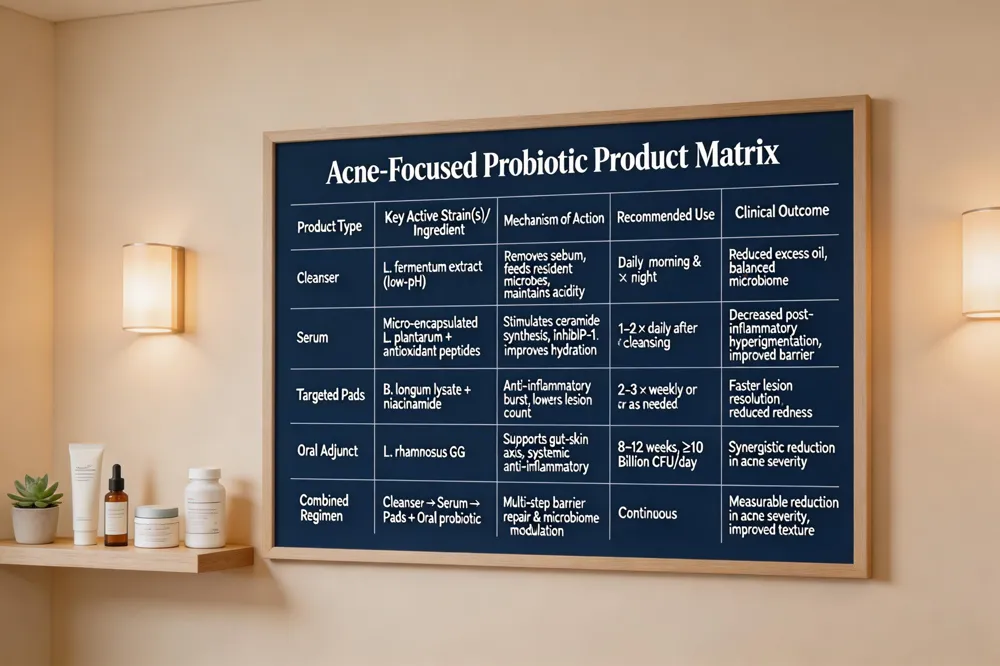 Acne‑prone skin benefits from a microbiome‑balanced approach that reduces inflammation, restores barrier integrity, and limits pathogenic Cutibacterium acnes growth. Clinical data show that Lactobacillus‑derived lysates up‑regulate tight‑junction proteins (claudin‑1, occludin) and decrease TEWL while Bifidobacterium longum extracts suppress TNF‑α and help calm redness. A three‑step regimen—cleanser, serum, and targeted pads—delivers these effects synergistically.
Probiotic cleanser: A low‑pH (4.5‑5.5) cleanser with Lactobacillus ferment extract gently removes excess sebum while feeding resident microbes, maintaining the skin’s natural acidity and preventing over‑drying.
Probiotic serum: Serums that combine live Lactobacillus plantarum (micro‑encapsulated) with antioxidant peptides stimulate ceramide synthesis, improve hydration, and inhibit MMP‑1, reducing post‑inflammatory hyperpigmentation.
Targeted pads: Pre‑impregnated pads containing postbiotic Bifidobacterium lysates and niacinamide provide on‑the‑go anti‑inflammatory bursts, lowering lesion count within weeks.
For optimal outcomes, clinicians can pair topical probiotics with oral strains that support the gut‑skin axis (e.g., L. rhamnosus GG) and ensure products meet FDA microbial‑load limits (<1,000 CFU/g) while preserving viability through microencapsulation or freeze‑drying. This personalized, science‑backed protocol aligns with non‑invasive aesthetic standards and delivers measurable reductions in acne severity and improved skin texture.
Probiotic Moisturizers and Postbiotic Ingredients
Moisturizer & Postbiotic Ingredient Overview
| Product Example | Live Strain(s) / Postbiotic | Key Benefits | Formulation Highlights |
|---|---|---|---|
| Epicuren Acidophilus Probiotic Facial Cream | Live L. acidophilus (micro‑encapsulated) | Deep hydration, barrier repair, pH balance | Micronized silver, hyaluronic acid, botanical extracts |
| Fermented Rice Water Moisturizer | Postbiotic rice water ferment | Antioxidant, soothing, improves elasticity | Ferment filtrate, low‑pH base |
| Leuconostoc / Radish Root Ferment Filtrate Lotion | Postbiotic Leuconostoc lysate | Strengthens barrier, reduces TEWL | Ferment filtrate, ceramide‑boosting peptides |
| Bifida Ferment Lysate Cream | Postbiotic B. longum lysate | Anti‑inflammatory, reduces redness | Lysate rich in peptides & organic acids |
| Lactobacillus Ferment Serum | Postbiotic L. fermentum extract | Improves skin tone, antioxidant | Ferment extract, niacinamide |
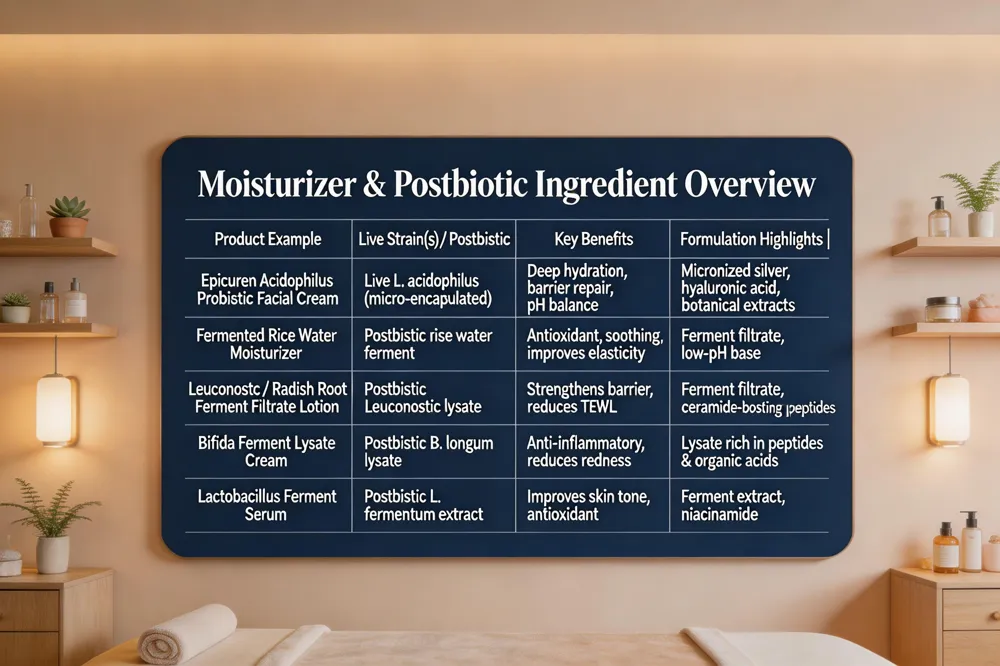 Modern probiotic moisturizers combine live cultures, prebiotic nutrients, and postbiotic lysates to reinforce the skin barrier while supporting a balanced microbiome. Postbiotic skincare ingredients are non‑living microbial derivatives produced through fermentation, such as Bifida Ferment Lysate, Lactobacillus Ferment, Leuconostoc/Radish Root Ferment Filtrate, and fermented rice water. These bio‑active compounds deliver peptides, organic acids, and enzymes that strengthen the moisture barrier, soothe irritation, and provide antioxidant protection; they appear on labels as “ferment lysate,” “ferment filtrate,” or “fermented [ingredient]”. Probiotic face creams restore microbiome harmony by delivering live beneficial bacteria or prebiotic nutrients that boost native microbes, thereby reducing transepidermal water loss, lowering inflammation, and improving hydration and skin tone. The top‑rated probiotic moisturizer for the face, Epicuren Acidophilus Probiotic Facial Cream, blends live Lactobacillus acidophilus with micronized silver, hyaluronic acid, and botanical extracts. Its lightweight, non‑greasy formulation suits combination, oily, and sensitive skin, delivering deep hydration, pH balance, and protection against environmental stressors while supporting ceramide synthesis for lasting barrier repair.
Regulatory Landscape and Formulation Challenges
Regulatory & Formulation Checklist
| Aspect | Requirement / Limit | Implication for Formulation |
|---|---|---|
| Classification | Cosmetics (U.S. FDA) – no therapeutic claims | Marketing must focus on aesthetic benefits |
| Microbial Load | <1,000 CFU/g for general cosmetics; <500 CFU/g for eye‑area products | Viability strategies needed for live probiotics |
| Strain‑Specific Benefit | Demonstrate strain‑level efficacy (clinical data) | Use validated strains (e.g., L. rhamnosus GG) |
| Labeling | Accurate CFU count, clear “live” vs “lysate” designation | Separate live‑probiotic products from postbiotic blends |
| Preservation | Preservatives can kill live cells | Micro‑encapsulation, alginate microspheres, freeze‑drying employed |
| Shelf‑Life Stability | Maintain ≥6 log CFU g⁻¹ over 6 months (if live) | Use protective technologies (micro‑encapsulation, pH‑adjusted carriers) |
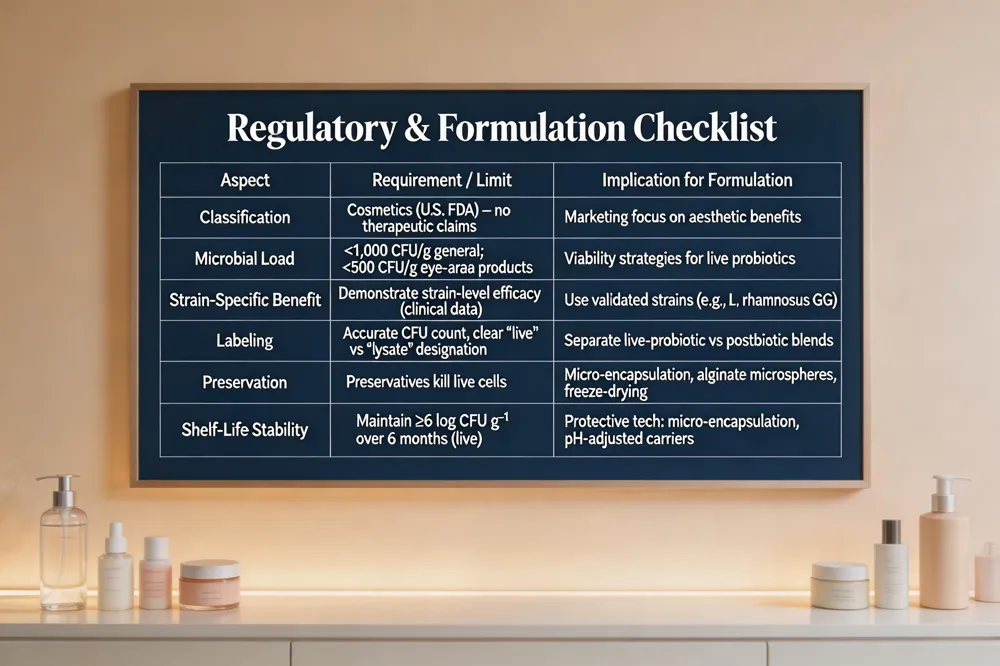 The U.S. FDA classifies skin‑care as a cosmetic, prohibiting therapeutic claims and requiring accurate labeling of microbial content. true live‑probiotic cosmetics must meet stringent microbial limits (e.g., <500 CFU/g for eye‑area products) and demonstrate strain‑specific benefit, lys most marketed "probiotic" items are actually lysates or post‑biotics. Live probiotics offer barrier reinforcement, hydration, and pH balance, but their viability is compromised by preservatives, moisture, and pH shifts. Lysates and post‑biotics, which contain bacterial fragments, metabolites, or short‑chain fatty acids, are permissible and retain many skin‑beneficial actions while being more stable. To preserve live cultures, manufacturers employ microencapsulation (e.g., alginate microspheres), freeze‑drying, and synbiotic blends that pair pre‑biotics with the bacteria. These technologies protect cells from oxidative stress and maintain adequate colony‑forming units throughout shelf life, enabling safe, effective probiotic‑enhanced cosmetics for premium aesthetic clinics in Troy, Michigan.
Customized Regimens and Clinical Integration
Three‑Step Clinical Protocol & Monitoring
| Step | Product Type | Strain / Lysate | Adjunctive Therapies | Monitoring Metrics |
|---|---|---|---|---|
| 1. Cleanse | Low‑pH probiotic cleanser | L. fermentum extract | None | Barrier integrity (TEWL) |
| 2. Serum | Live‑culture serum | Micro‑encapsulated L. plantarum | Optional laser/microneedling | Hydration (Corneometer), lesion count |
| 3. Moisturizer | Probiotic moisturizer | Live L. acidophilus or postbiotic Bifida lysate | Oral L. rhamnosus GG (≥10 Billion CFU) | SCORAD (if eczema), inflammatory markers (IL‑6, TNF‑α) |
| Follow‑up | Clinical assessment | Adjust CFU, pH (4.5‑5.5) | Laser, IPL, chemical peels | Patient‑reported outcomes, photographic analysis |
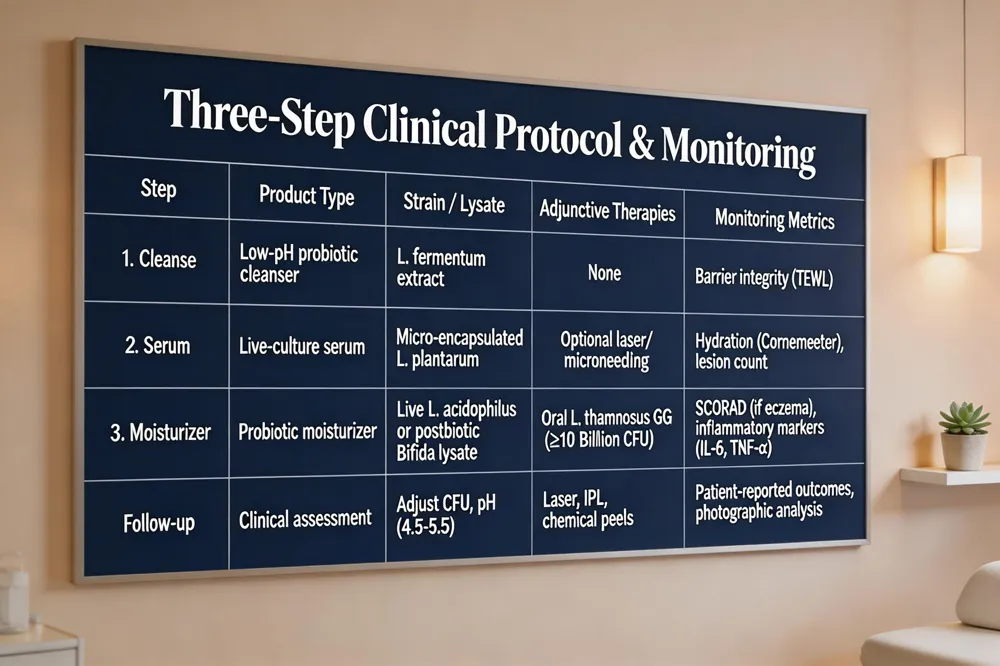 A premium aesthetic clinic in Troy, Michigan begins every probiotic‑based protocol with a personalized skin analysis that maps barrier integrity, microbiome balance, and specific concerns such as acne, rosacea, or photo‑aging. Using this data, clinicians select strain‑specific lysates or postbiotics—e.g., Lactobacillus rhamnosus lysate to up‑regulate claudin‑1 and occludin, or Bifidobacterium adolescentis filtrate to inhibit tyrosinase—combined with clinically proven actives (niacinamide, ceramide‑boosting peptides, antioxidant vitamins). The workflow integrates topical probiotic serums, moisturizers, and barrier‑repair creams into a three‑step routine (cleanse → serum → moisturizer) and aligns with oral probiotic supplementation that supports the gut‑skin axis reducing systemic inflammation and enhancing skin resilience. Regular follow‑up visits allow the dermatologist to adjust microbial counts, pH (ideal 4.5‑5.5), and adjunctive therapies (laser, microneedling) for optimal outcomes. This evidence‑backed, strain‑specific and regulatory‑compliant approach delivers measurable reductions in transepidermal water loss, improved hydration, and a calmer, more radiant complexion.
Addressing Specific Concerns: Eczema, Inflammation, Fungal Conditions
Targeted Probiotic Strategies by Condition
| Condition | Oral Probiotic Strains (dose) | Topical Probiotic / Lysate | Evidence Summary |
|---|---|---|---|
| Eczema (Atopic dermatitis) | L. rhamnosus GG, B. lactis, L. plantarum (10‑20 Billion CFU/day) | L. lactis lysate | Consistent reduction in SCORAD scores after 8‑12 weeks; modest benefit over standard moisturizers |
| General Inflammation | L. rhamnosus GG, L. plantarum WCFS1, B. longum BB536, L. reuteri DSM 17938 (≥10 Billion CFU) | B. longum lysate, L. plantarum lysate | ↓ IL‑1β, IL‑6, TNF‑α; improved barrier proteins (claudin‑1, occludin) |
| Seborrheic Dermatitis (Fungal) | L. crispatus, L. paracasei (≥10 Billion CFU) | Lactic acid from L. rhamnosus / L. plantarum | Pilot data show ↓ Malassezia abundance; larger trials needed |
| Acne | L. rhamnosus GG (oral) | L. plantarum serum, B. longum lysate pads | ↓ lesion count, TEWL; enhanced ceramide synthesis |
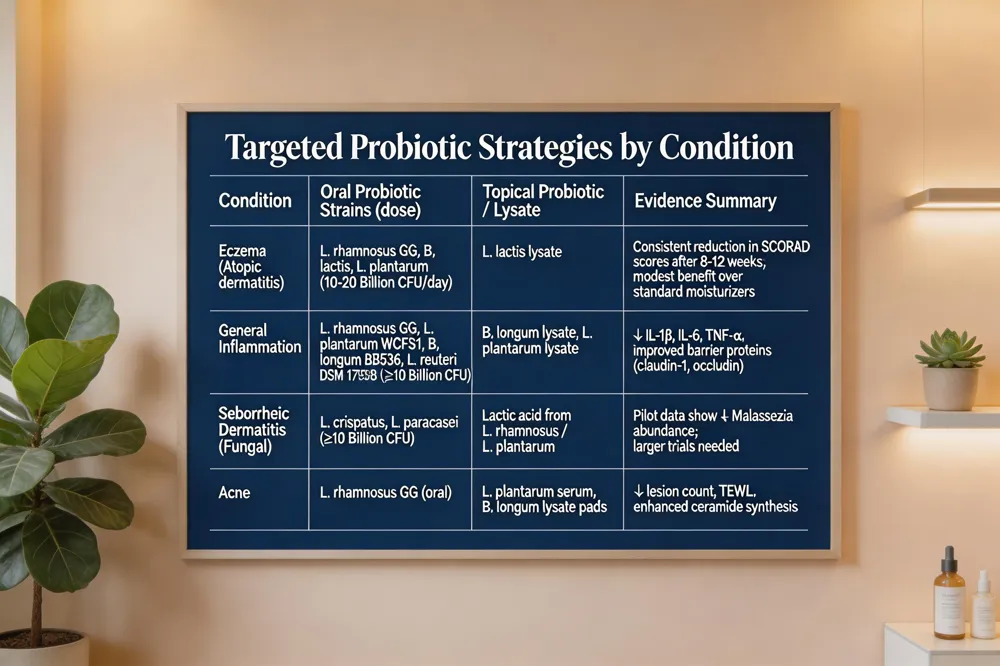 Atopic dermatitis and other inflammatory skin disorders benefit from a gut‑skin axis approach, but the evidence for topical probiotics remains preliminary. Clinical trials show that oral strains such as Lactobacillus rhamnosus GG, Bifidobacterium lactis, and Lactobacillus plantarum (10‑20 billion CFU daily) consistently reduce eczema flare‑ups and improve barrier proteins (claudin‑1, occludin, filaggrin) after 8‑12 weeks. Topical probiotic creams, including Lactobacillus lactis lysates, have demonstrated modest reductions in SCORAD scores in short‑term studies, yet meta‑analyses report mixed significance and no clear advantage over standard moisturizers at four weeks. For seborrheic dermatitis, early pilot data suggest that Lactobacillus crispatus or Lacticaseibacillus paracasei formulations lower Malassezia abundance and improve symptom scores, but larger trials are needed. Probiotic metabolites—including lactic acid from Lactobacillus rhamnosus, L. plantarum, and Saccharomyces boulardii—can inhibit Malassezia biofilm formation, offering a non‑steroidal adjunct. At our Troy, Michigan clinic we integrate evidence‑based oral probiotics with personalized skincare, while prioritizing proven prescription therapies for acute inflammation and fungal overgrowth.
Future Directions and Emerging Technologies
Emerging Innovations in Probiotic Skincare
| Innovation | Description | Benefits | Current Status |
|---|---|---|---|
| Microencapsulated Microspheres | Alginate‑based microspheres encasing live L. casei | Protects from preservatives, heat, UV; maintains >6 log CFU g⁻¹ after 120 days | Early‑stage commercial products, FDA‑compliant |
| Synbiotic Formulations | Combination of probiotic strains with prebiotic fibers (inulin, fructooligosaccharides) | Sustains on‑skin microbial activity, enhances efficacy | Being adopted in premium serums & creams |
| Live‑Probiotic Delivery Systems | Freeze‑drying + cationic oil phases, strain‑specific stabilizers | Improves viability, enables higher CFU loads within regulatory limits | R&D in academic‑industry collaborations |
| Postbiotic‑Only Alternatives | Use of fermented lysates, metabolites, SCFAs | Stable, no viability concerns, retains bioactivity | Widely used in current market |
| Clinical Microbiome Monitoring | Non‑invasive skin microbiome sequencing to tailor probiotic concentration | Personalized, dynamic regimens; real‑time adjustments | Pilot studies in aesthetic clinics (e.g., Troy, MI) |
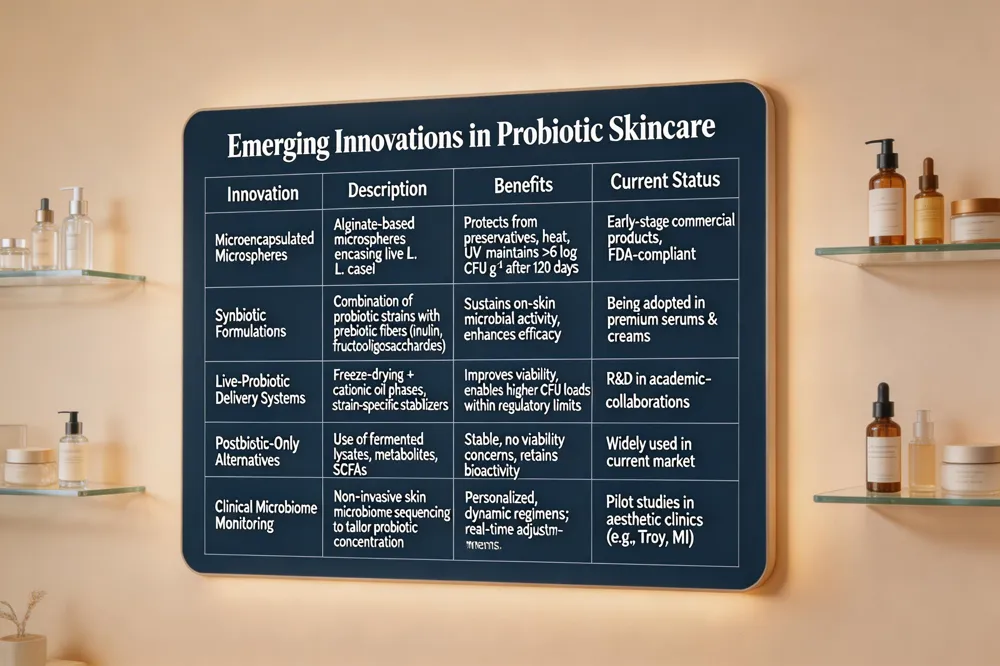 The next wave of probiotic skincare hinges on three inter‑related innovations: microencapsulation, live‑probiotic delivery, and synbiotic formulations.
Probiotic‑loaded microspheres for cosmetic applications – Alginate‑based microspheres encapsulate live Lactobacillus casei cells, shielding them from preservatives, heat, and UV light. Studies show that such microencapsulation maintains >6 log CFU g⁻¹ after 120 days of storage, enabling the inclusion of viable microbes in creams and serums without violating FDA microbial‑load limits.
Microbiome‑friendly formulation trends – Freeze‑drying, cationic oil phases paired with anionic thickeners, and strain‑specific stabilizers are emerging to preserve viability. Synbiotic approaches combine probiotic strains with prebiotic fibers (e.g., inulin) that feed the microbes on‑skin , while postbiotic alternatives provide the same bioactive metabolites without live‑cell stability concerns.
Probiotic integration in clinical practice – Premium aesthetic clinics can adopt clinically validated strains (e.g., Lactobacillus rhamnosus, Bifidobacterium longum) in serums and moisturizers used adjunctively after microneedling, laser resurfacing, or chemical peels. Regular microbiome assessments guide adjustments in probiotic concentration, creating a personalized, dynamic regimen that supports barrier repair, reduces post‑procedure erythema, and enhances long‑term skin health.
Putting It All Together for Radiant, Healthy Skin
Scientific evidence shows that specific probiotic strains—such as Lactobacillus plantarum HY7714, Bifidobacterium longum lysate, and Lactobacillus rhamnosus—up‑regulate tight‑junction proteins, boost ceramide synthesis, and inhibit matrix‑metalloproteinases, directly improving barrier function and reducing wrinkle depth. In a clinical setting, these strains are selected based on rigorous phenotypic characterization, viable CFU counts, and documented efficacy, ensuring the product meets the three core probiotic criteria. Personalized protocols begin with a skin‑type assessment, followed by a synbiotic regimen that pairs a strain‑specific serum (e.g., Lactobacillus ferment extract) with prebiotic sugars and postbiotic metabolites to maintain an optimal pH of 4.5–5.5. Long‑term skin health is supported by continuous modulation of the gut‑skin axis, regular reinforcement of the acid mantle, and periodic re‑evaluation of microbial load, allowing the regimen to adapt to seasonal changes and procedural recovery while maintaining safety within FDA cosmetic limits.