Introducing Long‑Term RF Benefits
Radiofrequency (RF) skin tightening delivers controlled electromagnetic energy deep into the dermis, where it heats tissue to 50‑75 °C. This thermal stimulus triggers immediate collagen contraction and initiates a cascade of neocollagenesis that continues for months after the final session. Modern monopolar and fractional RF devices are chromophore‑independent, allowing uniform three‑dimensional heating across all Fitzpatrick skin types, and they can be calibrated to target specific depths while sparing the epidermis.
Patients turn to RF for durable tightening because age‑related collagen loss, solar elastosis, and decreased dermal elasticity lead to visible sagging, fine lines, and loss of facial contour. Unlike surgical lifts, RF offers a non‑invasive “mini‑lift” with minimal downtime, yet it can achieve 35‑40 % skin‑tightening improvement at treatment completion that rises to 70‑75 % after three months of continued remodeling. Wrinkle reduction follows a similar trajectory, reaching 90‑95 % improvement at the three‑month follow‑up. These outcomes are supported by histologic data showing significant increases in type I and III collagen, newly synthesized collagen, and epidermal thickening, together with a reduction in solar elastosis.
This article will explore the science behind RF‑induced collagen remodeling, discuss the clinical evidence for long‑term efficacy (up to 1‑3 years with proper maintenance), and outline practical considerations for optimal results—including treatment frequency, after‑care, and lifestyle factors that sustain collagen synthesis. By understanding the mechanisms and realistic expectations, readers can make informed decisions about incorporating RF skin tightening into their personalized anti‑aging regimen.
Mechanism of Action and Immediate Effects
 Radiofrequency (RF) skin tightening works by delivering controlled electromagnetic energy that heats the deep dermis. Monopolar RF uses a single active electrode and a grounded plate, producing a uniform, three‑dimensional heat field that penetrates 3‑5 mm and causes immediate collagen fiber contraction. Bipolar RF, in contrast, employs two adjacent electrodes that confine the heat to a shallower, more focused zone, which can be useful for finer texture work but delivers less deep tightening. The rapid temperature rise (50‑75 °C) denatures collagen, resulting in an instant lift and a warm‑massage sensation during the session. Within hours to days, patients may notice mild erythema, swelling, tingling or a transient crusting—these short‑term side‑effects typically resolve within 24‑48 hours and are considered normal. Rarely, superficial burns or hyperpigmentation occur, especially if settings are too aggressive. Overall, RF does not cause sagging; instead, it stimulates neocollagenesis and elastin remodeling that progressively firm the skin over weeks to months. Before‑and‑after observations show tighter, smoother skin with reduced fine lines and a lifted contour, while post‑procedure care (sunscreen, hydration, antioxidants) helps sustain the results. Proper patient selection and an experienced, FDA‑cleared provider minimize risks and ensure optimal outcomes.
Clinical Evidence of Long‑Term Collagen Remodeling
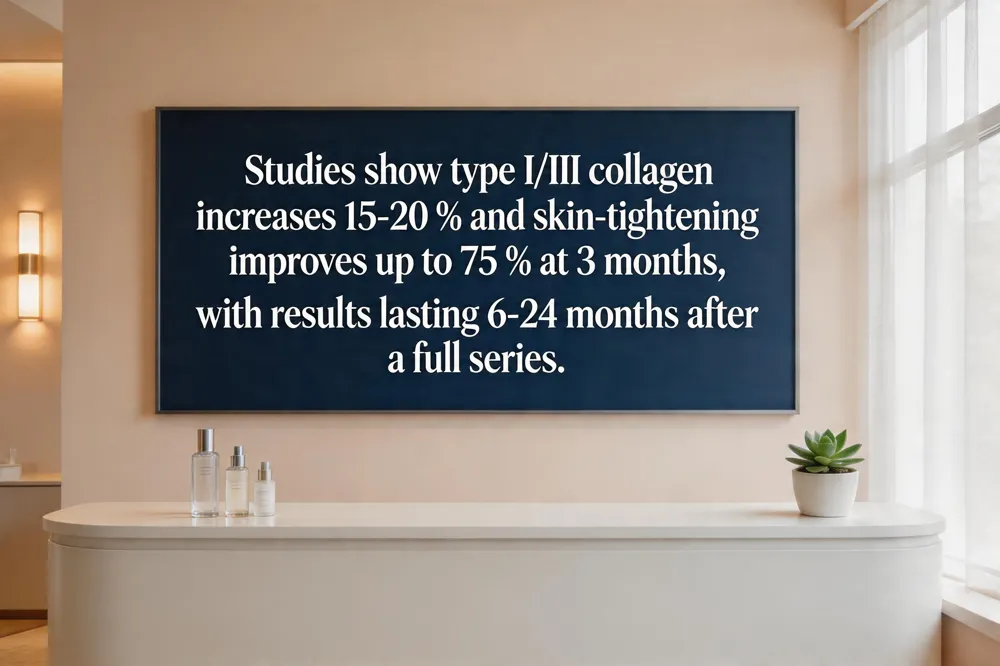 Histologic data on collagen type I/III – Monopolar RF delivers uniform dermal heat causing immediate collagen contraction. In a six‑woman study (ages 47‑62, Fitzpatrick III‑IV) total type I collagen rose from 65.8 % to 81.2 % and type III from 60.9 % to 73.6 % three months after treatment (P ≤ .001). Newly synthesized collagen increased from 15.3 % to 26.9 %, indicating ongoing remodeling.
Duration of tightening effects – Clinical assessments showed 35‑40 % skin‑tightening improvement at treatment end, which climbed to 70‑75 % three months later. Wrinkle reduction reached 90‑95 % at the same follow‑up. Collagen‑induced firmness can persist 6‑12 months after a single session and 12‑24 months after a full series of 2‑6 treatments, especially with proper after‑care.
Sustained results across body zones – RF benefits extend beyond the face to neck, abdomen, and other areas. Studies report continued firmness for up to six months on the neck and 12‑24 months on the stomach after 6‑12 sessions, with maintenance every 12‑18 months preserving outcomes.
How long does RF skin tightening last on face? – Results typically last 6‑12 months, with gradual improvement up to six months post‑treatment; yearly maintenance can extend firmness beyond a year.
RF skin tightening results over years neck – Collagen remodeling yields a smoother, lifted neck that can remain youthful for several years when combined with regular maintenance.
Best long‑term benefits of RF skin tightening sustained tightening over years – Ongoing collagen and elastin synthesis provides lasting firmness, reduced fine lines, and a natural lift without downtime, often persisting 1‑3 years with periodic touch‑ups.
How long does RF skin tightening last before and after? – Immediate tightening is visible right after treatment; maximal remodeling appears at 4‑6 weeks, and effects can endure 6‑12 months after a full treatment course.
RF skin tightening results over years stomach – A 6‑12‑session protocol yields a firm abdomen that stays stable for 12‑24 months; annual maintenance sustains the lift.
Does radio frequency skin tightening work long term? – Yes—clinical data show durable collagen remodeling and skin tightening lasting 12‑24 months when followed by proper skincare and periodic maintenance.
Treatment Protocols, Session Count, and Cost Considerations
Typical Number of Sessions and Spacing
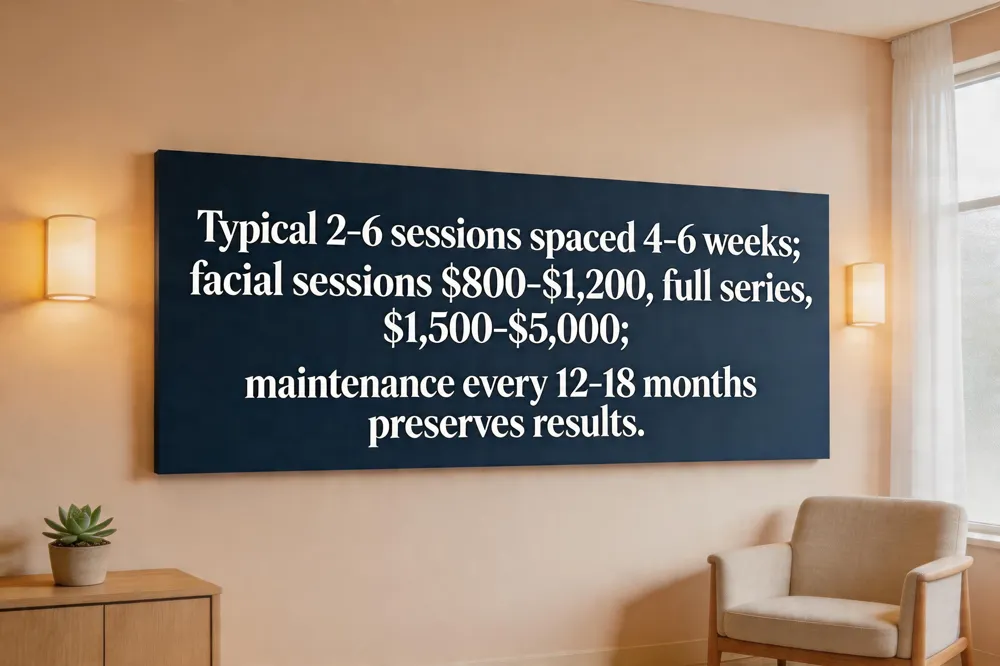
Most clinicians recommend 2–6 RF sessions spaced 4–6 weeks apart to stimulate durable collagen remodeling. A common protocol for facial rejuvenation is Six RF sessions over three months, which yields measurable skin‑tightening that continues to improve for 3–6 months after the final session. Body areas often require 3–5 sessions with similar spacing to achieve optimal firmness.
RF Treatment for Face Cost
At a Troy, Michigan clinic, a facial RF session generally ranges from $800–$1,200, depending on device (e.g., Morpheus8, Scarlet RF) and treatment area size. National averages sit near $875 per session, and many providers bundle 3–4 treatments at a discounted rate. A complimentary consultation provides a personalized quote based on skin concerns and goals.
RF Skin Tightening Cost (Face, Neck, Body)
Single‑area facial or neck treatments start at $300–$800. Larger zones such as abdomen, thighs, or full‑body contouring cost $1,200–$2,500 per visit. A full series of 3–5 sessions typically totals $1,500–$5,000. Financing options and package discounts are common in the Troy market.
RF Skin Tightening vs. Other Treatments Cost
RF sessions ($300–$800) are generally less expensive than Ultherapy or Sofwave ($600–$1,200) and far cheaper than laser resurfacing ($1,000–$2,500) or surgical facelifts ($8,000–$12,000). RF offers a cost‑effective middle ground: deep‑tissue collagen stimulation without the higher price tag of surgery or some high‑tech energy devices.
Is RF Really Worth It?
Clinical data show 40‑95% wrinkle reduction and 70‑75% skin‑tightening three months post‑treatment, with ongoing collagen synthesis for up to a year. When performed by a skilled, FDA‑cleared provider, RF delivers a natural‑looking, long‑term improvement that justifies its investment.
RF vs. Microneedling and Other Modalities
RF provides immediate dermal contraction and deeper heat penetration, resulting in faster tightening than traditional microneedling. Compared with laser or ultrasound, RF is color‑blind, safe for all Fitzpatrick types, and offers adjustable depth for precise results with minimal downtime.
Safety Profile, Adverse Events, and Patient Selection
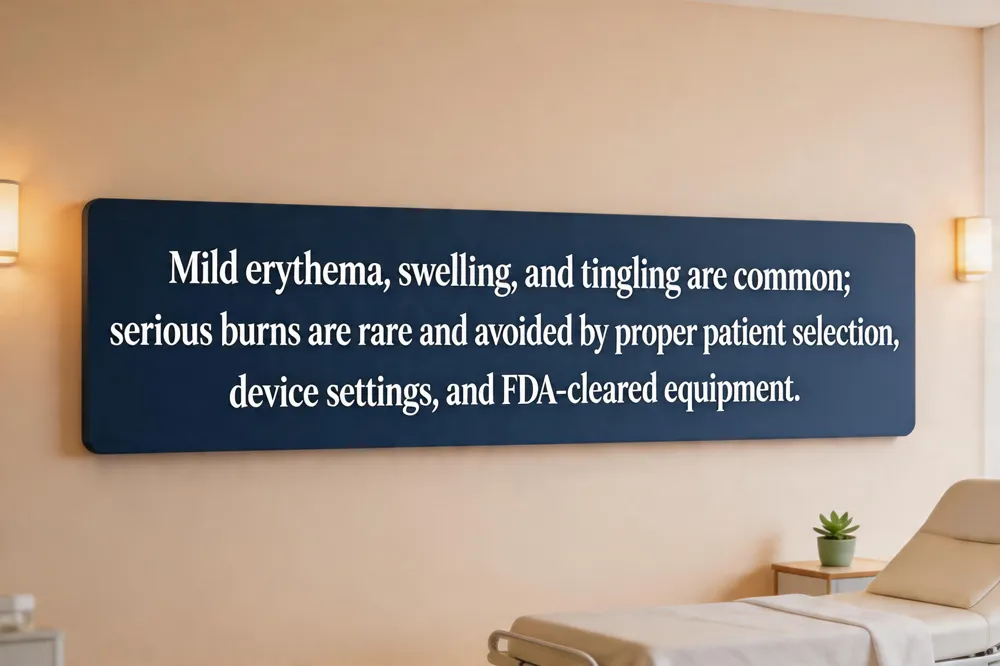 Radiofrequency (RF) skin tightening is generally safe, but complications arise when heat is applied excessively or to unsuitable patients. The most common adverse events are mild erythema, transient swelling, and a temporary warm sensation that resolve within 24 hours. More serious issues—burns, blistering, hyper‑ or hypopigmentation, loss of facial volume, or scarring—occur when device settings are too high, the probe is held too long, or the practitioner lacks proper training. To avoid these outcomes, providers must perform a thorough pre‑treatment consultation, adjust energy levels to the patient’s Fitzpatrick skin type, and use FDA‑cleared equipment with real‑time temperature monitoring.
Contraindications include active skin infections, severe skin laxity requiring surgical lift, implanted electronic devices, and certain medical conditions (e.g., uncontrolled diabetes). Darker skin types (Fitzpatrick IV‑VI) are not at higher risk of burns because RF energy bypasses melanin, but practitioners should still tailor parameters to minimize pigmentary changes.
If unexpected results appear—persistent redness, uneven texture, or volume loss—patients should contact a qualified dermatologist promptly. Early intervention may involve topical resurfacing, collagen‑stimulating serums, or corrective fillers. Regular maintenance sessions (every 12‑18 months) and diligent post‑care (broad‑spectrum sunscreen, hydration, antioxidant‑rich diet) help sustain benefits and reduce the likelihood of recur.
Body‑Specific RF Applications: Face, Neck, Tummy & Stomach
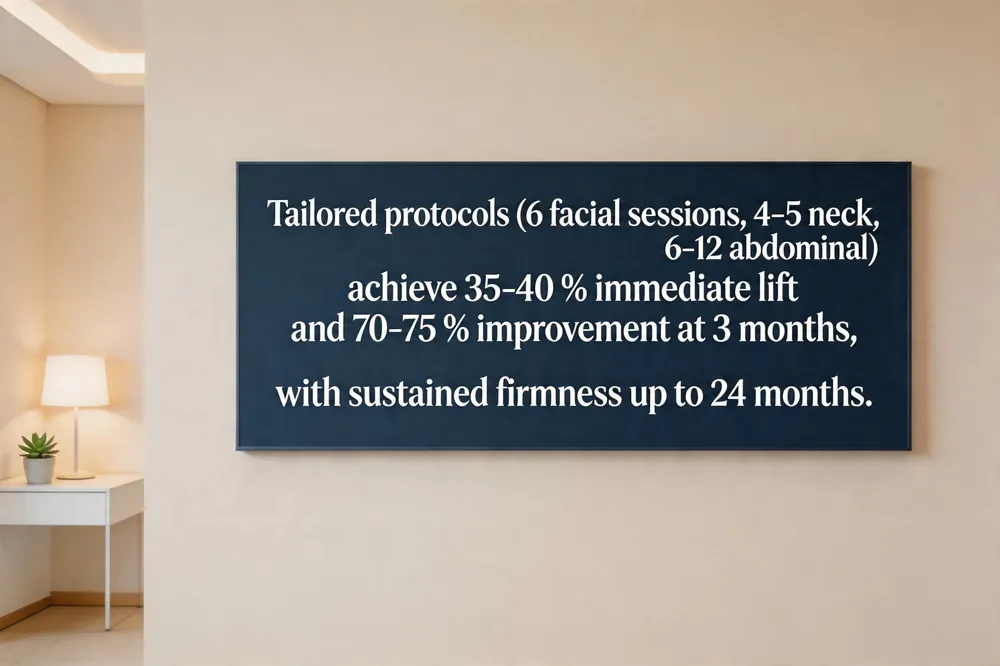 Tailored protocols for each anatomical zone optimize energy delivery while respecting skin thickness and underlying structures. For the face, a series of six monopolar RF sessions (30‑45 min each) spaced two weeks apart targets the dermis at 3‑4 mm depth, producing immediate collagen contraction and progressive remodeling over 3‑6 months. Neck treatments use a slightly deeper setting (4‑5 mm) with 4‑5 sessions to address vertical creases and laxity. Abdominal (tummy) protocols employ high‑power, deep‑acting RF (up to 6 mm) for 6‑12 sessions, focusing on the dermal‑subdermal junction to improve skin firmness and reduce solar elastosis.
Results timeline per area – Clinical data show skin‑tightening gains of 35‑40 % at treatment end, rising to 70‑75 % after three months; wrinkle reduction improves from 40‑45 % to 90‑95 % in the same period. Face and neck typically exhibit visible lift within 2‑4 weeks, with maximal collagen maturation at 3‑6 months. Tummy skin shows a subtle lift after a single session, with continued firmness for up to 12‑24 months when a full 6‑12‑session course is completed.
Combination with other modalities – RF can be safely paired with microneedling, PRP, or LED phototherapy to amplify neocollagenesis. For example, RF microneedling (e.g., Profound RF) adds controlled micro‑injuries, enhancing collagen turnover and extending durability.
Frequently asked questions –
- RF skin tightening before and after: Before treatment, skin appears lax, textured, with fine lines; after a full series, it becomes firmer, smoother, and more lifted, with gradual improvement over weeks as new collagen matures.
- Before and after face: Early weeks show subtle firmness; the most noticeable lift appears at 3‑6 months, delivering a natural‑looking contour with minimal downtime.
- Before and after tummy: One session yields a subtle lift; continued remodeling over weeks produces a flatter, toned abdomen without surgery.
- Results over years – stomach: Initial gains appear within 4‑6 weeks; a 6‑12‑session regimen can maintain firmness for 12‑24 months, with annual touch‑ups preserving results.
- Results over years – neck: Early improvement within weeks, peak tightening at 2‑6 months, and sustained youthful contour for years with occasional maintenance sessions.
Future Outlook, Maintenance, and At‑Home Solutions
 Maintaining the benefits of radiofrequency (RF) skin tightening requires a structured follow‑up plan. Most clinicians recommend a series of 2‑6 sessions spaced 4‑6 weeks apart, followed by maintenance treatments every 12‑18 months to sustain collagen remodeling that can continue for 3‑6 months after the final session. Longevity improves with diligent sun protection, antioxidant‑rich skincare, and a healthy lifestyle, allowing results to persist 12‑24 months in most patients.
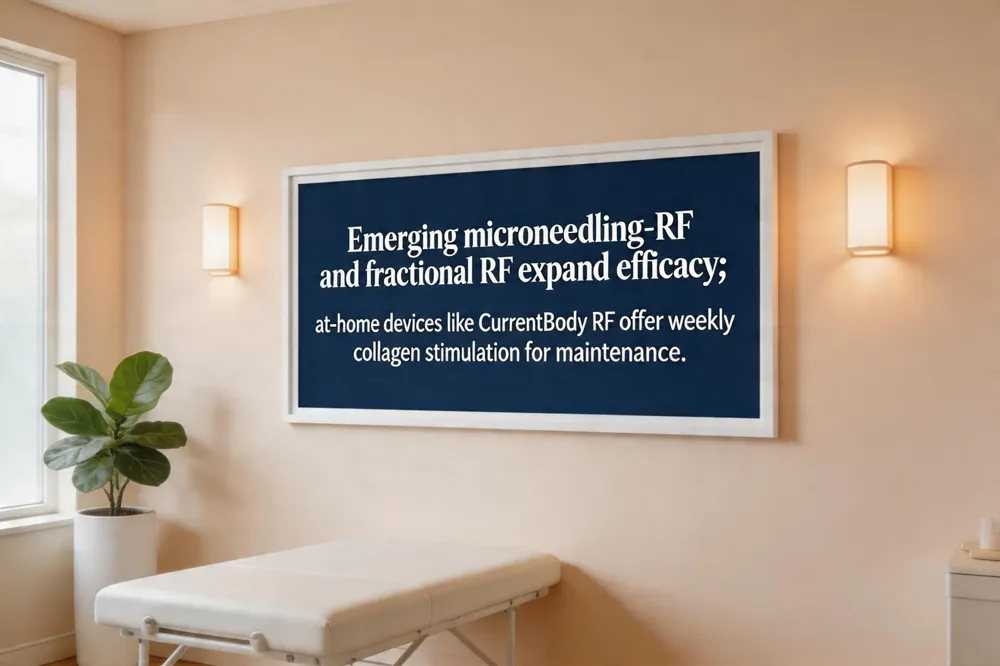
Emerging RF technologies are expanding the procedural toolkit. Microneedling‑RF combos (e.g., Potenza, Morpheus8) create deeper, more uniform heating and micro‑injuries, accelerating neocollagenesis. Fractional RF devices, such as PiXel8‑RF, merge RF with LED or high‑power phototherapy to boost elastin synthesis and reduce solar elastosis. Combination protocols—RF with PRP, injectable fillers, or ultrasound—are gaining traction for synergistic tightening and volume restoration.
At‑home RF options now offer clinically‑validated energy levels. The CurrentBody RF Radio Frequency Skin‑Tightening Device, FDA‑cleared and equipped with a temperature sensor, is widely regarded as the best home system, delivering 104 °F (40 °C) heat for collagen stimulation in brief 5‑minute weekly sessions. Alternatives such as Silk’n Titan (RF + LED + EMS) and Medicube RF Ultra‑Tune provide budget‑friendly choices.
FAQs
- Does RF skin tightening work long term? Yes; with proper after‑care, results typically last 12‑24 months, driven by immediate collagen contraction and ongoing remodeling for months.
- Best at‑home RF device? CurrentBody RF is the top recommendation for safety and efficacy.
- HIFU vs RF for fat loss? RF cavitation heats subcutaneous fat, rupturing adipocytes for visible contouring, while HIFU mainly tightens connective tissue with minimal fat reduction.
- HIFU vs RF for double chin? HIFU excels at deep SMAS lifting for loose‑skin chins; RF improves surface firmness and texture, ideal after fat reduction.
- Why do some plastic surgeons distrust RF microneedling? They worry that delivering heat deep into the dermis can inadvertently damage nerves, vessels, or fat, posing safety concerns when not expertly performed.
Sustained Tightening – A Viable Long‑Term Strategy
Radio‑frequency (RF) skin‑tightening delivers controlled heat to the dermis, triggering immediate collagen contraction and a cascade of neocollagenesis that continues for months after the final session. Clinical data show skin‑tightening improvements rise from 35‑40 % at treatment end to 70‑75 % three months later, while wrinkle reduction can reach 90‑95 % in the same period. Histologic analyses confirm significant gains in type I and III collagen, increased epidermal thickness, and a reduction in solar elastosis—effects that persist for at least six months to a year, and with proper after‑care, for up to three years.
Because RF response varies by age, skin type, and baseline laxity, a personalized protocol is essential. Most practitioners recommend 2‑6 sessions spaced several weeks apart, tailoring energy depth, temperature, and number of passes to each patient’s Fitzpatrick classification and Glogau grade. Post‑procedure regimens—broad‑spectrum SPF, antioxidant‑rich nutrition, and hydration—further prolong collagen remodeling and mitigate lifestyle‑related degradation.
Ready to experience a non‑surgical, long‑lasting lift? Schedule a personalized consultation at Iconic Laser, where board‑certified professionals design a customized RF plan that aligns with your aesthetic goals and skin health needs.