Understanding Injectable Longevity
Neuromodulators (Botox, Dysport, Xeomin) temporarily block acetylcholine, smoothing dynamic wrinkles for 3‑4 months; dermal fillers (HA, calcium hydroxylapatite, PLLA, PMMA) restore volume for 6 months to several years depending on composition and depth. Duration is shaped by biological factors—muscle activity, metabolic rate, age, and skin quality—as well as lifestyle influences such as UV exposure, smoking, alcohol, hydration, and stress. Highly mobile areas (forehead, periorbital, lips) break down faster than static zones (cheeks, tear‑troughs). Post‑treatment care—avoiding massage, vigorous exercise, heat, and sun for the first 24‑48 hours, maintaining hydration, using hyaluronic‑acid moisturizers, antioxidants, and broad‑spectrum SPF, and following a personalized maintenance schedule (Botox every 3‑4 months, fillers every 6‑12 months)—optimizes product retention and supports skin health. Tailoring after‑care to each patient’s anatomy, product choice, and lifestyle maximizes longevity, safety, and overall patient satisfaction.
Baseline Duration and Sourcesability
 Injectable neuromodulators—Botox, Dysport, and Xeomin—typically relax targeted muscles for 3–4 months, although newer formulations such as Daxxify can extend this window to 6–9 months in some patients. Hyaluronic‑acid dermal fillers are advertised for a 6–12 month lifespan, yet high‑resolution ultrasound studies demonstrate that residual gel can persist for 24–27 months, especially with densely cross‑linked products placed deep on bone (e.g., cheeks). Calcium‑hydroxylapatite (Radiesse) and biostimulatory agents (Sculptra, PLLA) often sustain visible results for 12–18 months and up to 2 years, respectively, by stimulating new collagen. Factors that shape these timelines include the injection site (high‑movement areas such as the lips or periorbital region break down faster), product type and cross‑link density, total dose and placement depth, and the individual’s metabolic rate, age, and lifestyle (smoking, UV exposure, hydration). Consequently, retreatment should be timed to the patient’s observed fading rather than a rigid calendar, with regular follow‑up every 3‑4 months for neurotoxins and 6‑12 months for fillers to maintain optimal aesthetic outcomes.
Can Fillers Last Ten Years?
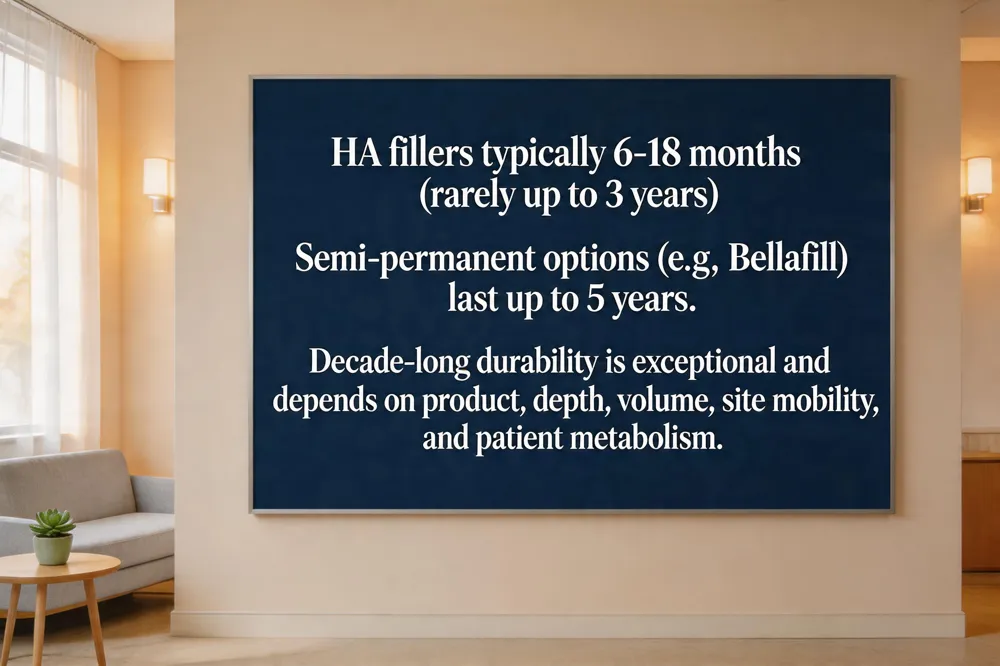 Hyaluronic‑acid (HA) fillers such as Juvéderm and Restylane typically persist 6‑18 months, with some high‑cross‑linked formulations extending to 2‑3 years in low‑movement areas. Semi‑permanent options like Bellafill (PMMA) are marketed for up to 5 years, while calcium‑hydroxylapatite fillers (Radiesse) usually last 12‑18 months. Rare clinical observations report residual HA filler beyond five years, and occasional anecdotal cases describe durability of up to a decade. These outliers depend on product composition, injection depth, volume, treated site mobility, and the patient’s metabolic rate. Because a true 10‑year effect is exceedingly uncommon, most patients require scheduled maintenance (every 6‑12 months for HA, yearly for semi‑permanent) to preserve desired aesthetics. Understanding the filler’s material, placement strategy, and personal lifestyle factors helps set realistic expectations and optimize longevity.
Optimizing Longevity: After‑Care and Lifestyle
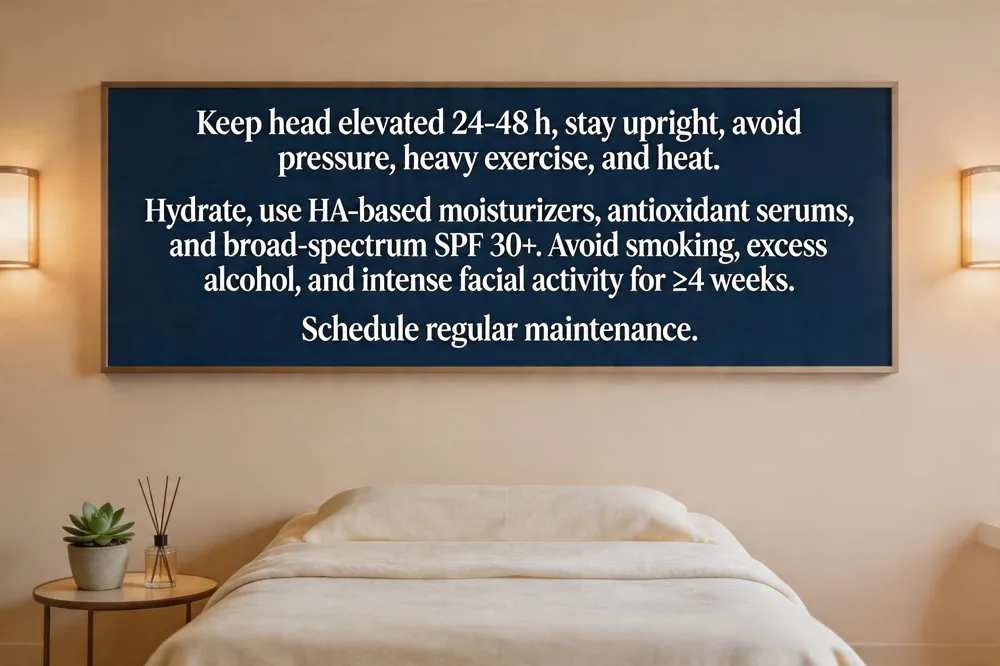 Immediate post‑procedure guidelines – For the first 24‑48 hours keep your head elevated and avoid bending over, heavy exercise, or any pressure on the treated areas. This reduces migration of neurotoxins and fillers and allows the product to set securely.
Hydration and antioxidant‑rich skincare – Drink ample water daily and use a hyaluronic‑acid‑based moisturizer or medical‑grade serum to support the filler’s water‑binding capacity. Incorporate topical antioxidants such as vitamin C, ferulic acid, or peptide‑rich formulas to protect against free‑radical damage and to preserve both Botox and filler results.
Sun protection, smoking/alcohol avoidance, and stress management – Apply a broad‑spectrum SPF 30+ sunscreen each morning and reapply throughout the day; UV exposure accelerates degradation of hyaluronic acid and collagen. Refrain from smoking, excessive alcohol and intense facial activity for at least four weeks. Manage stress with meditation, yoga, or adequate sleep, as cortisol can hasten skin aging and diminish injectable durability.
Answer to the key question – How to make injectables last longer? Follow your provider’s post‑treatment instructions and keep your head elevated for the first 24‑48 hours, avoiding pressure, heavy exercise, heat and excessive facial movements. Maintain optimal skin hydration by drinking plenty of water and using a hyaluronic‑acid‑rich moisturizer or medical‑grade serum daily. Apply a broad‑spectrum sunscreen each morning and reapply throughout the day to protect the filler from UV‑induced breakdown. Avoid smoking, excessive alcohol and any facial procedures (e.g., peels, microneedling) for at least four weeks after injection. Finally, choose a qualified, experienced injector and schedule regular maintenance appointments to keep results fresh and long‑lasting.
Factors Influencing Botox Outcomes
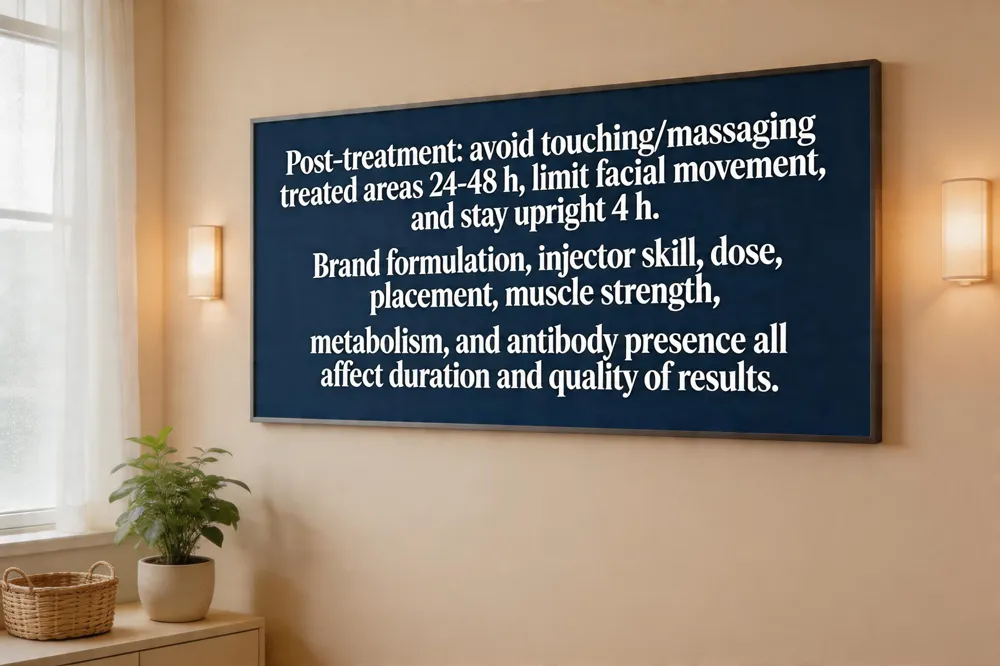 What can affect Botox results? Avoid touching, massaging, or applying pressure to treated areas for at least 24‑48 hours can cause the toxin to migrate, leading to uneven relaxation or unintended muscle weakness. Excessive facial movement—such as vigorous smiling, frowning, or squinting—immediately after injection may also disrupt the settling of the product. Exposure to extreme heat (saunas, hot tubs, or intense sunlight) and activities that increase blood flow, like intense exercise or alcohol consumption, can accelerate diffusion and reduce efficacy. The skill of the injector, the dose used, and the precise placement of each injection are critical determinants of how well the results hold. Post‑treatment aftercare for Botox and dermal fillers includes avoiding touching or massaging treated areas for at least 24 hours and staying upright for four hours to prevent product migration helps ensure the intended outcome.
Why does some Botox work better than others? Each brand—Botox, Dysport, Xeomin, Jeuveau, Daxxify—has a slightly different formulation, diffusion pattern, and duration of effect. The injector’s expertise is equally critical; precise knowledge of facial anatomy, correct injection depth, and accurate dosing prevent under‑ or over‑treatment and ensure the toxin reaches the intended muscles. Individual factors such as muscle strength, skin thickness, metabolism, and antibody presence also influence performance.
What happens after 20 years of Botox? Long‑term users often notice smoother skin and mild muscle atrophy, which can reduce the amount of product needed over time. However, regular treatments remain necessary to maintain the desired aesthetic.
Risks, Materials, and the Longest‑Lasting Options
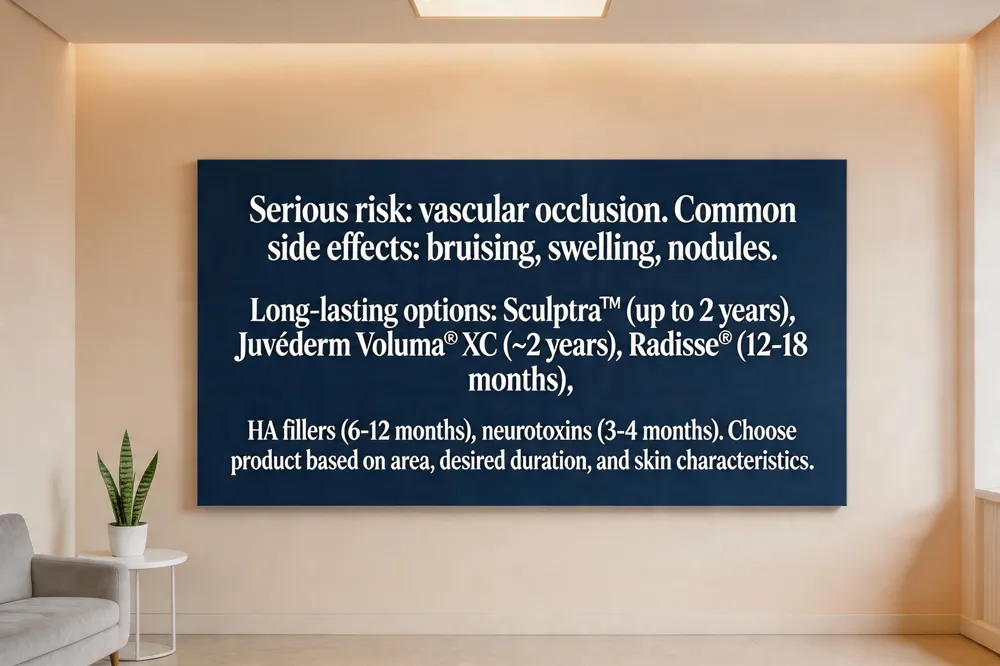 Injectable treatments are safe when performed by a qualified clinician, but they carry potential complications. The most serious risk is vascular occlusion, which can cause tissue necrosis, visual loss, or stroke if filler enters a blood vessel. More common side effects include bruising, swelling, tenderness, allergic reactions, infection, and the formation of nodules or granulomas. Over‑injection or improper placement may also lead to filler migration or an unnatural “pillow‑face” appearance that requires correction. Selecting an experienced injector with thorough facial‑anatomy knowledge and using FDA‑approved products markedly reduces these risks and ensures prompt management if complications arise.
Regarding durability, Sculptra™ (poly‑L‑lactic acid) is the longest‑lasting injectable, with results lasting up to two years as it stimulates new collagen. Juvéderm Voluma® XC approaches the two‑year mark for cheek augmentation. Radiesse® typically endures 12‑18 months, while HA fillers such as Restylane range 6‑12 months depending on formulation and injection depth. Neuromodulators (Botox®, Dysport®, Xeomin®) generally last 3‑4 months. Choosing the optimal product depends on the treatment area, desired duration, and individual skin characteristics, which a board‑certified provider can tailor to each patient’s goals.
Putting Longevity Into Practice
Understanding why injectables last varies is the first step to extending their benefit. Key factors include product type, injection depth, facial movement, dosage, metabolism, UV exposure, smoking, alcohol and overall skin health. A personalized maintenance plan—scheduled touch‑ups every 3‑4 months for neuromodulators and every 6‑12 months for fillers—allows the clinician to adjust volume and placement before noticeable fading. In Troy, Michigan, a board‑certified dermatologist or plastic surgeon brings expertise in anatomy, product selection and advanced techniques such as micro‑cannula placement, ensuring optimal dosing and minimizing migration. This combination of science‑backed after‑care and expert injection maximizes longevity while preserving safety, a natural‑looking rejuvenation.