Introduction
Luxury aesthetic care in the United States blends a spa‑like environment with rigorous medical oversight. Over 14,000 licensed medical aesthetic clinics operate nationwide, and in Michigan alone, premium facilities such as those in Troy follow FDA‑cleared technologies (e.g., CoolSculpting®, Hydrafacial®, laser systems) under board‑certified physicians. Safety protocols are the cornerstone of this model: patients undergo detailed medical histories, allergy testing, and pre‑treatment screenings to identify contraindications. Clinics enforce sterile, single‑use needles, ISO‑certified sterilization, and real‑time monitoring of vital signs, while emergency equipment (e.g., crash carts, hyaluronidase) is readily available. State medical boards mandate continuous education and adherence to infection‑control standards, resulting in complication rates of less than 2 % for non‑invasive procedures. By combining cutting‑edge, FDA‑approved devices with personalized consultations and structured after‑care, luxury aesthetic practices deliver high‑satisfaction outcomes while maintaining the highest safety standards.
Market Leaders and Luxury Aesthetics Defined
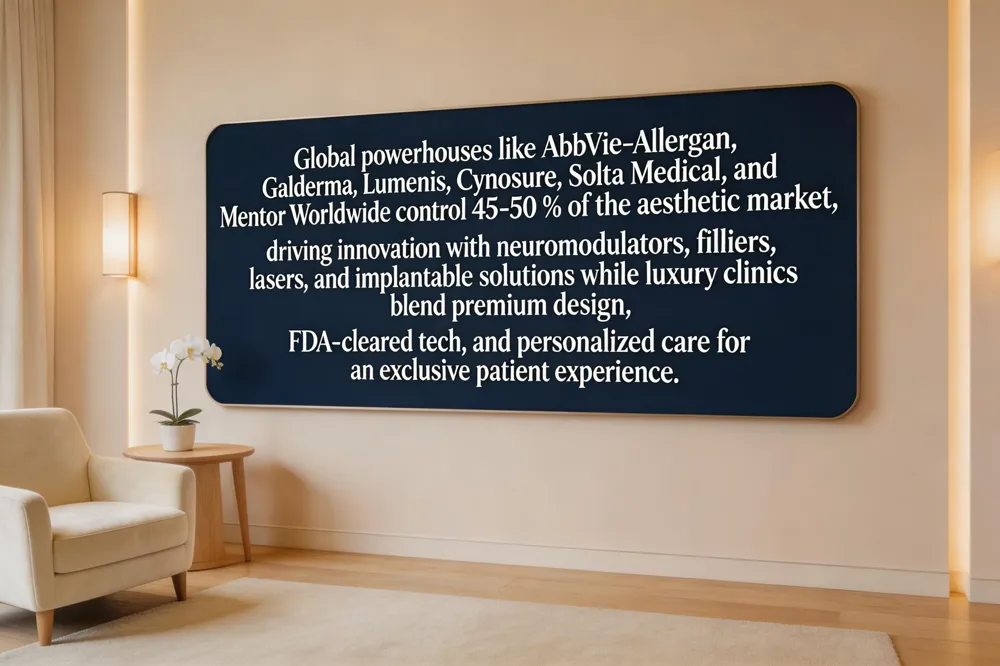 The medical‑aesthetics industry is dominated by a few global powerhouses that together generate roughly half of worldwide revenue. AbbVie’s Allergan segment leads with its extensive line of neuromodulators (Botox®) and hyaluronic‑acid fillers (Juvederm®). Galderma, Lumenis, Cynosure, Solta Medical and Mentor Worldwide complete the leadership group, each specializing in advanced laser systems, radio‑frequency devices, or implantable solutions. These brands account for about 45‑50 % of total market sales, drive product innovation, and maintain broad distribution networks that keep them at the forefront of the fast‑growing sector.
Luxury aesthetics are defined by a seamless blend of refined design, premium materials, and cutting‑edge technology. Clinics create an environment that feels both sophisticated and welcoming, using high‑quality furnishings, discreet lighting, and private treatment suites. Clinical excellence is ensured through board‑certified physicians, FDA‑cleared devices, and rigorous infection‑control protocols. Personalized care—through thorough consultations, customized treatment plans, and structured post‑procedure follow‑up—elevates the patient experience. The result is a premium setting where clinical outcomes are clinically superior while the ambience delivers a sense of exclusivity and comfort.
Core Services of a Premium Aesthetic Clinic
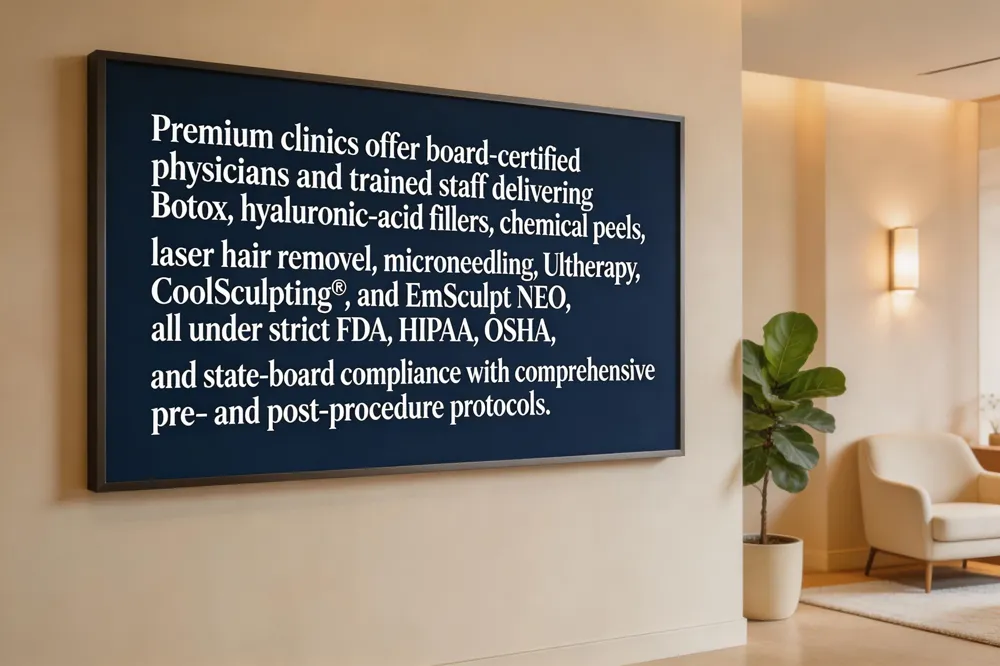 A premium aesthetic clinic is a medically regulated facility where board‑certified physicians, nurse practitioners, and trained aesthetic professionals deliver non‑surgical, minimally invasive cosmetic treatments. The clinic offers a broad menu of procedures—Botox and other neurotoxins, hyaluronic‑acid dermal fillers such as Juvéderm®, chemical peels, laser hair removal, microneedling, Ultherapy, and body‑contouring technologies like CoolSculpting® and EmSculpt NEO. Advanced devices are FDA‑cleared, and each treatment begins with a comprehensive medical history, skin analysis, and allergy testing to personalize care and identify contraindications. Regulatory compliance is rigorous: the FDA governs all injectable products and laser systems, state medical boards enforce physician licensing and continuing‑education requirements, and clinics follow HIPAA, OSHA, and infection‑control standards—including sterile, disposable needles, aseptic technique, and on‑site emergency equipment. Post‑procedure protocols include detailed after‑care instructions, scheduled follow‑ups, and 24‑hour support lines. By integrating evidence‑based technology, strict safety measures, and individualized treatment plans, premium aesthetic clinics achieve natural‑looking results while maintaining the highest standards of patient safety and comfort.
Safety First: The Safest Cosmetic Procedures
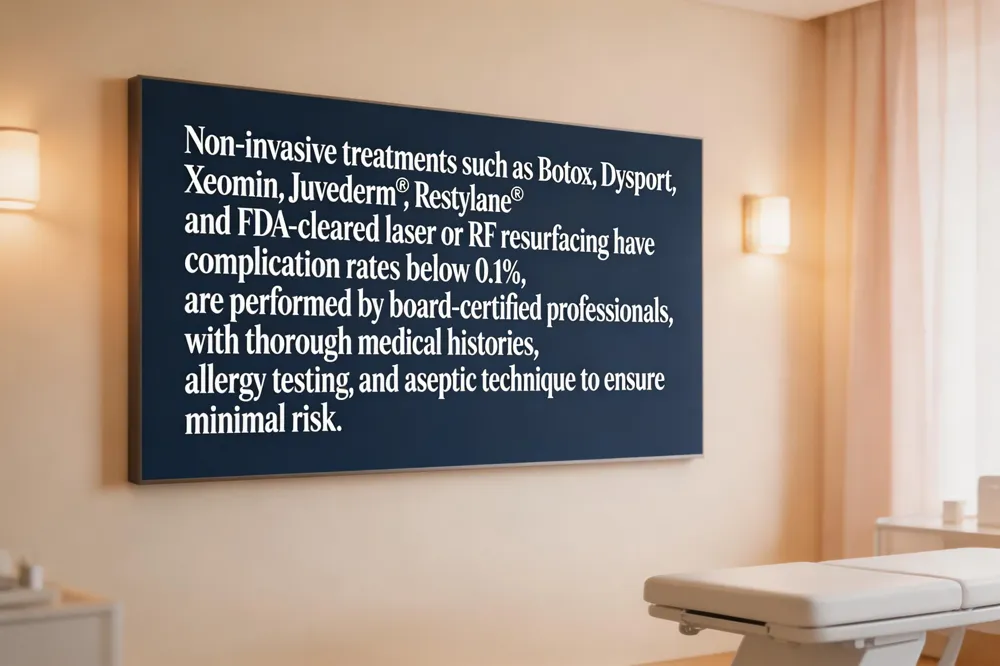 Non‑invasive aesthetic treatments have become the gold standard for patients who want effective results with minimal risk. Low‑risk options such as botulinum toxin type A injections (Botox®, Dysport®, Xeomin®), hyaluronic‑acid dermal fillers (e.g., Juvederm®, Restylane®), and FDA‑cleared laser or radio‑frequency resurfacing are supported by large clinical studies showing complication rates under 0.1 %. All of these products are FDA‑approved, meaning they have passed rigorous safety and efficacy testing before market clearance. Crucially, each procedure is performed under the direct supervision of a board‑certified physician, nurse practitioner, or physician assistant who has completed specialized aesthetic training. Pre‑treatment medical histories, allergy testing, and strict aseptic technique further reduce adverse events. Because they require only a brief office visit, no general anesthesia, and allow real‑time dosage adjustments, these minimally invasive treatments are regarded as the safest cosmetic procedures available today.
Path to Becoming an Aesthetic Specialist
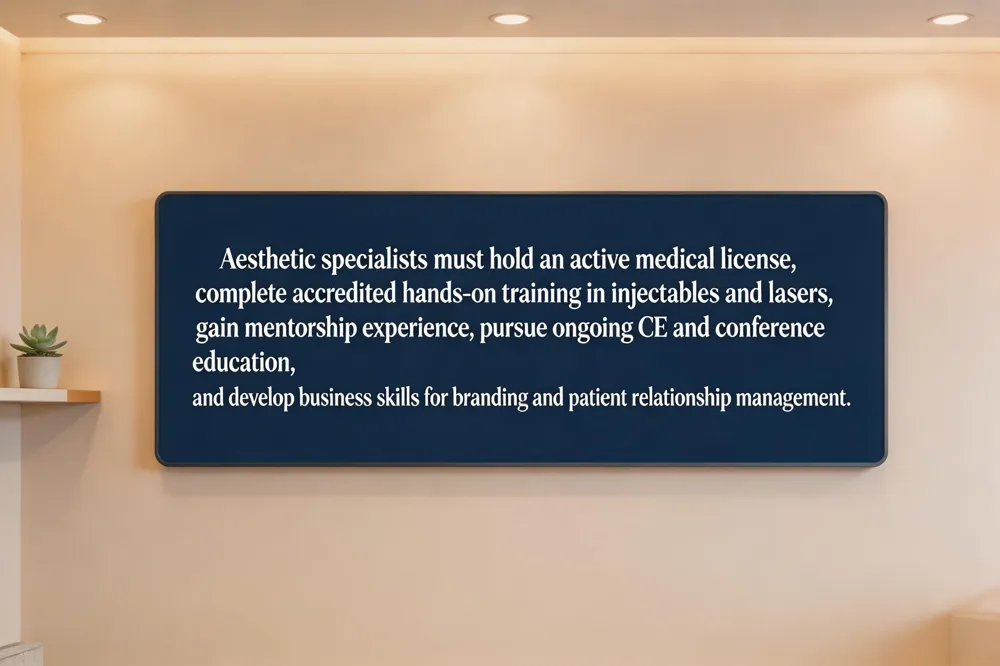 To become an aesthetic specialist in the United States, first secure an active medical license—typically as a physician, nurse practitioner, or physician assistant—and maintain it in good standing. Next, enroll in accredited aesthetic training programs that provide hands‑on certification in Botox, dermal fillers, laser therapies, and other minimally invasive procedures. Gain practical experience by working under a seasoned mentor in a reputable clinic, allowing you to refine your technique and build confidence with real patients. Stay current with continuing‑education courses, industry conferences, and regulatory updates to ensure safety, compliance, and mastery of emerging technologies. Finally, develop a solid business foundation, including branding, marketing, and patient‑relationship skills, so you can offer high‑quality, personalized care within a thriving aesthetic practice.
Patient Journey: From Consultation to Youthful Results
 One of the most sought‑after advances is the “undetectable facelift.” This minimally invasive approach restores lost volume, tightens deeper facial layers, and preserves natural anatomy using a combination of injectable fillers, energy‑based devices (e.g., radiofrequency or ultrasound), and thread‑lifting techniques. The result is subtle, natural‑looking lift without surgical scars or visible signs.
To look a decade younger without surgery, combine a dermatologist‑approved skincare regimen—broad‑spectrum SPF, retinoid serum, daily hydration—with in‑office procedures. Microneedling stimulates collagen, IPL photofacials fade age spots, and targeted injectables soften dynamic wrinkles and restore cheek and lip volume. Laser resurfacing or Ultherapy can further tighten texture and lift sagging skin. Consistent, personalized care from a qualified medical aesthetic clinic delivers refreshed, youthful results with minimal downtime.
Conclusion
In summary, premium aesthetic clinics across Troy, Michigan and the broader United States combine cutting‑edge, FDA‑cleared technologies with rigorous medical oversight, delivering results that rival surgical outcomes while maintaining a non‑invasive risk profile. Board‑certified physicians, thorough pre‑treatment screenings, sterile techniques, and emergency preparedness underpin a safety‑first culture that patients can trust. Looking ahead, luxury aesthetic care will continue to integrate AI‑driven facial analysis, personalized regenerative therapies, and next‑generation energy‑based devices, further enhancing precision and patient satisfaction. As these innovations mature, clinics will uphold the same stringent standards, ensuring that luxury and safety remain inseparable pillars of the aesthetic experience.