Understanding Post‑Treatment Inflammation in Sensitive Skin
After a laser, peel, microneedling or aesthetic treatment, the skin’s barrier is disrupted. The body responds with an inflammatory phase—redness, warmth, swelling and mild tenderness—that peaks within the first 24‑48 hours and then subsides as repair mechanisms engage. In people with sensitive skin (Fitzpatrick I‑III, rosacea, eczema or a compromised barrier) this response can be amplified, leading to prolonged erythema, heightened stinging and a risk of secondary irritation or infection. Post‑procedure care therefore aims to (1) calm the inflammatory cascade with cool compresses and fragrance‑free moisturizers containing hyaluronic acid or ceramides; (2) protect the barrier by avoiding harsh actives, hot water and UV exposure; and (3) support healing through hydration, antioxidant nutrition and, once the barrier is restored, SPF 30+ sunscreen.
Fundamentals of Sensitive Skin
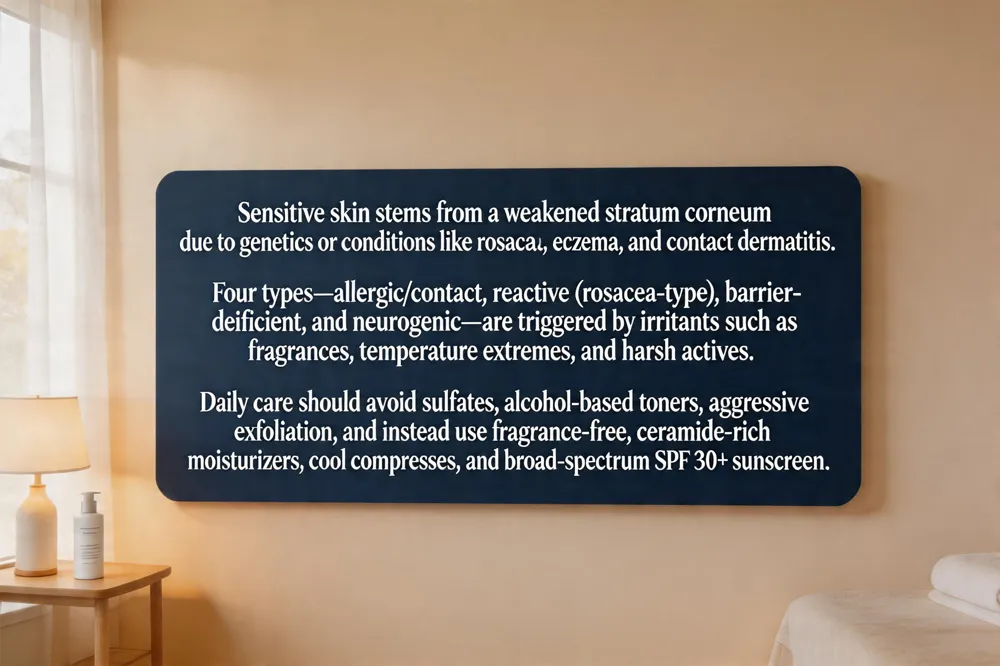 Sensitive skin arises when the stratum corneum is compromised—often due to genetic variants that weaken barrier proteins such as filaggrin—and can be exacerbated by conditions like rosacea, eczema, or allergic contact dermatitis. Typical signs include stinging or burning on product use, visible redness, itching, tightness, and flaky or dry patches, indicating a loss of moisture and barrier integrity. Four main classifications are recognized: (1) allergic/contact sensitivity, (2) reactive (rosacea‑type) sensitivity, (3) barrier‑deficient sensitivity, and (4) neurogenic sensitivity, each driven by distinct triggers ranging from fragrances to temperature extremes. Daily inflammation can be reduced by avoiding harsh soaps, sulfates, alcohol‑based toners, and aggressive exfoliants; using fragrance‑free moisturizers, ceramide‑rich moisturizers; applying cool compresses; and protecting with broad‑spectrum SPF 30+ sunscreen. For sensitive skin, the safest skincare routine starts with a gentle, pH‑balanced cleanser, followed by a soothing serum (niacinamide or centella asiatica) and a ceramide‑based moisturizer, finishing with mineral sunscreen. Products such as SkinCeuticals’ Phyto Corrective Gel and Triple‑Lipid‑Restore moisturizers are formulated to calm redness and reinforce the barrier, while their Vitamin C Serum 10 offers antioxidant protection with minimal irritation. Patch testing new items and steering clear of known irritants remain essential steps to maintain a calm, resilient complexion.
Preparing the Skin Before Procedures
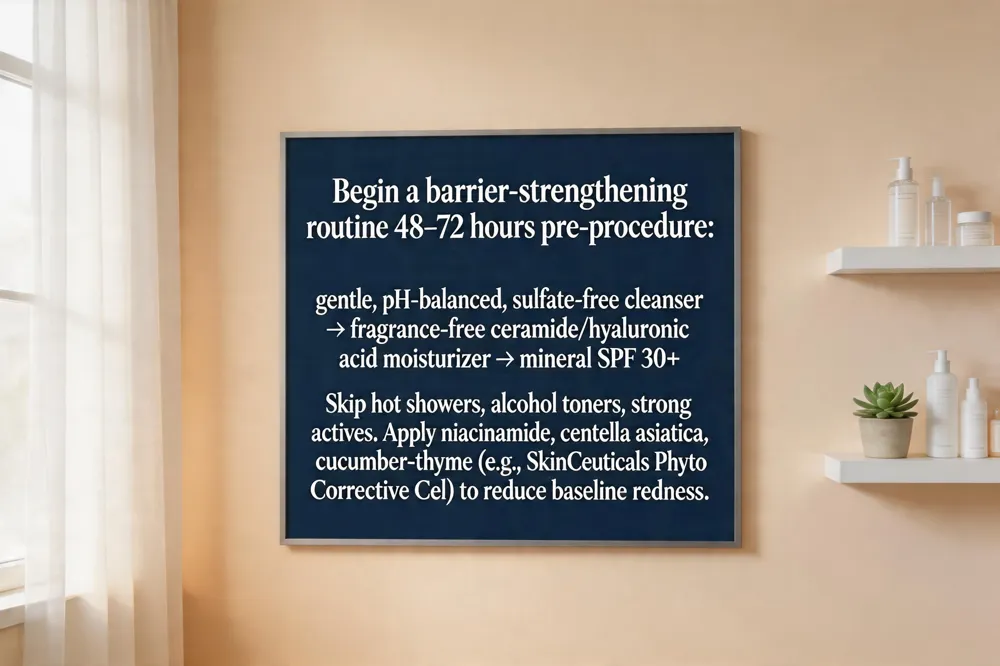 Preparing the skin before a cosmetic procedure is essential for minimizing post‑treatment inflammation. Start a barrier‑strengthening routine 48–72 hours ahead with a gentle, pH‑balanced, sulfate‑free cleanser followed by a fragrance‑free moisturizer containing ceramides, hyaluronic acid or squalane. Apply a Broad‑spectrum SPF 30+ sunscreen daily and avoid irritants such as alcohol‑based toners, harsh exfoliants, hot water and scented detergents. Calming actives like niacinamide, centella asiatica or cucumber‑thyme extracts (e.g., SkinCeuticals Phyto Corrective Gel) can reduce redness.
Sensitive skin treatment: use a mild, fragrance‑free cleanser, barrier‑repair moisturizer, mineral sunscreen; skip hot showers and aggressive actives. How to treat sensitive skin on face: cleanse gently, moisturize with ceramides/hyaluronic acid, apply calming serums, protect with SPF 30+. SkinCeuticals for sensitive skin: Gentle Cleanser, Phyto Corrective Gel, Triple‑Lipid‑Restore, Future Mineral UV Defense. SkinCeuticals vitamin C for sensitive skin: Serum 10 (10 % L‑ascorbic acid) paired with a calming moisturizer and sunscreen. Clarins for sensitive skin: Hydra‑Essentiel line, fragrance‑free, patch‑test advised. Sensitive skin treatment at home: gentle cleanser, barrier‑repair moisturizer, mineral sunscreen, cool compresses, avoid harsh actives.
Immediate Post‑Procedure Protocols
 Best moisturizer after laser treatment?
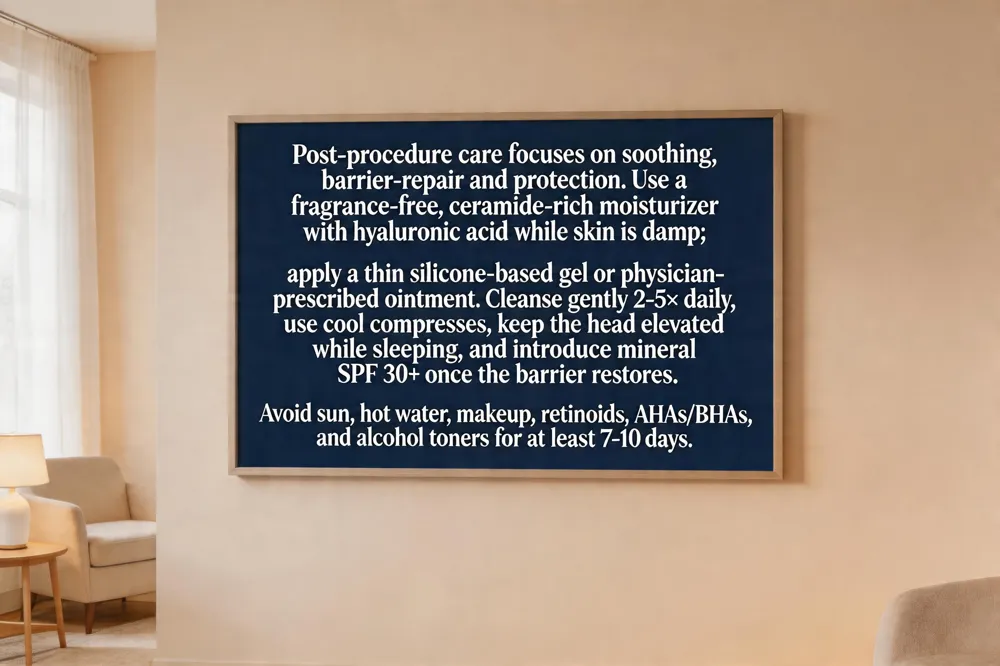
Use a fragrance‑free, ceramide‑rich moisturizer with hyaluronic acid (e.g., CeraVe PM or Alastin Ultra‑Nourishing). Apply a thin layer while skin is still damp; avoid fragrance, alcohol, retinoids, and acids for at least 7 days.
Best moisturizer after laser treatment?
Use a fragrance‑free, ceramide‑rich moisturizer with hyaluronic acid (e.g., CeraVe PM or Alastin Ultra‑Nourishing). Apply a thin layer while skin is still damp; avoid fragrance, alcohol, retinoids, and acids for at least 7 days.
Laser skin treatment aftercare ointment? Apply a thin, silicone‑based gel or physician‑prescribed ointment (e.g., TriDerma Aloe & Zinc Cream) to lock in moisture and protect the barrier. If antibiotics are prescribed, follow the provider’s regimen. Skip heavy petroleum products that trap heat.
Laser skin treatment aftercare for face? Clean gently with a fragrance‑free cleanser or saline solution 2‑5 times daily, no scrubbing. Follow with a barrier ointment, then a soothing moisturizer. Elevate the head while sleeping, use cool compresses 10‑15 minutes q2‑3 times daily, and wear SPF 30+ mineral sunscreen as soon as the barrier is restored.
What to avoid after laser treatment on face? Do not expose to direct sun, hot water, saunas, vigorous exercise, or swimming for the first 48‑72 hours. Skip makeup, exfoliants, retinoids, AHAs/BHAs, and alcohol‑based toners for at least 10 days. Promptly report excessive pain, pus, or fever.
How to quickly heal inflamed skin? Cool the area with a damp, cold compress 10‑15 minutes several times a day, then apply a fragrance‑free, antioxidant‑rich serum (e.g., niacinamide or aloe vera). Maintain hydration, use a barrier‑repair moisturizer, and protect with SPF 30+ sunscreen. If inflammation persists beyond 72 hours, seek professional evaluation.
Managing Redness, Swelling, and Peeling
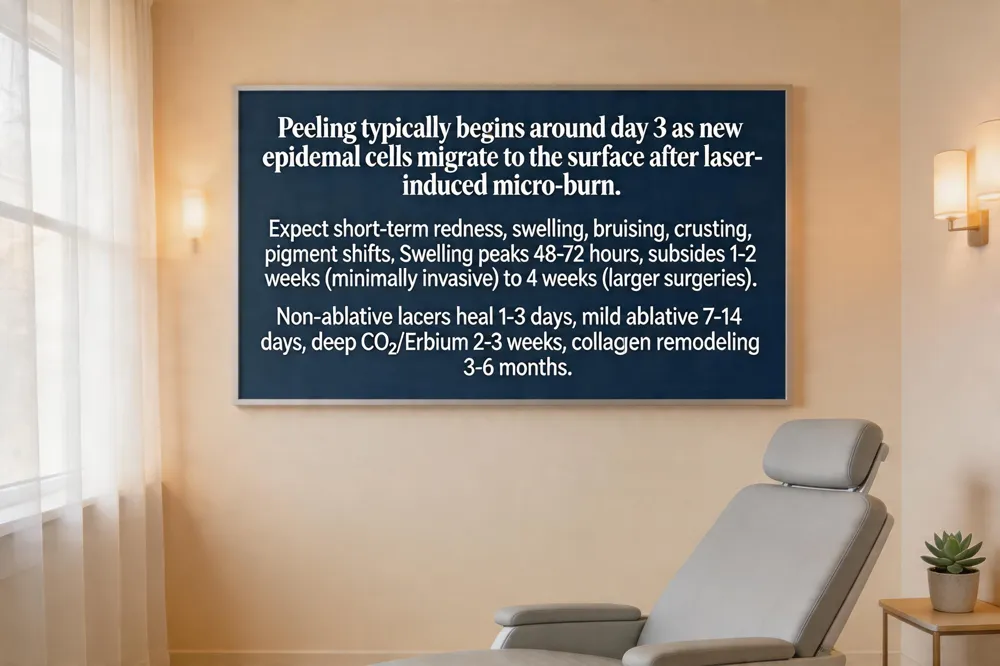 Why does skin start to peel 3 days after laser treatment? Laser vaporizes or loosens the outer epidermis, creating a controlled micro‑burn. Inflammation peaks within 24‑48 hours, and basal cells begin to proliferate and migrate upward. By day 3 the newly formed cells surface the surface, the weakened dead‑cell layer separates and flakes off – a normal sign of regeneration. Proper moisturization and SPF protect the fresh skin.
After laser treatment on face side effects? Short‑term reactions include redness, swelling, mild bruising, crusting, itching, and temporary pigment shifts (PIH or hypopigmentation). Less common concerns are persistent erythema, milia, acne flare‑ups, infection, or scarring. Gentle cleansing, fragrance‑free moisturizers, and diligent sun protection minimize these risks.
Inflammation after surgery how long? Swelling usually peaks in the first 48‑72 hours and subsides over 1‑2 weeks for minimally invasive procedures, up to 4 weeks for larger surgeries. Persistent or worsening edema warrants prompt medical evaluation.
How long does it take for skin to heal after laser treatment? Non‑ablative lasers resolve in 1‑3 days; mild ablative resurfacing needs 7‑14 days for re‑epithelialization; deeper CO₂/Erbium procedures may require 2‑3 weeks, with final collagen remodeling continuing 3‑6 months.
Natural Anti‑Inflammatory Strategies
 Hydration and anti‑inflammatory nutrition
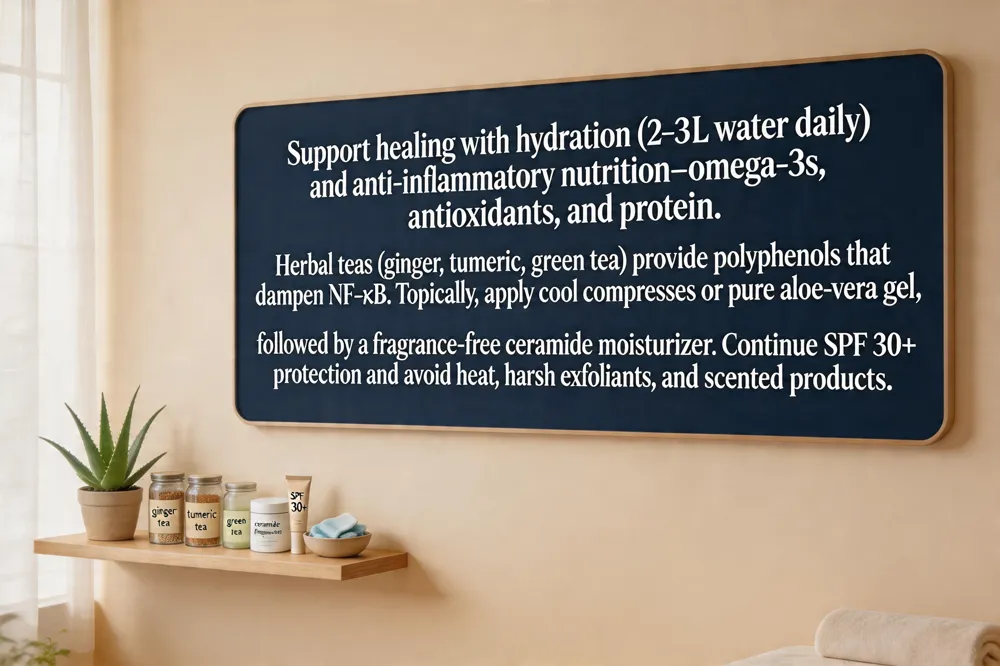
Staying well‑hydrated (≈2‑3 L water daily) supports cellular turnover and helps clear metabolic waste that fuels swelling. Pair water with nutrient‑dense foods rich in omega‑3 fatty acids (salmon, walnuts), antioxidants (berries, leafy greens) and protein‑rich sources such as bone broth or collagen‑based shakes to supply amino acids for tissue repair and to modulate systemic cytokine activity.
Herbal teas and topical soothing agents
Warm teas containing ginger, turmeric (curcumin) or green tea deliver polyphenols that inhibit NF‑κB‑mediated inflammation while also easing nausea. For local relief, a cool compress or a thin layer of pure aloe‑vera gel applied to the treated area reduces erythema and provides a protective barrier without fragrance or oil.
Home‑based remedies for post‑surgery inflammation
Start with a clean, damp cloth soaked in cold water or an ice‑pack wrapped in a soft cloth for 10‑15 minutes, 2‑3 times daily. Follow with a fragrance‑free ceramide‑rich moisturizer or a calming serum containing hyaluronic acid to restore the skin barrier. Avoid heat, harsh exfoliants, and scented products, and protect the skin with a Broad‑spectrum SPF 30+ sunscreen when outdoors. If redness persists beyond 48‑72 hours or pain intensifies, seek professional evaluation.
Optimizing Barrier Repair and Sun Protection
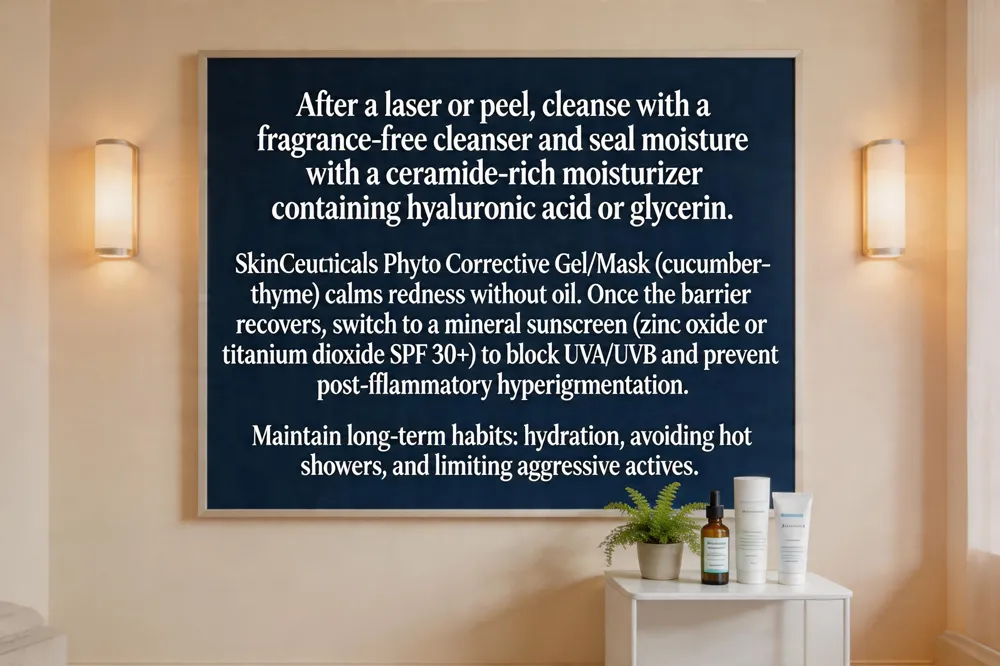 Barrier repair after laser or peel begins with a fragrance‑free cleanser and a ceramide‑rich moisturizer with hyaluronic acid or glycerin to seal moisture. SkinCeuticals’ Phyto Corrective Gel (cucumber‑thyme) and Phyto Corrective Mask (cucumber, thyme, olive leaf, mulberry, hyaluronic acid) calm redness without oil, suitable for the first 24‑48 hours. Sensitive skin should use a mineral sunscreen with zinc oxide or titanium dioxide SPF 30+ once the barrier recovers; it blocks UVA/UVB and prevents post‑inflammatory hyperpigmentation. Long‑term habits—hydration, avoiding hot showers and actives—support barrier health.
Q: SkinCeuticals vitamin C for sensitive skin? A: Serum 10 (10 % L‑ascorbic acid, 0.2 % ferulic acid) is fragrance‑free; start slowly, then use Phyto Corrective Gel and mineral sunscreen.
Q: SkinCeuticals for sensitive skin? A: Gentle Cleanser, Triple‑Lipid‑Restore 2:4:2, Hydrating B5 Gel and Future Mineral UV Defense SPF 50—all barrier‑supportive.
Q: Sensitive skin redness? A: Redness signals inflammation or barrier weakness; calm with fragrance‑free cleanser, ceramide moisturizer, SPF 30+ and avoid irritants.
Q: Is Clarins ok for sensitive skin? A: Hydra‑Essentiel line is fragrance‑free and barrier‑friendly, but patch test is advised.
Long‑Term Care and Follow‑Up
 Regular sunscreen use and UV protection are non‑negotiable after any laser or resurfacing procedure. Apply a broad‑spectrum mineral sunscreen (SPF 30 or higher) as soon as the barrier is restored, reapply every two hours outdoors, and wear a wide‑brimmed hat. Lifestyle factors—adequate hydration, a diet rich in omega‑3 fatty acids, antioxidants, and vegetables, and 7‑9 hours of sleep—support systemic anti‑inflammatory pathways and accelerate skin repair. Schedule follow‑up appointments at 3–5 days and again at 2 weeks to let the clinician assess healing, adjust moisturizers, and catch early signs of infection or prolonged erythema. Seek medical attention immediately if you notice rapid swelling, increasing pain, pus, fever, or spreading redness.
What is the best aftercare for laser treatment? Gently cleanse with a fragrance‑free lukewarm cleanser, pat dry, and apply a soothing, fragrance‑free moisturizer or prescribed ointment frequently. Protect with SPF 30+ mineral sunscreen, keep the head elevated while sleeping, stay hydrated, avoid smoking, and refrain from makeup for 10–14 days.
How to reduce inflammation in sensitive skin? Use cool compresses or splash with lukewarm water, apply fragrance‑free moisturizers containing calming botanicals (e.g., cucumber, thyme, centella), avoid hot showers and harsh actives, perform patch tests before new products, and limit sun exposure.
What not to do after laser face treatment? No direct sunlight or UV for at least a week, no hot saunas, steam rooms, or hot water baths, no makeup, retinoids, AHAs, or aggressive exfoliation for 10–14 days, no vigorous exercise that induces heavy sweating, and no picking or rubbing of the treated area.
Key Takeaways and Next Steps
Effective post‑procedure care for sensitive skin hinges on three pillars: (1) immediate soothing—apply cool compresses for 10‑15 minutes, 2‑3 times daily, keep the area clean with a fragrance‑free, pH‑balanced cleanser, and use a hydrating, fragrance‑free moisturizer containing hyaluronic acid, ceramides or glycerin; (2) protection—avoid heat, hot water, strenuous exercise, and direct sun for the first 48‑72 hours, then apply a broad‑spectrum SPF 30+ mineral sunscreen every two hours when outdoors; (3) support—maintain oral hydration, elevate the head while sleeping, and refrain from retinoids, AHAs, BHAs, and alcohol‑based toners for at least 5‑7 days. Professional guidance is essential: a board‑certified physician can tailor the regimen, perform patch tests, monitor for infection or abnormal inflammation, and adjust topical strength as needed. To ensure optimal healing and the best aesthetic outcome, schedule a personalized consultation at Iconic Laser in Troy, Michigan, where state‑of‑the‑art technology and expert care meet.