Why Patient Safety Matters in Aesthetic Injectable Care
Allergic reactions to dermal fillers and neuromodulators are uncommon, occurring in roughly 0.1 %–0.5 % of treated patients, with anaphylaxis reported in far fewer cases (<0.01 %). A comprehensive pre‑procedure medical history—including prior cosmetic injections, known drug or latex allergies, autoimmune disorders, and current medications—remains the most effective risk‑reduction strategy. Clinics must maintain a readily accessible emergency kit containing intramuscular epinephrine, antihistamines, corticosteroids, oxygen, and resuscitation tools, and staff should be BLS‑trained and rehearsed in anaphylaxis protocols. After treatment, patients should receive clear written instructions on expected side‑effects and warning signs such as spreading urticaria, facial swelling, respiratory difficulty, or persistent nodules, and be instructed to contact the clinic immediately or seek emergency care if these symptoms arise, promptly to prevent complications.
Allergic Reactions to Fillers: Timing, Symptoms, and Self‑Care
 Hyaluronic‑acid (HA) dermal fillers can trigger two distinct hypersensitivity patterns. Immediate (type I) reactions appear within minutes to a few hours and are mediated by histamine release, producing itching, urticaria, swelling, and erythema at the injection site. Delayed (type IV) reactions develop 48–72 hours—or even weeks—after treatment, reflecting a T‑cell‑mediated response that may manifest as persistent edema, nodules, or granulomatous plaques.
Typical allergic swelling, redness, and nodules often last several weeks if untreated, but prompt therapy—oral corticosteroids, short‑course antibiotics, or hyaluronidase‑mediated dissolution—can shorten the course to a few days.
Oral antihistamines are a first‑line adjunct for mild post‑procedure inflammation. A regimen of a non‑sedating H1‑antagonist (e.g., cetirizine 10 mg daily) for the first 48–72 hours can reduce histamine‑driven swelling; older antihistamines such as diphenhydramine may be used but cause drowsiness and should be taken with caution.
Distinguishing a true filler rejection from normal bruising hinges on timing and symptom quality. Bruising peaks within 24‑48 hours, fades, and is limited to discoloration. Rejection signs include persistent swelling beyond a week, painful warm nodules, itching, rash, fever, or sudden lump formation days to weeks later—indicating an inflammatory or granulomatous process rather than simple hematoma.
FAQ
- How long does an allergic reaction to fillers last? Delayed‑type reactions usually start 48‑72 hours post‑injection and may persist weeks to months; early treatment shortens duration to a few weeks.
- Can you take antihistamine after dermal fillers? Yes; regular oral antihistamines (e.g., diphenhydramine or cetirizine) for the first few days can curb swelling, but monitor for drowsiness.
- How do you know if your body is rejecting fillers? Warning signs are swelling >1 week, painful red nodules, itching, rash, fever, or uneven lumps that worsen rather than improve.
- Can you have an allergic reaction to dermal fillers? Yes, though rare; reactions are usually inflammatory (swelling, redness, itching) and manageable with oral antihistamines, steroids, or hyaluronidase.
A thorough pre‑procedure allergy history, vigilant post‑procedure monitoring, and ready access to emergency medications (epinephrine, antihistamines, corticosteroids, hyaluronidase) are essential components of safe aesthetic practice.
Emergency Management and Safety Protocols
 Recognizing early signs of anaphylaxis and severe delayed reactions
Clinicians must watch for rapid onset of urticaria, angio‑edema, throat tightness, wheezing, or hypotension within minutes of injection, as well as delayed nodules, persistent edema, or granulomatous swelling that can appear days to weeks later. Prompt identification enables immediate treatment and prevents progression to life‑threatening shock.
Standard anaphylaxis treatment: intramuscular epinephrine dosing and repeat administration
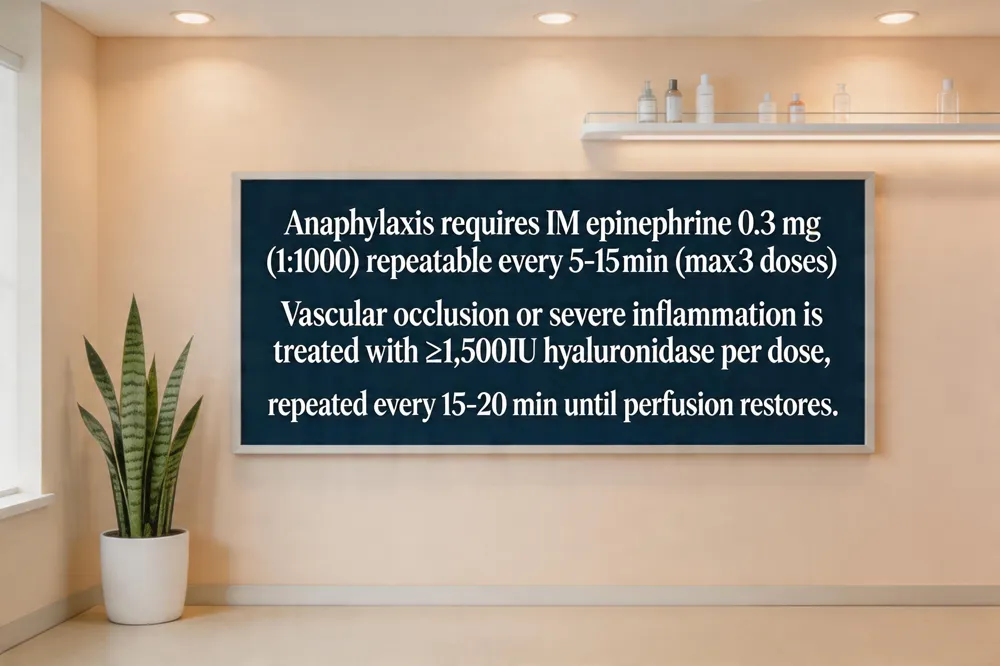
The first‑line response is 0.3 mg of 1:1000 epinephrine injected intramuscularly into the mid‑outer thigh. If symptoms persist, repeat the dose every 5–15 minutes, up to a total of three administrations, while calling emergency services and providing supplemental oxygen, antihistamines, and corticosteroids as adjuncts.
Use of hyaluronidase for vascular occlusion and severe inflammatory filler reactions
When a hyaluronic‑acid filler causes vascular compromise or a pronounced inflammatory reaction, a minimum of 1,500 IU hyaluronidase (reconstituted in 5 mL) should be injected directly into the affected area, with repeat dosing every 15–20 minutes until perfusion returns. The enzyme also helps dissolve filler that is contributing to severe allergic swelling.
Building a culture of safety through leadership, communication, learning, teamwork, and patient involvement
A safe clinic environment relies on five core elements: leadership commitment, open communication, continuous learning, teamwork, and active patient involvement. Leaders allocate resources for emergency kits, staff are encouraged to speak up about risks, incidents are reviewed for lessons, multidisciplinary teams coordinate care, and patients receive clear education on warning signs and follow‑up procedures.
What is the protocol for allergy shots?
Allergy shots start with a skin‑test or blood‑test to pinpoint triggers. During the buildup phase (3–6 months), allergen doses increase weekly to three times per week. Once the target dose is reached, a maintenance injection is given monthly for 3–5 years or longer. Patients remain under observation for at least 30 minutes after each shot; missed doses require dose reduction and schedule adjustment.
What are the 5 elements of patient safety?
The five elements are: leadership commitment, open communication, continuous learning, teamwork, and active patient involvement. Each pillar supports a systematic approach to minimizing harm.
What are the 7 steps of patient safety?
- Build a safety culture;
- Lead and support staff;
- Integrate risk‑management activities;
- Promote reporting;
- Involve and communicate with patients and the public;
- Learn and share safety lessons;
- Implement solutions to prevent harm.
Assessing Risks Before Treatment
 High‑risk facial zones for filler injection are those where vessels lie superficially and are prone to accidental intravascular placement. The glabella (between the eyebrows), the forehead, the periorbital area just beneath the eyes, the nasolabial folds, and the nose are consistently identified as the most hazardous sites because inadvertent injection can lead to vascular occlusion, tissue necrosis, or vision loss. Practitioners should employ blunt‑tip cannulas, aspirate before injection, and inject slowly with low pressure in these regions.
Age alone is not a contraindication for Botox or hyaluronic‑acid fillers. Even patients 70 years and older can be treated safely when they are in good systemic health, have no uncontrolled medical conditions, and provide informed consent. Comprehensive medical evaluation and a personalized injection plan are essential to minimize the slightly increased risk of bruising or delayed healing that can accompany older skin.
Autoimmune diseases such as Hashimoto’s thyroiditis merit special consideration. While hyaluronic‑acid fillers are generally biocompatible, the altered immune milieu in autoimmune patients may increase the likelihood of delayed hypersensitivity or granulomatous reactions. A detailed allergy and autoimmune history should guide filler selection, with a preference for low‑cross‑linked HA products or alternative modalities after discussion with the patient’s physician.
Aesthetic practice hazards span physical, chemical, and environmental domains. Physical risks include needle sticks, burns, and ocular injury; chemical risks involve allergic reactions to botulinum toxin, fillers, and chemical peels; and environmental exposures to disinfectants or cleaning agents can cause dermal or respiratory irritation. Strict aseptic technique, proper ventilation, and staff training on emergency protocols (epinephrine, antihistamines, corticosteroids) mitigate these risks and ensure a safe treatment environment.
Emerging Options and the 2026 Filler Landscape
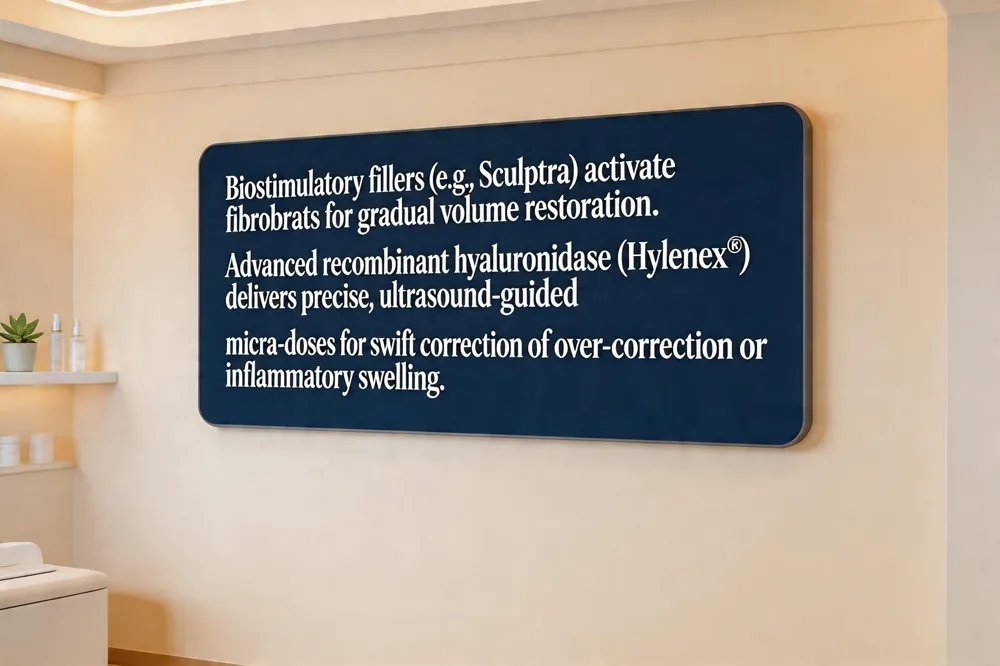 In 2026 the aesthetic market is seeing rapid growth in biostimulatory fillers (e.g., Sculptra Aesthetic), which works by activating fibroblasts to lay down new collagen and gently restore volume over 3‑6 months. This collagen‑stimulating approach offers a longer‑lasting, natural‑looking result compared with traditional hyaluronic acid (HA) gels.
Another key development is the refinement of hyaluronidase formulations. Recombinant human hyaluronidase (Hylenex®) is now supplied in higher‑concentration, low‑pH buffers that enable faster, more precise dissolution of HA fillers while minimizing tissue irritation. Clinicians can deliver targeted micro‑doses under ultrasound guidance, achieving rapid reversal of over‑correction or inflammatory swelling without compromising safety.
These advances underscore a shift toward personalized, science‑backed treatments that combine durable volume restoration with robust emergency reversal options, meeting both patient expectations and stringent safety standards.
Putting It All Together: Clinic Best Practices
 Informed‑consent forms should explicitly outline the low but real risk of allergic reactions, describe typical signs (urticaria, angio‑”ema, respiratory distress), and detail the clinic’s emergency protocol, including epinephrine administration and hyaluronidase availability.
Staff competence is reinforced through regular training: all clinicians and nurses must hold current Basic Life Support (BLS) certification, participate in quarterly simulation drills for anaphylaxis, and stay updated on the latest allergen‑screening recommendations.
Post‑procedure observation periods of 15–30 minutes allow early detection of immediate hypersensitivity, especially after high‑risk products, while scheduled follow‑up visits within 1–2 weeks ensure prompt identification of delayed reactions and enable timely intervention.
These coordinated measures create a safety‑first environment that protects patients and upholds best‑practice standards.
Ensuring Confidence in Every Cosmetic Choice
A safe aesthetic journey begins with a thorough pre‑procedure assessment that captures every allergy, prior filler experience, medication, and atopic condition. Only FDA‑approved, high‑purity hyaluronic‑acid products are selected, and each vial’s brand, batch and and injection technique are documented for traceability. After injection, patients are observed for at least 30 minutes—longer for high‑risk agents—to catch early urticaria, angio‑edema or respiratory distress. Should a reaction arise, the clinic’s emergency kit—epinephrine auto‑injectors, antihistamines, corticosteroids, hyaluronidase and resuscitation tools—is deployed immediately, following BLS‑trained protocols. Post‑procedure, patients receive written after‑care guidance, a list of warning signs, and a direct clinic contact for urgent concerns. Continuous staff education, regular simulation drills, and systematic audit of every adverse event ensure ongoing quality improvement and transparent communication with each patient.