Why Telemedicine Matters in Aesthetic Care
The COVID‑19 pandemic accelerated the adoption of telehealth, turning virtual visits into a standard offering for aesthetic practices. Across multiple studies, patient satisfaction with tele‑aesthetic consultations ranges from 72 % to 98 %, while provider satisfaction is reported between 74 % and 97 %. These high scores reflect the convenience of eliminating travel, which not only saves time and money but also reduces exposure to infectious agents—a safety benefit highlighted by the American Society of Plastic Surgeons. Secure, HIPAA‑compliant video platforms provide end‑to‑end encryption, multi‑factor authentication and audit logs, meeting federal privacy standards and state‑specific licensure requirements. Technical best practices—high‑resolution cameras, proper lighting, and reliable broadband—ensure accurate visual assessment, while standardized informed‑consent documents and patient‑identity verification safeguard legal and ethical compliance. Together, these regulatory and technical foundations make telemedicine a safe, efficient, and patient‑centered component of modern aesthetic care.
Regulatory Landscape and Reimbursement
 State‑specific licensure remains a cornerstone of compliance: providers must hold an active medical license in the patient’s state of residence, and many clinicians use the Interstate Medical Licensure Compact to streamline multi‑state practice. All platforms must employ HIPAA‑compliant end‑to‑end encryption, multi‑factor authentication, and Business Associate Agreements to protect e‑PHI.
Legal and ethical safeguards focus on informed consent and marketing integrity. Aesthetic teleconsultations must include a documented electronic consent that outlines the limits of remote assessment, the risks of proceeding without an in‑person exam for certain procedures, and a clear escalation pathway for emergencies. Marketing messages must avoid overstating outcomes or using telemedicine solely as a promotional tool, as this can compromise patient autonomy and contravene professional ethical standards.
Did the government shut down telehealth? The 2025 shutdown paused Medicare telehealth payments but did not eliminate the service; providers continued virtual visits while reimbursement was on hold.
Will Congress extend telehealth in 2026? Yes, the House has approved legislation to keep telehealth waivers active through 2027, pending Senate approval.
Clinical Safety and Diagnostic Reliability
 High‑resolution 2‑dimensional video conferencing is the most common modality, yielding usability scores >6.5/7 is the dominant telemedicine modality in aesthetic practice, consistently earning usability scores >6.5/7. Studies show Diagnostic reliability for skin lesions, wounds, and postoperative assessments reaches up to 94.4% concordance with in‑person exams, making virtual exams a reliable adjunct to in‑person care. Technical challenges—Technical challenges include connection failures (~11% of appointments) and camera issues (~3%)—can lower reliability scores and patient confidence, underscoring the need for robust platforms and backup plans. Emerging tools such as AI‑driven risk alerts, Emerging 3‑D holographic telemedicine shows promising usability and diagnostic accuracy, and real‑time monitoring devices promise to narrow the gap between virtual and face‑to‑face evaluations.
Can telehealth help with a sore throat? Yes—secure video visits allow patients to describe symptoms, show the throat via camera, and receive assessment, testing, and prescription without leaving home.
What are the risks of online consultations? Risks include limited physical examination leading to misdiagnosis, technical glitches, privacy breaches, and increased provider workload, all of which can compromise safety if not mitigated.
What are the downsides of virtual appointments? Downsides are the inability to perform tactile exams, dependence on reliable internet, need for in‑person follow‑up for certain procedures, and potential erosion of rapport.
Can you do telehealth for pneumonia? An initial telehealth assessment can guide management and prescribe antibiotics, but definitive diagnosis usually requires a chest X‑ray and may prompt an in‑person visit for severe cases.
What can be diagnosed in a virtual visit? Common infections (e.g., strep throat, sinusitis), minor skin conditions, allergic reactions, and post‑procedure complications can be evaluated using high‑resolution video, photos, and patient‑reported outcomes.
Patient Preparation, Consent, and Product Safety
 Digital informed‑consent documentation must be completed electronically, with a clear explanation of telemedicine limitations, privacy risks, and emergency protocols. Two‑factor identity verification (photo ID plus secure login token) should be performed at the start of each session to confirm the correct patient and enable rapid response if an adverse event occurs.
Assessing cosmetic product safety begins with third‑party certifications such as MADE SAFE® or EWG VERIFIED®, indicating vetted ingredient lists. Patients should copy the full INCI ingredient list into reputable tools (e.g., INCIdecoder) to flag irritants, allergens, or prohibited chemicals. Red‑flag substances—parabens, certain sulfates, high‑concentration alcohols, silicones, or comedogenic agents—should be avoided, especially for sensitive skin. When in doubt, a licensed aesthetician or dermatologist should review the product and confirm suitability for the individual's skin type and treatment goals.
How to check if a cosmetic product is safe? Start by looking for trusted third‑party certifications (MADE SAFE®, EWG VERIFIED®), then review the full ingredient list using an ingredient‑checking tool (INCIdecoder, Ecogolik). Flag known irritants, allergens, or prohibited chemicals, and verify that active ingredients are scientifically supported at safe concentrations. Finally, consult a licensed aesthetician or dermatologist for personalized guidance.
What patient preferences for utilization of telemedicine in aesthetic surgery consultations? Most patients (≈72 % for surgical and 74 % for non‑surgical procedures) feel comfortable with an initial virtual consult, especially for head‑and‑neck areas. Sensitive regions (breast, gluteal) still favor in‑person visits. Younger patients seeking non‑surgical interventions are more likely to accept telemedicine as the sole pre‑procedure step. After a virtual consult, 65 % feel ready to schedule a non‑surgical treatment versus 58 % for surgery, highlighting convenience and reduced infection risk as key drivers.
Cost, Access, and Patient Preferences
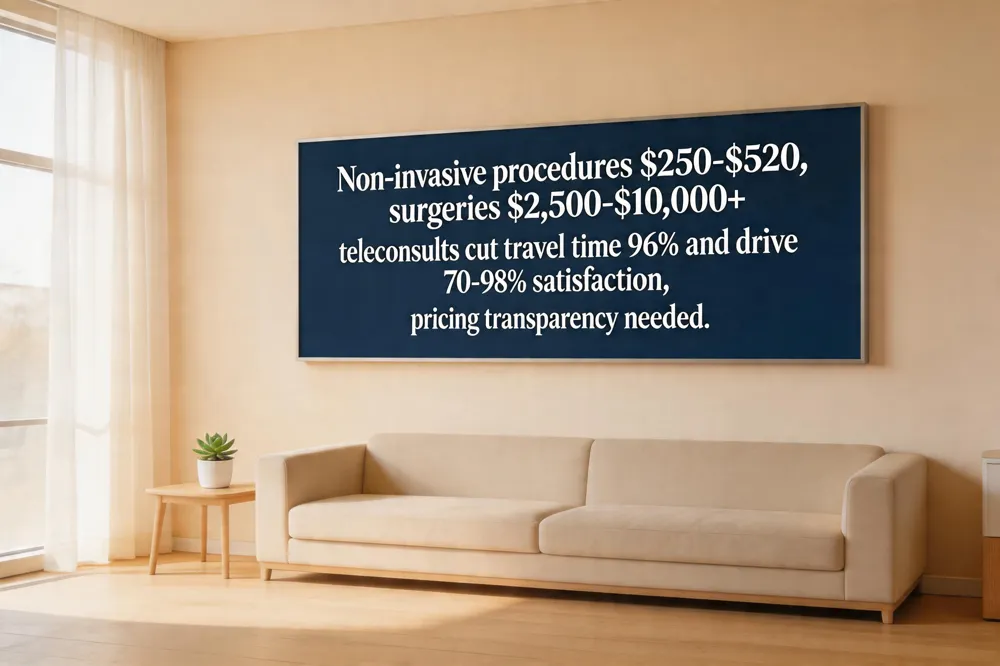 Aesthetic procedures span a wide price spectrum. Non‑invasive injectables such as Botox or Xeomin usually cost between $420‑$520 per session, while chemical peels range from $250 for light peels up to $2,700 for deep resurfacing. Surgical interventions are considerably higher: a standard facelift averages $9,700, brow lifts $3,500, chin augmentations $2,550, liposuction $2,800, buttock enhancement $3,500, and tummy tucks about $7,500. In total, patients may spend a few hundred dollars on minor skin‑care treatments or exceed $10,000 for comprehensive surgical rejuvenation.
Virtual consultations dramatically improve access and convenience. By eliminating travel, patients save up to 96 % of commute time and can connect with board‑certified aesthetic physicians across state lines, expanding geographic reach. Satisfaction scores consistently exceed 70 % when convenience, reduced infection risk, and rapid specialist access are factored in, with many studies reporting 92‑98 % post‑procedure satisfaction when follow‑up is managed via telehealth.
Patient preferences mirror these benefits. About 72 % of surgical and 74 % of non‑surgical patients feel comfortable with an initial telemedicine visit, especially for head‑and‑neck concerns. After virtual consult, 65% ready for non‑surgical, 58% ready for surgical, highlighting a clear favor toward convenience while still preferring in‑person exams for sensitive or complex areas. Insurance coverage for telehealth aesthetic visits is expanding, yet many patients continue to bear out‑of‑pocket costs, making transparent pricing and tiered membership models valuable for budgeting.
Future Innovations and Ongoing Safety Measures
 Emerging 3‑D holographic and augmented‑reality (AR) tools are narrowing the virtual‑in‑person gap by allowing patients to view realistic, manipulable renderings of expected outcomes during tele‑aesthetic consults. When combined with AI‑driven risk‑alert systems, these platforms can flag contraindications—such as recent isotretinoin use, active infections, or vascular anomalies—before a procedure is scheduled, enabling predictive analytics that prioritize patient safety. Interoperability with electronic medical records (EMR) ensures that high‑resolution images, consent forms, and secure e‑prescriptions flow seamlessly into a single, HIPAA‑compliant workflow, reducing documentation errors and supporting standardized reporting. To sustain these advances, providers must complete certified telehealth training, obtain competency in digital imaging, and engage in continuous quality‑improvement programs that audit technical performance, patient satisfaction, and adverse‑event reporting. Together, these innovations create a resilient, data‑rich ecosystem that upholds safety while delivering personalized, cutting‑edge aesthetic care.
Balancing Convenience with Clinical Rigor
Virtual aesthetic care is dependable when it follows a strict safety protocol: clinicians verify patient identity with two‑factor authentication, conduct a thorough medical‑history intake, and obtain electronic informed consent that outlines the limits of remote assessment. High‑resolution, HIPAA‑compliant video (≥1080p, stable 5 Mbps connection) is essential for accurate skin, lesion, and symmetry evaluation, while standardized lighting and camera positioning minimize diagnostic error. If the virtual exam raises concerns—such as atypical lesions, infection, or the need for tactile assessment—an immediate escalation to an in‑person visit is triggered, with clear instructions provided to the patient on how to access emergency care. Patients are encouraged to prepare a quiet, well‑lit space, test their device beforehand, and compile a list of medications, allergies, and questions. Our clinic remains committed to premium, evidence‑based telemedicine, integrating AI‑driven risk alerts, secure e‑prescribing, and structured follow‑up (48‑hour, 1‑week, monthly) to ensure safety, personalization, and optimal outcomes.