Understanding RF Skin Tightening for Neck and Jawline
Radiofrequency (RF) skin tightening is a leading non‑surgical option for neck and jawline rejuvenation because it delivers heat into the dermis without harming the epidermis. The device emits low‑frequency electromagnetic waves (1‑6 MHz) that raise tissue temperature to 40‑45 °C, causing collagen fibers to contract and stimulating fibroblasts to produce new collagen and elastin over 2‑6 months. During a visit the clinician cleans the skin, applies topical anesthetic, and uses an applicator to treat the area for 15‑20 minutes while monitoring temperature. Patients feel a warm sensation, mild redness, and can resume activities immediately.
How RF Works: The Science Behind Collagen Remodeling
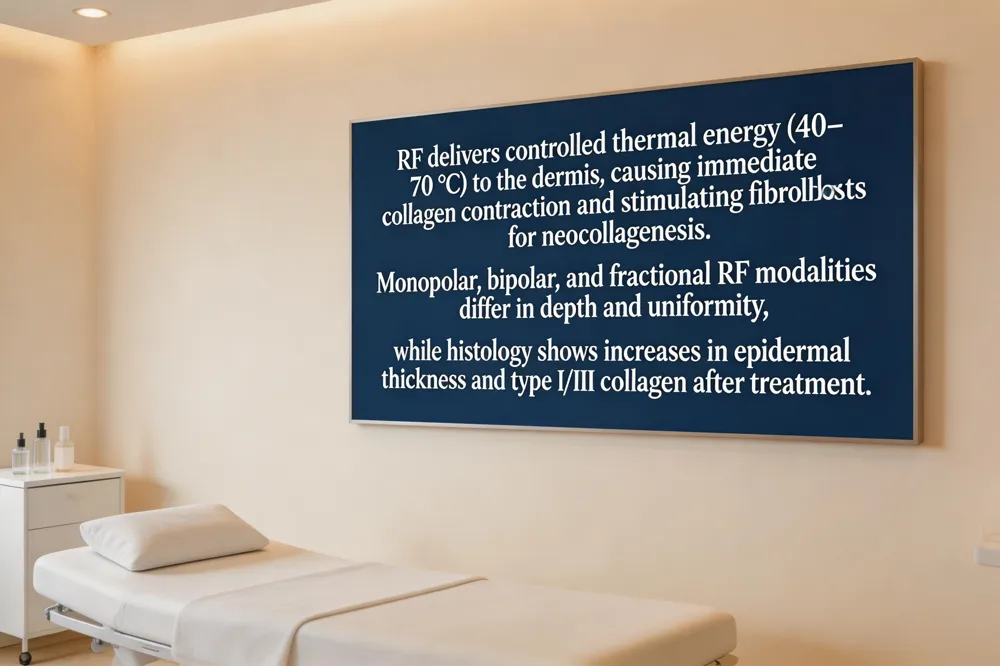 Radiofrequency (RF) devices deliver controlled thermal energy deep into the dermis, typically maintaining tissue temperatures between 40–45 °C for milder protocols and up to 65–70 °C for aggressive collagen induction. At these temperatures, native collagen fibers denature and immediately contract, producing an instant tightening effect. The thermal stimulus also activates fibroblasts, triggering neocollagenesis that continues for up to six months after the final session, resulting in progressive firmness.
Three RF delivery modalities are used in clinical practice. Monopolar systems employ a single active electrode with a grounding pad, allowing deeper penetration (up to 20‑25 mm). Bipolar devices use paired electrodes on the handpiece, for more uniform, superficial heating (2‑8 mm). Fractional RF combines microneedles with RF energy, creating micro‑thermal zones that preserve the epidermis while stimulating deep dermal remodeling.
Histologic studies confirm these mechanisms: epidermal thickness increases from ~63 µm to ~80 µm[https://pmc.ncbi.nlm.nih.gov/articles/PMC6541915/], type I collagen rises from 66 % to 81 %[https://pmc.ncbi.nlm.nih.gov/articles/PMC6541915/], and type III collagen from 61 % to 74 %[https://pmc.ncbi.nlm.nih.gov/articles/PMC6541915/] post‑treatment, while dermal elastin reorients, reducing solar elastosis. These cellular changes underpin the measurable improvements in skin laxity, texture, and jawline definition reported in peer‑reviewed trials.
Clinical Efficacy for Neck Tightening
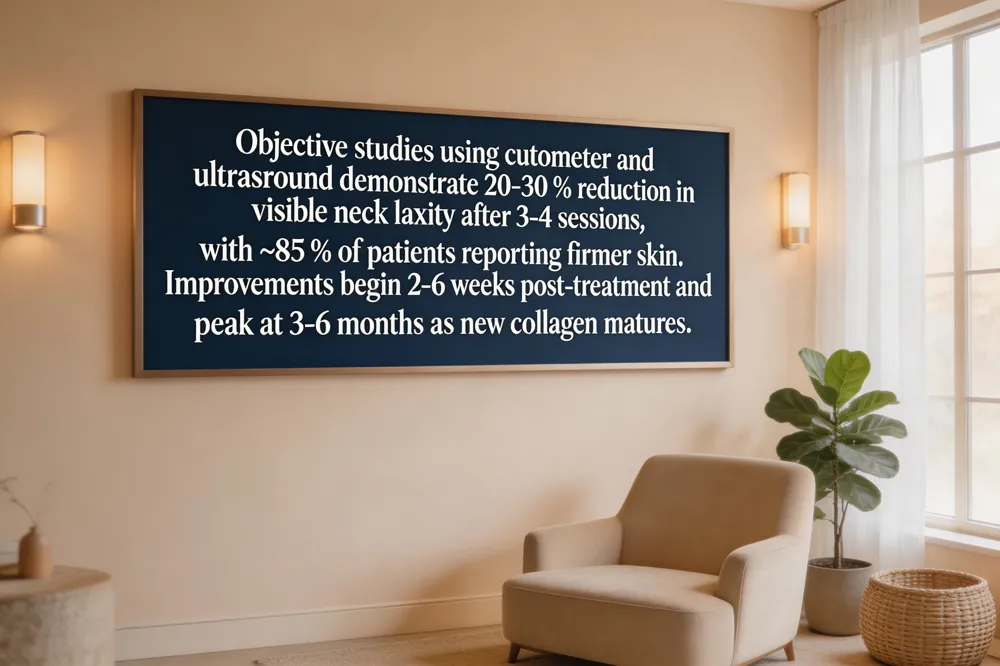 Radiofrequency (RF) neck tightening has been validated by multiple peer‑reviewed studies using objective instruments such as cutometer and high‑frequency ultrasound. These measurements consistently show statistically significant improvements in skin elasticity and dermal thickness after a standard 3‑4‑session protocol, with tissue temperatures maintained at 40‑45 °C for 15‑20 minutes per area. Clinical trials report a 20‑30 % reduction in visible neck laxity after 3‑4 treatments, and patient‑reported firmness improvement in roughly 85 % of cases.
Timeline of results – Patients typically notice a subtle tightening effect within 2‑6 weeks, owing to immediate collagen contraction. The remodeling phase continues, peaking between 3‑6 months as newly synthesized type I and type III collagen mature, delivering the most pronounced lift and texture enhancement.
Frequently asked questions
- Does RF neck tightening work? Yes—controlled RF energy penetrates the deep dermis, stimulating collagen and elastin remodeling that firm and lift mild‑to‑moderate lax skin. Evidence shows measurable gains in firmness and elasticity, with most patients experiencing smoother neck skin within 6‑8 weeks and optimal results by 3‑6 months. The procedure is non‑invasive, requires only a brief office visit, and carries minimal downtime compared with surgical facelifts.
- Does RF tighten neck skin? Yes—by heating the dermis to the therapeutic range (≈40‑45 °C), RF induces immediate collagen fiber contraction and a prolonged neocollagenesis response. The result is a firmer, tighter neckline without incisions or scarring, especially effective for mild‑to‑moderate sagging. RF can be safely combined with fillers, Botox®, or microneedling to further refine jawline definition and overall facial contour.
Jawline Contouring and Definition
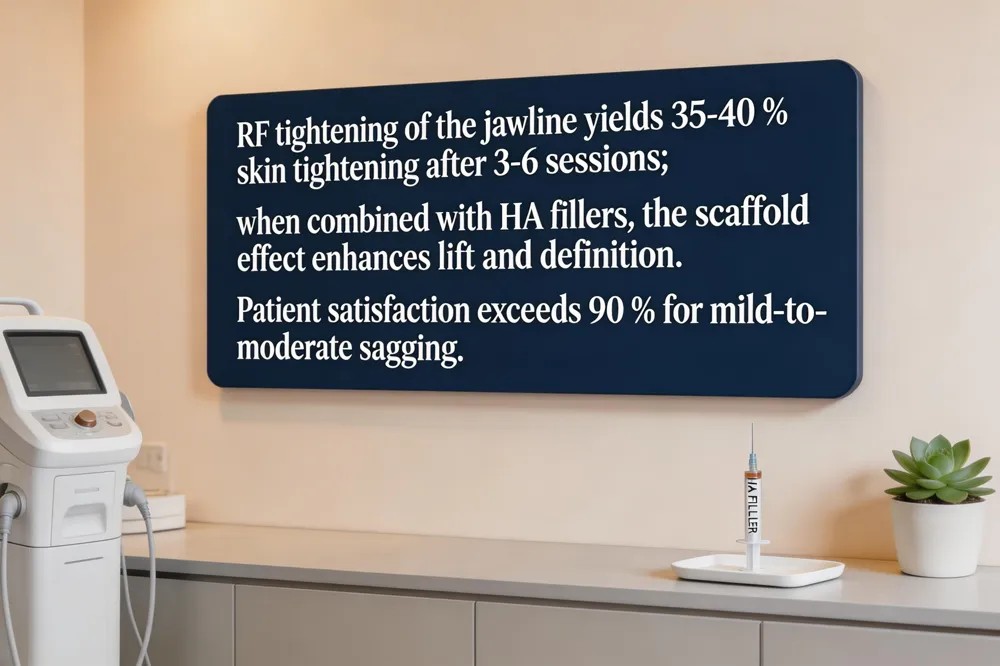 Radiofrequency (RF) delivers controlled thermal energy to the dermis of the jawline, causing immediate collagen fiber contraction and initiating a cascade of neocollagenesis. Over the ensuing weeks new collagen and elastin fibers remodel, thickening the dermal matrix and restoring firmness. When RF is paired with hyaluronic‑acid fillers, the tightened tissue provides a supportive scaffold that enhances filler lift and definition, yielding a more sculpted jawline. Clinical trials report a 35‑40 % improvement in skin tightening after 3‑6 RF sessions, with patient satisfaction rates exceeding 90 % for mild‑to‑moderate sagging. The protocol typically involves 3‑5 treatments spaced 4‑6 weeks apart, allowing progressive remodeling without downtime.
Does radiofrequency tighten the jawline?
Yes. RF heats deep skin layers around the jaw and neck, instantly contracting existing collagen and stimulating new collagen and elastin production. This dual action smooths texture, reduces fine lines, and gradually lifts the jawline. Results become noticeable after a series of 3‑6 sessions, are minimally invasive, and can be safely combined with other aesthetic modalities for optimal contouring.
Treatment Protocols: Sessions, Timing, and Expected Timeline
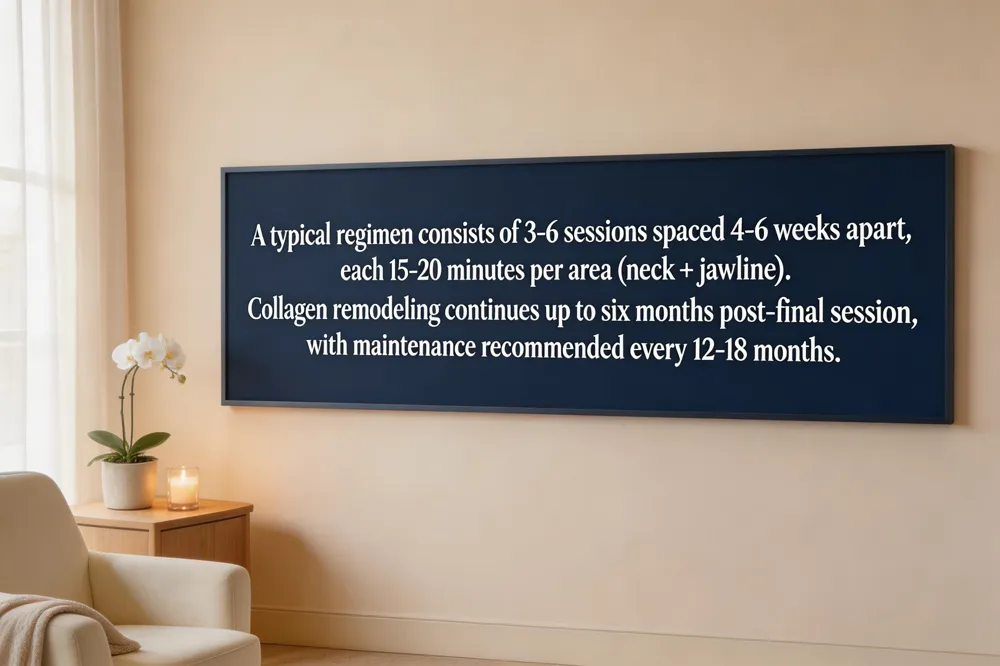 A typical radiofrequency (RF) skin‑tightening program for the neck and jawline consists of 3‑6 treatment sessions spaced 4‑6 weeks apart. Each appointment lasts 15‑20 minutes per treatment area (usually the neck and jawline), which translates to a total clinic time of 30‑60 minutes per visit. The controlled thermal dose (40‑45 °C for 15‑20 minutes) denatures existing collagen and triggers a cascade of new collagen synthesis. Collagen remodeling continues for up to six months after the final session, so patients often notice progressive tightening for weeks after the last treatment.
Maintenance is essential to preserve results; most clinicians recommend a maintenance session every 12‑18 months (or annually for patients with higher laxity) to re‑stimulate neocollagenesis and counteract natural aging.
Frequently asked question
How many sessions of RF skin tightening to see results?
Most patients begin to see noticeable tightening after about three to six treatment sessions, depending on the degree of laxity and the treated area. The neck typically follows this 3‑6‑session range, while larger regions (e.g., abdomen, thighs) may require additional sessions for optimal firmness. Each session stimulates collagen and elastin production, and the full effect develops over the ensuing weeks. Visible improvement is usually evident within one month of the final session, and results can last up to a year or longer with proper skin care, sun protection, and scheduled maintenance. A personalized consultation at our Troy clinic will determine the exact number of sessions best suited for your aesthetic goals.
Safety Profile, Side Effects, and Contraindications
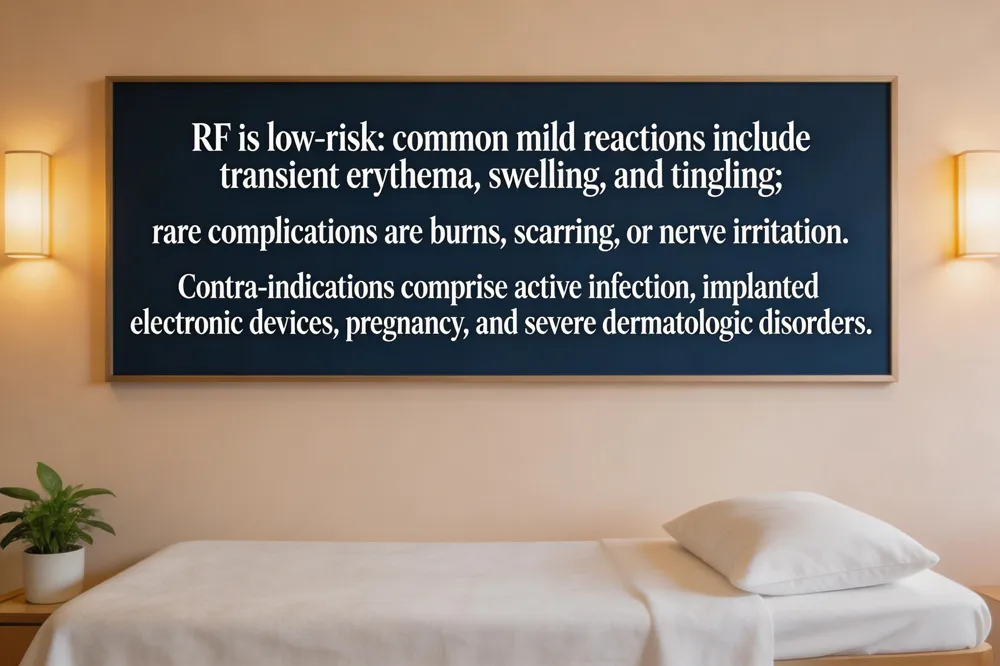 Radiofrequency (RF) skin tightening is widely regarded as a low‑risk, non‑invasive alternative to surgical facelift, yet it still carries a predictable safety profile.
Common mild reactions – The most frequently reported side effects are transient erythema, mild swelling, and a brief tingling or warm sensation during and after treatment. These typically resolve within 24‑48 hours and require no downtime.
Rare serious complications – While uncommon when performed by a qualified, FDA‑cleared provider, excessive tissue temperatures can cause superficial burns, focal scarring, or, in very rare cases, nerve irritation or localized fat loss. Proper temperature monitoring (40‑45 °C for most devices) and real‑time impedance feedback dramatically reduce these risks.
Contra‑indications – RF tightening should be avoided in patients with active skin infection, implanted electronic devices (e.g., pacemakers), pregnancy or nursing, and severe dermatologic disorders such as uncontrolled eczema or psoriasis.
Comparison to surgical facelift – Compared with an operative facelift, RF offers a markedly lower complication rate, virtually no anesthesia, and same one‑day recovery. Surgical lifts provide more dramatic, longer‑lasting lifts but involve incision‑related risks, longer downtime, and higher cost. RF delivers modest but natural‑looking improvements for mild‑to‑moderate laxity with minimal interruption to daily life.
Answering key questions:
- What are the downsides of radiofrequency? The main downsides are occasional transient redness, swelling, or tingling; rare but possible burns, scarring, or nerve injury if settings are misused; the need for multiple sessions to achieve optimal results; and higher out‑of‑pocket costs compared with at‑home devices.
- Why do plastic surgeons not like RF microneedling? Some surgeons caution that any energy‑based modality that penetrates the dermis carries a theoretical risk of deeper tissue injury, including fat necrosis, nerve damage, or vascular compromise, especially when performed by inexperienced hands.
Overall, when administered by board‑certified dermatologists or plastic surgeons using FDA‑cleared equipment, RF skin tightening provides a safe, effective, and low‑downtime option for neck and jawline rejuvenation.
Why do plastic surgeons not like RF microneedling ? Some surgeons caution that any energy‑based modality that penetrates the dermis carries a theoretical risk of deeper tissue injury, including fat necrosis, nerve damage, or vascular compromise, especially when performed by inexperienced hands.
Cost, Accessibility, and Popular Culture
 Typical RF neck‑and‑jawline sessions range from $500–$700 for a localized treatment to $1,200–$1,500 for a full‑face or comprehensive neck protocol, with most clinics offering 3‑4‑session packages at a modest discount. Insurance does not cover cosmetic RF tightening, as it is classified as an elective aesthetic procedure. Celebrity endorsement has helped popularize the technology: Kim Kardashian publicly prefers Sofwave, a non‑invasive RF platform that delivers rapid firmness and youthful contour. Patient satisfaction is high—clinical surveys report 80‑95 % of treated individuals notice meaningful improvement in skin laxity and jawline definition. In practice, most patients experience mild redness that resolves within 24‑48 hours and can return to normal activities the same day.
Putting It All Together: What You Can Expect
Radiofrequency (RF) skin‑tightening for the neck and jawline delivers improvement: studies show 20‑30 % reduction in laxity and 30‑45 % increase in skin elasticity after 3‑5 sessions, with patient satisfaction averaging 85‑90 %. Safety is established; adverse events are limited to transient erythema, mild swelling, and rare superficial burns, and the technology is FDA‑cleared for all types. Treatment costs vary by device and provider, typically ranging from $1,200 to $2,500 per session. At Iconic Laser, a consultation evaluates skin tone, laxity grade, medical history, and aesthetic goals to tailor frequency, temperature, and session spacing. After the initial series, maintain results with follow‑up appointments every 12‑18 months and a home‑care regimen including sunscreen, moisturizers, and hyaluronic‑acid fillers.