Why Vitamin C Matters for Modern Skin Rejuvenation
Vitamin C is a potent water‑soluble antioxidant that neutralizes reactive oxygen species generated by UV radiation, pollution, and metabolic stress, protecting keratinocytes and fibroblasts from oxidative damage. Its role as a co‑factor for prolyl and lysyl hydroxylases is essential for stabilising the collagen triple‑helix and up‑regulating collagen‑I/III gene expression, which translates into increased dermal firmness, reduced fine‑line depth, and accelerated wound closure. In aesthetic medicine, these mechanisms underpin the clinical use of topical serums (10‑20 % L‑ascorbic acid, pH < 3.5), micro‑needled infusions, and high‑dose intravenous protocols that raise systemic antioxidant capacity and support post‑procedure healing. Evidence from randomized trials shows measurable improvements in skin texture, elasticity, and hyperpigmentation after 12‑16 weeks of consistent application, making vitamin C a cornerstone of modern, non‑invasive rejuvenation strategies.
Vitamin C in Dermatology – Roles and Mechanisms
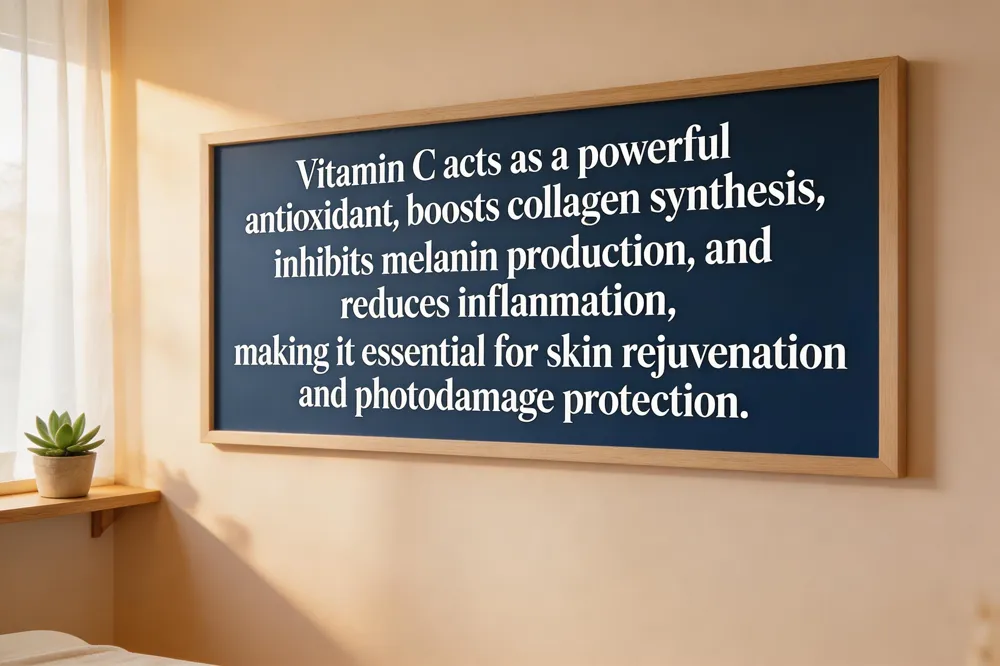 Vitamin C is a cornerstone in modern dermatology because it serves multiple, science‑backed functions. As a potent water‑soluble antioxidant, it scavenges reactive oxygen species generated by UV radiation, pollution and metabolic stress, thereby protecting keratinocytes and fibroblasts from oxidative DNA and collagen damage. The molecule also regenerates oxidized vitamin E, amplifying photoprotection when used together with sunscreen.
Crucially, vitamin C is a required co‑factor for prolyl and lysyl hydroxylases, enzymes that hydroxylate proline and lysine residues during collagen maturation. This stabilizes the triple‑helix structure, stimulates collagen‑I/III gene expression, and promotes fibroblast proliferation, which translates into improved skin firmness, reduced fine lines and accelerated wound healing.
In the pigmentation pathway, vitamin C inhibits tyrosinase by reducing its copper‑centered quinones, decreasing melanin synthesis and fading hyperpigmented lesions such as melasma, age spots and post‑inflammatory marks.
Anti‑inflammatory effects are also evident: vitamin C lowers inflammatory cytokines (e.g., IL‑6, TNF‑α) and helps control sebum, offering benefits for acne‑prone or rosacea‑affected skin.
Overall, topical vitamin C (10‑20 % L‑ascorbic acid at pH < 3.5) delivers antioxidant protection, collagen‑boosting, melanogenesis inhibition and inflammation reduction, making it an essential, non‑invasive option for skin rejuvenation and photodamage prevention.
Delivery Methods – Oral, Topical, and Injectable Vitamin C
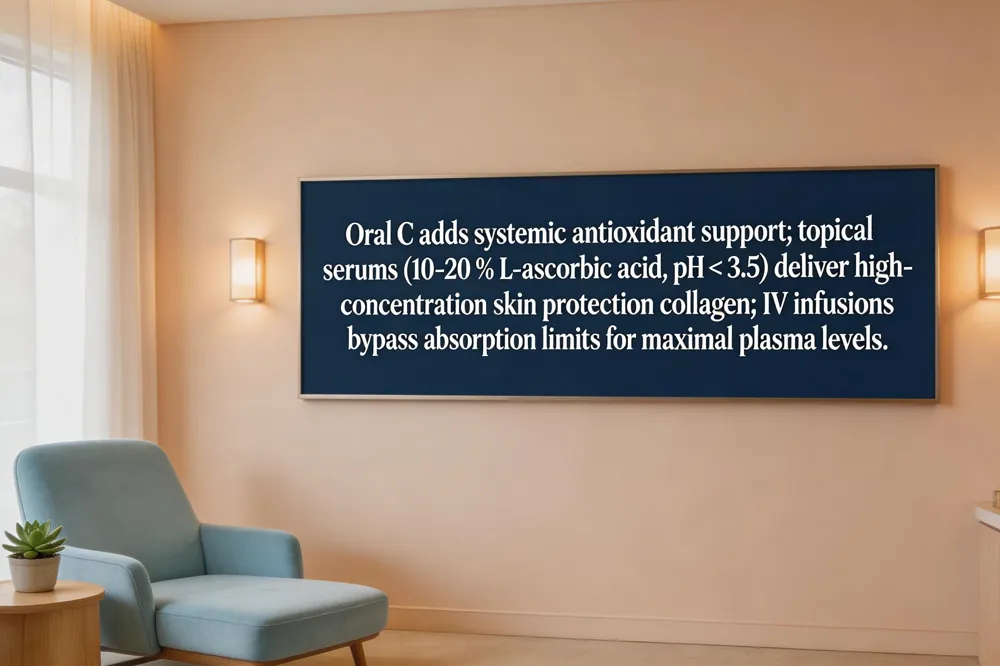 Oral vitamin C supplies the skin with systemic antioxidant capacity and the essential co‑factor for collagen‑hydroxylation. Clinical data show that 100 mg/day raises skin radical‑trapping activity by ~22 % and 180 mg/day by ~37 %, supporting dermal firmness and modestly slowing fine‑line formation. Once plasma saturation is reached, higher doses do not further increase skin levels, so a modest daily intake (≈100–200 mg) is sufficient.
Topical vitamin C delivers a high, localized concentration directly to the epidermis and dermis. Formulations with 10‑20 % L‑ascorbic acid at pH ≤ 3.5 keep the molecule uncharged, allowing passage through the stratum corneum. This results in rapid antioxidant protection, brightening of hyperpigmentation, and a measurable boost in collagen synthesis within weeks. Pure ascorbic acid penetrates better than its more stable esterified derivatives, although the latter improve shelf‑life.
High‑dose intravenous infusion bypasses gastrointestinal limits, achieving plasma concentrations ten‑fold higher than oral dosing. Such levels enhance fibroblast proliferation, collagen deposition, and post‑procedure recovery, while remaining safe when administered under medical supervision.
Practical use: cleanse, apply a low‑pH vitamin C serum, wait a few minutes, then moisturize and finish with broad‑spectrum SPF. Begin with a lower concentration on sensitive skin and perform a patch test. Combining oral supplementation with a well‑formulated topical serum maximizes both systemic and localized skin‑health benefits.
High‑Dose Vitamin C Infusions – Clinical Impact and Practical Use
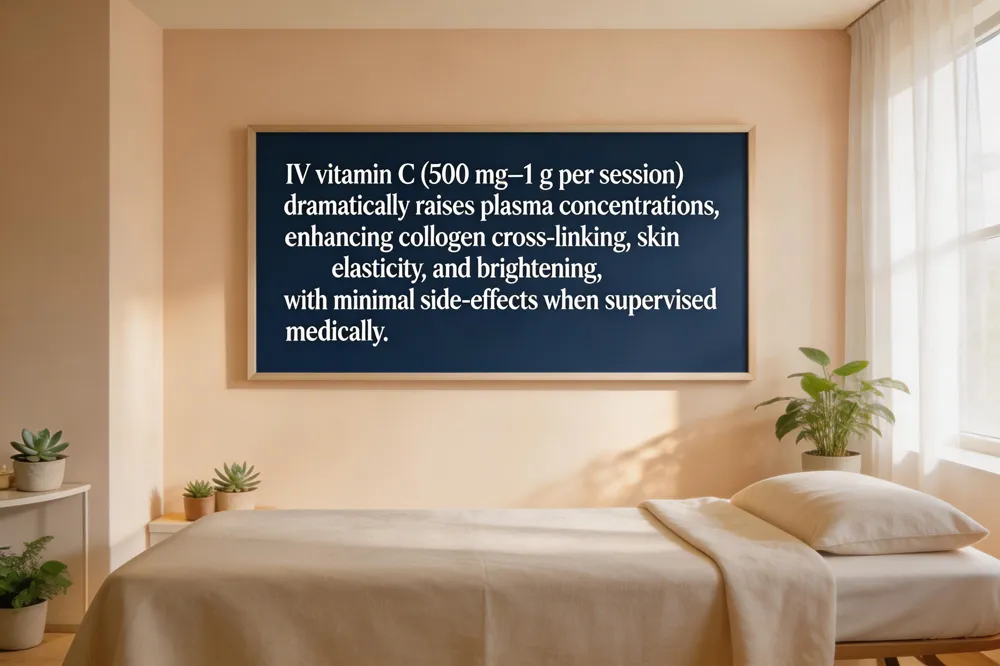 IV vitamin C achieves plasma concentrations far above oral supplementation, enabling the antioxidant to reach dermal fibroblasts efficiently. This high‑dose exposure supports collagen cross‑linking, improves elasticity, and can brighten skin by Vitamin C inhibits tyrosinase‑mediated melanin synthesis. Clinical observations report a noticeable “glow” and reduced fine‑line depth after weekly infusions, though large‑scale trials are still limited. A typical skin‑whitening protocol uses 500 mg–1 g of vitamin C per injection, often combined with glutathione (150 mg–500 mg) to enhance melanin inhibition and provide synergistic antioxidant protection. IV drips are generally safe; mild side‑effects include transient flushing, bruising at the infusion site, or a brief metallic taste. Rare reactions involve allergic rash or hypoglycemia in susceptible individuals. Prices vary by clinic, ranging from $150–$210 for a vitamin C‑focused drip and $199–$260 for combined glutathione‑vitamin C formulations, with member discounts and bulk‑package savings. In the Troy, Michigan area, Iconic Laser and nearby aesthetic centers offer customized antioxidant infusions administered by board‑certified staff.
Michigan Skin Rejuvenation Landscape – Options, Costs, and Specials
 Best skin rejuvenation treatments Michigan
Michigan’s top non‑surgical options blend advanced lasers (BBL®, Sciton HALO®, HERO®), fractional CO₂ resurfacing, and microneedling with PRF to stimulate collagen, tighten skin, and fade pigmentation. Gentle yet effective choices include Alpha‑Beta peels, dermaplaning, and IPL for brightening and tone‑evening.
Skin rejuvenation treatments Michigan cost
Typical pricing ranges: medical facials $125‑$175 (HydraFacial $149, DiamondGlow $125); Microneedling $200‑$800 per session (average $295, $675 with PRP); laser skin‑tightening/pigment packages $120‑$400 for partial‑face, $410‑$825 for full‑face/neck.
Skin rejuvenation treatments Michigan prices
A basic HydraFacial starts at $149, DiamondGlow at $125, and DNA Defense Facial at $140. Laser bundles begin at $120 for a partial face, exceeding $410 for full‑face/neck. Microneedling without add‑ons averages $200‑$800; with PRP $675.
Metro Health Cosmetic Treatment Center specials
Current offers: “Refresh & Revitalize” Vitamin C Firming Facial + free skin analysis; discounted Sciton MicroLaserPeel® + ProFractional™ laser combo; 50 % off CoolSculpting® when paired with CoolTone®; BOGO HydraFacial for new clients ($175 after discount). All specials require a brief consultation.
Patient considerations for budgeting
Assess skin goals, treatment frequency, and combine modalities (e.g., microneedling + PRP) to maximize results while spreading costs. Ask about bundled series discounts and financing options during the pre‑treatment consult.
Regional Dermatology Practices and Patient Experiences
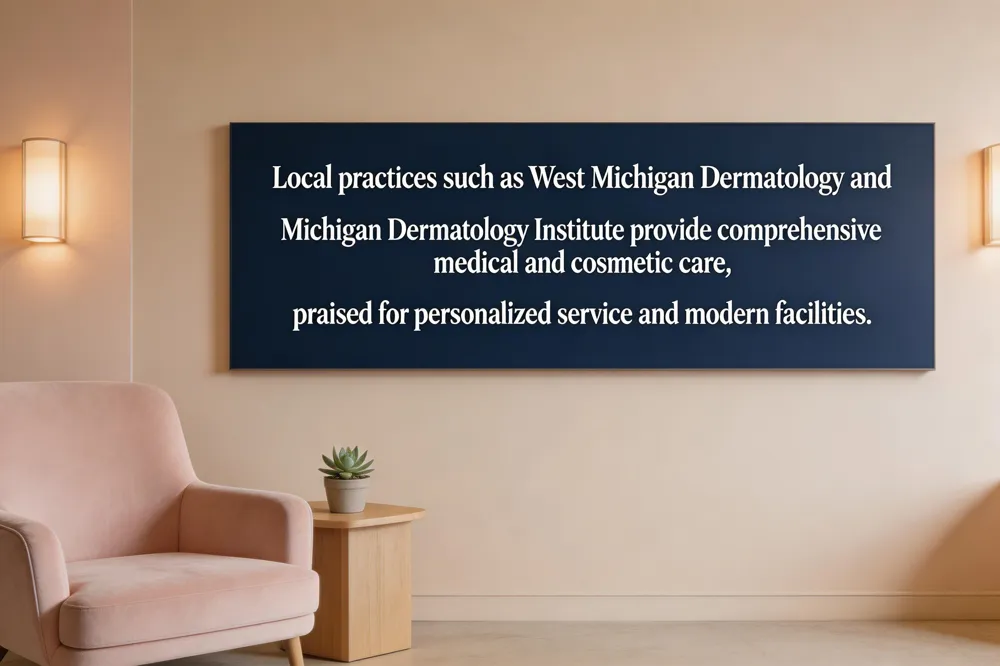 West Michigan Dermatology is a board‑certified practice serving Grand Rapids, Holland and surrounding areas with locations in Grandville and Rockford. It offers medical skin care—including cancer screening, acne, eczema, hair‑loss treatment—and a full suite of cosmetic services such as laser resurfacing, Botox, dermaplaning, and micro‑needling. Patients appreciate the caring staff, modern facilities, and personalized approach, though occasional wait‑time and scheduling inconsistencies are noted in online reviews (Grandville: 2.8‑star; Holland: 5‑star).
The Michigan Dermatology Institute (Michigan Derm Institute) operates multiple offices across western Michigan—Waterford, Caledonia, and Petoskey—providing medical, surgical, and cosmetic dermatology. Services include laser skin‑rejuvenation, acne/rosacea management, and skin‑cancer screening, with broad insurance acceptance and easy appointment scheduling via phone or web.
The Derm is a physician‑owned partnership that unites several dermatology practices under a shared business model. It delivers comprehensive care—Mohs surgery, laser therapies, injectables, and anti‑aging treatments—while leveraging centralized resources to keep costs low and preserve clinical autonomy. Together, these practices illustrate the region’s commitment to evidence‑based, non‑invasive aesthetic solutions and patient‑centered care.
Practical Tips and Frequently Asked Questions
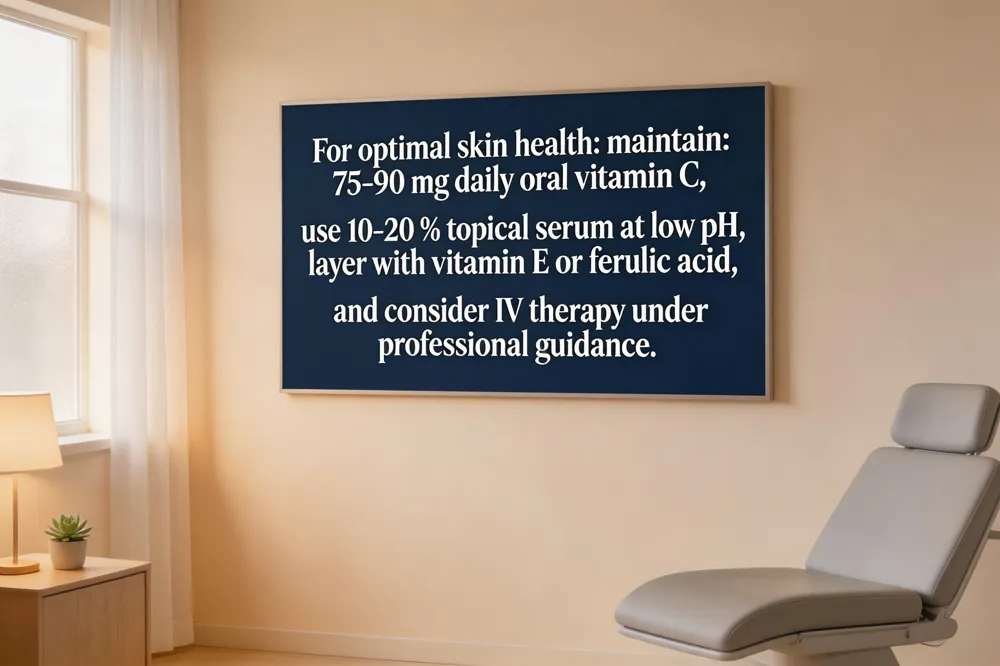 Daily vitamin C intake for skin health: Adult skin benefit from at least 75‑90 mg of vitamin C per day, the amount needed to keep plasma levels saturated. When plasma is saturated, skin vitamin C concentrations rise, supporting collagen‑hydroxylation, antioxidant defense, and barrier lipid synthesis. Clinical trials show that oral doses of 50‑180 mg/day improve elasticity, moisture, and wrinkle depth, while higher doses (500 mg‑1 g) raise the minimal erythemal dose and reduce UV‑induced DNA damage.
Layering vitamin C with other actives: L‑ascorbic acid (10‑20 % at pH < 3.5) pairs well with vitamin E, ferulic acid, and thiamidol. Apply the vitamin C serum first on clean, dry skin, allow it to absorb, then follow with thiamidol or other melanin‑targeting agents. Finish with a broad‑spectrum sunscreen to maximize photoprotection. Sensitive skin may start with lower concentrations and increase gradually.
Safety of high‑dose oral vitamin C: Oral bioavailability plateaus around 200‑300 mg per dose; doses above 1 g provide limited additional skin benefit and may cause gastrointestinal upset or kidney‑stone risk in predisposed individuals. High‑dose intravenous vitamin C (10‑25 g) bypasses this limit, delivering plasma concentrations 10‑100 × higher, which is generally safe under medical supervision.
Methadone interaction note: Limited data suggest that very high intravenous vitamin C (12 g) can modestly lower serum methadone levels, but a 24 g regimen did not produce a statistically significant change. Patients on methadone should discuss vitamin C supplementation with their prescriber.
How to use vitamin C injection for skin whitening: Schedule a consultation with a qualified aesthetic clinician. Typical protocols involve weekly intravenous infusions of 10‑25 g for 3‑4 weeks, followed by a maintenance schedule. Combine with gentle topical care, sunscreen, and adequate hydration to support collagen synthesis and pigment reduction. Monitor progress and adjust as needed.
Integrating Vitamin C Into a Premium Rejuvenation Protocol
Integrating oral, topical, and IV vitamin C maximizes skin resilience and rejuvenation. Oral supplementation (≥50 mg/day) restores systemic stores, especially in individuals with sub‑saturating plasma levels, while high‑dose IV infusions (7 g per session) achieve plasma concentrations 10‑fold higher, supporting collagen cross‑linking, fibroblast proliferation, and rapid post‑procedure recovery. Topical serums containing 10‑20 % L‑ascorbic acid at pH < 3.5 penetrate the epidermis, neutralize UV‑induced ROS, inhibit tyrosinase, and stimulate collagen I/III synthesis. For optimal protection, a broad‑spectrum sunscreen must be applied daily, and all vitamin C protocols should be overseen by a board‑certified dermatologist to tailor dosage, delivery method, and frequency to the patient’s skin type, concerns, and budget. This personalized, science‑backed approach delivers consistent improvement in elasticity, texture, and pigmentation while maintaining safety.