Why Choose Non‑Invasive Sculpting?
The Rise of Non‑Surgical Body Contouring
The demand for non‑invasive aesthetic procedures has surged, with over 188,000 Americans opting for skin‑tightening treatments in 2020 alone. Patients increasingly seek effective alternatives to surgery that offer minimal downtime, fewer risks, and natural‑looking results. Non‑surgical body sculpting, which reshapes specific areas without incisions or anesthesia, has become a mainstream solution for those looking to refine their silhouette and address early signs of aging.
Key Technologies: Ultrasound and Radiofrequency (RF)
Two leading technologies power most modern non‑surgical sculpting treatments: ultrasound and radiofrequency (RF).
- Ultrasound uses high‑frequency sound waves to create targeted thermal effects. High‑Intensity Focused Ultrasound (HIFU) delivers focused energy to deeper layers, such as the SMAS, providing a lifting effect comparable to a surgical facelift. Ultrasound cavitation disrupts fat cells through microscopic bubbles, which the body then naturally eliminates.
- Radiofrequency (RF) employs electromagnetic waves to generate controlled heat within the dermis. This heat stimulates collagen and elastin production, contracts existing collagen fibers, and can induce fat cell apoptosis. RF is safe for all skin types and effectively tightens skin while reducing localized fat.
Both technologies are FDA‑cleared, non‑invasive, and involve little to no downtime, making them attractive options for patients who want to avoid the cost and recovery of surgery.
What to Expect from This Guide
This guide provides a comprehensive, science‑based comparison of ultrasound and RF body‑contouring and skin‑tightening treatments. You will learn the distinct mechanisms of each technology, their ideal applications, treatment protocols, expected results, side effects, and cost considerations. Our goal is to equip you with the knowledge needed to have an informed consultation with a qualified provider and choose the personalized plan that best aligns with your aesthetic goals and lifestyle.
Understanding the Core Differences

What is the difference between ultrasound and radio frequency?
Ultrasound and radio frequency (RF) are two distinct non-surgical skin-tightening technologies that operate through different energy sources. Ultrasound uses focused sound waves to generate heat deep within the tissue, while RF relies on electromagnetic waves to heat the skin's deeper layers.
RF targets the dermis, stimulating collagen and elastin production to improve skin texture and firmness. Ultrasound, particularly High-Intensity Focused Ultrasound (HIFU), can reach the SMAS layer, the same tissue addressed in a surgical facelift, providing a more pronounced lifting effect. This makes RF ideal for overall skin tightening and texture improvement on the face and body, whereas ultrasound is better suited for lifting the brow, jawline, and neck.
What are the pros and cons of body sculpting?
Both RF and ultrasound offer significant pros for body sculpting. They are non-invasive, require minimal to no downtime, and can effectively target stubborn fat pockets and skin laxity. Results are natural-looking and can be long-lasting with a healthy lifestyle. However, the cons include that these treatments are not for weight loss, results develop gradually over weeks or months, and multiple sessions are often required. Both modalities produce modest changes compared to surgery, so realistic expectations are essential.
Depth of Penetration and Typical Treatment Areas
The depth of penetration dictates the best use for each technology. RF primarily heats the dermis and sub-dermal layers, making it versatile for treating larger body areas such as the abdomen, thighs, and arms for skin tightening and fat reduction. It also works well on the face and neck for fine lines and mild laxity. Ultrasound, reaching the deeper SMAS, is most effective for targeted lifting on the face, neck, and décolleté. For body contouring, ultrasound is also used to disrupt fat cells in specific areas like the abdomen and flanks. In practice, a clinic may offer both modalities to create complementary plans: RF for body contouring and skin tightening, and ultrasound for a non-surgical facial lift.
| Feature | Radio Frequency (RF) | Ultrasound (HIFU) |
|---|---|---|
| Energy Source | Electromagnetic waves | Focused sound waves |
| Primary Target | Dermis, sub-dermal fat | SMAS, deep dermis, fat |
| Depth of Action | Superficial to mid-dermal | Mid-dermal to deep (SMAS) |
| Ideal Treatment Areas | Face, neck, abdomen, arms, thighs | Face, neck, brow, décolleté |
| Main Effect | Skin tightening, texture, cellulite reduction | Lifting, deep tightening, fat reduction |
Skin Tightening: Which Modality Delivers Better Lift?

Is ultrasound or radio frequency better for skin tightening?
The choice between ultrasound and radio frequency depends on the depth of your concern. High-Intensity Focused Ultrasound (HIFU) , with platforms like Ultherapy® and Sofwave™, penetrates deep into the Superficial Musculo‑Aponeurotic System (SMAS)—the same layer targeted in surgical facelifts. This makes HIFU superior for lifting and addressing mild to moderate sagging, particularly in the lower face, neck, and brow. Ultrasound achieves a more pronounced lift by creating controlled thermal coagulation points, with results emerging over 2‑3 months and lasting 12‑18 months.
Radiofrequency (RF) , in contrast, uses electromagnetic energy to heat the dermis. This stimulates fibroblasts to produce new collagen and elastin, improving skin texture, firmness, and fine lines. RF is versatile for both face and larger body areas, often requiring a series of 3‑6 sessions. While its lifting effect is more subtle than HIFU’s, RF can tighten skin on the abdomen, arms, and thighs, offering a gentler but effective option for overall skin rejuvenation.
How do patient comfort and sensation compare?
The treatment experience differs significantly between the two modalities. Patients typically describe RF as a soothing, deep warmth or a warm massage, making it comfortable for those with lower pain thresholds. Sessions last 30‑70 minutes, with minimal discomfort during the procedure.
HIFU can feel more intense. Patients often report a brief stinging or prickling sensation when ultrasound energy is delivered to deeper layers. While discomfort is temporary and can be mitigated with topical numbing cream, it is a key consideration for sensitive individuals. Both modalities allow patients to resume normal activities immediately after treatment.
What are the side‑effect and safety profiles?
Both technologies are classified as non‑invasive and have excellent safety records. Common side effects for both are mild and transient, including temporary redness, swelling, and warmth, which resolve within hours to a few days.
Rare RF risks include burns, blisters, nodules, or changes in skin color, typically linked to operator inexperience or improper device settings. The FDA has also reported cases of unintended fat loss with aggressive RF microneedling. Rare HIFU risks primarily involve bruises, nerve damage, or burns, though these are uncommon with proper technique.
Crucially, both modalities are safe for all skin types. RF is pigment‑independent, making it an inclusive option for darker skin tones. While HIFU works best on fair‑to‑medium skin, modern devices like Sofwave are designed to minimize risk on darker Fitzpatrick types.
| Feature | Ultrasound (HIFU) | Radiofrequency (RF) |
|---|---|---|
| Primary Mechanism | Focused sound waves create thermal coagulation points | Electromagnetic waves heat dermal tissue |
| Target Depth | SMAS and deep dermis | Dermis and sub‑dermal layers |
| Best For | Lifting, mild‑to‑moderate sagging (face, neck, brow) | Texture improvement, fine lines, laxity (face & body) |
| Treatment Course | 1‑3 sessions | 3‑6 sessions |
| Sensation | Stinging/prickling pain | Deep, soothing warmth |
| Safety Concern | Rare nerve damage or nerve injury | Rare burns, fat loss with microneedling |
In summary, neither modality is universally “better.” The optimal choice depends on individual anatomy, skin concerns, and comfort preferences. A personalized consultation remains essential for tailoring a treatment plan that may even combine both technologies for synergistic results. Safety further hinges on an experienced practitioner using FDA‑cleared devices to minimize adverse events.
Body Contouring: Fat Reduction and Toning
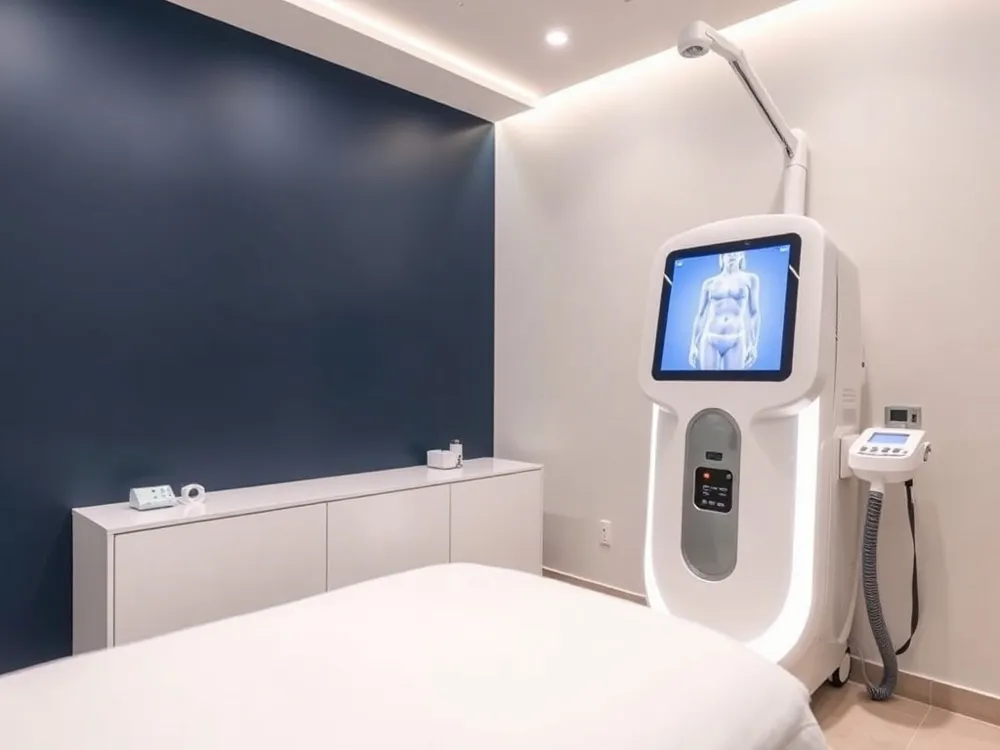
What are the benefits and drawbacks of ultrasound body contouring?
Ultrasound body contouring is a non-invasive, FDA-approved procedure that uses ultrasonic waves to break down fat cells, which are then naturally eliminated by the body. Benefits include no downtime, minimal discomfort, and natural-looking results that can last with a healthy lifestyle. It is effective for reducing localized fat and cellulite on areas like the abdomen and thighs.
However, it is not a weight loss solution. Drawbacks include potential temporary side effects such as pain, redness, and swelling. It is not suitable for everyone, including pregnant women, individuals with metal implants, or those with certain medical conditions.
What are the benefits and drawbacks of radiofrequency body sculpting?
Radiofrequency body sculpting is a non-invasive treatment with minimal downtime, allowing patients to return to daily activities immediately. It stimulates collagen and elastin production, leading to natural-looking skin tightening and fat reduction in stubborn areas. The procedure is versatile and can be applied to various body parts.
However, drawbacks include that it is not a weight loss solution. Results are temporary and may require maintenance sessions. It is less effective for individuals with severe skin sagging. Additionally, multiple sessions are often needed to achieve desired outcomes.
How does ultrasound lipolysis work for belly fat?
Ultrasound lipolysis uses focused ultrasonic energy to selectively target and disrupt fat cells in the belly area without harming surrounding tissues. The sound waves create pressure changes that cause fat cell membranes to break down, liquefying the fat inside. The body then naturally processes and eliminates the released fat through the lymphatic system. This precision makes it especially effective for stubborn belly fat.
Does ultrasonic cavitation work for weight loss?
No, ultrasonic cavitation is not a weight loss solution. It is a body contouring treatment designed to target stubborn, localized fat pockets. Clinical studies show it can reduce circumference by 2-4 centimeters, but it does not significantly lower the number on the scale. For lasting results, it must be combined with healthy lifestyle habits.
Cost, Safety Concerns, and Cancer Myths
How much does ultrasonic liposuction cost?
Ultrasonic liposuction, a minimally invasive surgical procedure, has an average cost of around $3,200 per treatment area. This fee typically includes the surgeon's fee, anesthesia, and facility costs. In contrast, non-invasive ultrasonic cavitation is more affordable per session, with typical costs ranging from $675 to $800, though multiple sessions (often 6-12) are required for optimal results.
How much does ultrasound skin tightening cost?
High-Intensity Focused Ultrasound (HIFU) skin tightening, such as with Ultherapy or Sofwave, is priced per area. Ultherapy costs range from $950 to $5,300, while Sofwave is generally between $950 and $3,500. These treatments often require 1-3 sessions. The total cost can be comparable to a full series of RF treatments, but ultrasound's longer-lasting results (12-18 months) can make it more cost-effective long-term.
What is the typical pricing for RF body sculpting?
Radiofrequency (RF) body sculpting is typically priced per session. For example, Sylfirm X Tight costs between $800 and $1,500 per session. Since most RF protocols require 3-6 sessions, the total investment can be significant. However, maintenance sessions are typically needed every 6-12 months to sustain results, which adds to the long-term cost.
Can ultrasonic cavitation cause cancer?
There is no established link between ultrasonic cavitation and cancer. This non-invasive procedure uses low-frequency ultrasound waves to break down fat cells, which the body then eliminates. The treatment is FDA-approved and considered safe when performed by a qualified professional. While some temporary side effects like bruising or redness may occur, these are not related to cancer development.
What about the cancer risk from RF?
Similarly, no conclusive evidence links RF skin tightening to cancer. The World Health Organization classifies radiofrequency waves as “possibly carcinogenic,” but this classification is for high-level, occupational exposure, not the brief, controlled bursts used in aesthetic treatments. The RF energy used in medical devices is low-frequency and considered safe, with a strong safety record.
| Modality | Typical Cost per Session | Typical Number of Sessions | Total Cost Estimate | Result Longevity | Safety & Cancer Myth |
|---|---|---|---|---|---|
| Ultrasonic Cavitation | $675 - $800 | 6-12 | $4,050 - $9,600 | Maintenance needed | No link to cancer; FDA-approved |
| HIFU (Ultrasound) | $950 - $5,300 | 1-3 | $950 - $5,300+ | 12-18 months | No link to cancer; safe for most skin types |
| RF Skin Tightening | $800 - $1,500 | 3-6 | $2,400 - $9,000+ | 6-12 months | No link to cancer; safe for all skin tones |
| RF Body Sculpting | Varies by area | 3-6 | Varies | 6-12 months | No link to cancer; skin-tone neutral |
Age, Candidacy, and Surgical Alternatives
What is the best age for RF skin tightening?
While there is no single “best” age, RF skin tightening is most effective for individuals in their mid-30s to early 50s. This is when visible signs of aging—such as sagging and loss of elasticity—become apparent, and the natural decline in collagen and elastin accelerates. The treatment is ideal for those with early to moderate skin laxity who seek a non-surgical facelift alternative. Clinical results show up to a 30% improvement in skin thickness and tightness, with effects lasting 4–5 years per session. Candidacy depends more on skin condition and goals than chronological age, so a consultation with a specialist is essential.
Is there an age limit for Ultherapy?
Ultherapy has no strict age limit. Its effectiveness depends on skin health and laxity rather than chronological age. Younger patients often see faster results due to higher collagen levels, but older individuals with healthy skin can also achieve meaningful improvements. Factors like smoking or significant sun damage are more likely to compromise outcomes than age itself. The best candidate is someone with mild to moderate skin sagging who is in good overall health, regardless of age.
What are the cons of body contouring?
Surgical body contouring has several downsides. Recovery involves significant swelling, pain, and restricted activity, as rigorous exercise can hinder healing. The procedure often leaves noticeable scarring, and achieving desired results may require multiple surgeries with extended downtime. Strict candidacy requirements include a BMI under 30, stable weight for at least six months, and a commitment to avoid tobacco. Patients must also maintain realistic expectations, as final results take months to fully develop.
How age and skin condition influence outcomes
| Factor | Influence on Results |
|---|---|
| Patient Age | Younger patients (30s-40s) tend to have better natural collagen production, leading to more robust RF and ultrasound results. |
| Skin Health | Healthy, well-hydrated skin responds more predictably to energy-based treatments, while sun-damaged or neglected skin may show slower improvement. |
| Degree of Laxity | Mild to moderate sagging responds best to non-surgical methods; severe laxity may require surgical lift for optimal correction. |
| Lifestyle Factors | Smoking, poor diet, and chronic sun exposure can significantly reduce collagen stimulation and treatment effectiveness. |
Risks, Weight Impact, and Patient Expectations
What are the risks of ultrasonic cavitation?
Ultrasonic cavitation is generally safe, but minor, temporary side effects can occur. These include bruising, redness, pain or discomfort at the treatment site, skin sensitivity, and occasional headaches. More serious risks like tissue damage or burns are possible if the procedure is performed incorrectly or at too high an intensity. There is no scientific evidence linking ultrasonic cavitation to cancer or internal organ damage when used properly on FDA-cleared devices. To minimize risk, treatment should be avoided during pregnancy, breastfeeding, or if you have certain medical conditions, active implants, or metal in the treatment area.
How many pounds can you lose with ultrasonic cavitation?
Ultrasonic cavitation is designed for inch loss, not significant weight loss, so you will likely not see a dramatic drop on the scale. The treatment targets localized fat pockets, and any weight reduction is typically minimal—often less than a few pounds—as the body flushes out the released fat content over time. Instead of focusing on pounds, most clients notice their clothes fitting better and a slimmer appearance in treated areas like the abdomen or thighs. This is because fat volume decreases while overall body weight remains stable, improving body composition rather than overall weight.
The importance of lifestyle support after treatment
To maintain results, lifestyle habits are essential. The destroyed fat cells do not regenerate, but remaining fat cells can still enlarge if you gain weight. A stable weight achieved through a balanced, low-calorie diet and regular exercise supports the lymphatic system in clearing the liquefied fat and prevents new fat accumulation. While the procedure provides a head start, it is not a substitute for a healthy lifestyle. Post-treatment, patients are advised to stay well-hydrated and maintain a low-glycemic index diet to help conditions like pre-diabetes and ensure lasting contouring outcomes. Long-term success hinges on this combined approach.
Putting It All Together: Choosing the Right Modality for You
Decision-Making Framework
Select the appropriate treatment by evaluating these clinical criteria:
- Goal: Ultrasound reduces localized fat; RF improves skin texture and firmness.
- Area: Ultrasound targets larger zones like the abdomen; RF excels on smaller contours such as the face and neck.
- Candidacy: Both modalities are safe across all skin types with zero downtime.
| Modality | Primary Action | Typical Courses |
|---|---|---|
| Ultrasound | Fat disruption | 1-3 sessions |
| RF | Collagen build | 4-6 sessions |
Ultrasound penetrates deeper for lifting and fat reduction, while RF stimulates dermal tightening and enhances cellulite appearance. Integrating these technologies can address multiple concerns simultaneously for optimized sculpting.
Combination Therapy
Aesthetic professionals may design synergistic protocols that combine RF and ultrasound in a single visit. This approach allows providers to maximize surface refinement through RF while utilizing ultrasound for deeper fat cell disruption, delivering comprehensive contouring results that neither modality achieves alone.
Your Personalized Path to a Sculpted Look
Choosing between radiofrequency (RF) and ultrasound is about aligning the technology with your specific goals. RF deeply heats the dermis to stimulate collagen, making it ideal for improving skin texture, tightening mild laxity, and reducing cellulite across larger body areas. Ultrasound, by contrast, uses focused sound waves to precisely target the SMAS layer, offering a more pronounced lifting effect for significant facial sagging.
The best choice isn't generic—it's personal.
Your unique anatomy, skin type, and desired outcome determine the optimal approach. At Iconic Laser, our expertise begins with a professional evaluation. We assess your skin laxity, fat distribution, and health history to recommend either RF, ultrasound, or a synergistic combination of both. This personalized roadmap ensures you receive the most effective, safe, and satisfying treatment for your sculpting journey.
Take the first step with a free skin analysis.
Understanding your options is empowering. We invite you to schedule a complimentary skin analysis at Iconic Laser. During this no-obligation consultation, we will discuss your aesthetic vision and outline a customized plan using our advanced technologies. Discover how you can achieve a naturally sculpted look with confidence.