Introduction
Radiofrequency (RF) technology has become a cornerstone of non‑invasive aesthetic medicine, delivering controlled electromagnetic energy that heats the dermis to 40‑70 °C. This thermal stimulus triggers immediate collagen fiber contraction and a subsequent wound‑healing cascade that activates fibroblasts, leading to neocollagenesis and elastin remodeling over weeks to months. RF devices are offered in monopolar, bipolar, and multipolar configurations; monopolar systems provide deeper penetration (up to 20 mm) but require careful pain management, while bipolar and multipolar electrodes offer more uniform, superficial heating with lower discomfort. Safety is ensured by real‑time temperature monitoring, cooling mechanisms, and adherence to FDA‑cleared protocols, making RF suitable for all skin types and minimizing risks such as burns or pigmentary changes.
How RF Skin Tightening Works on the Neck
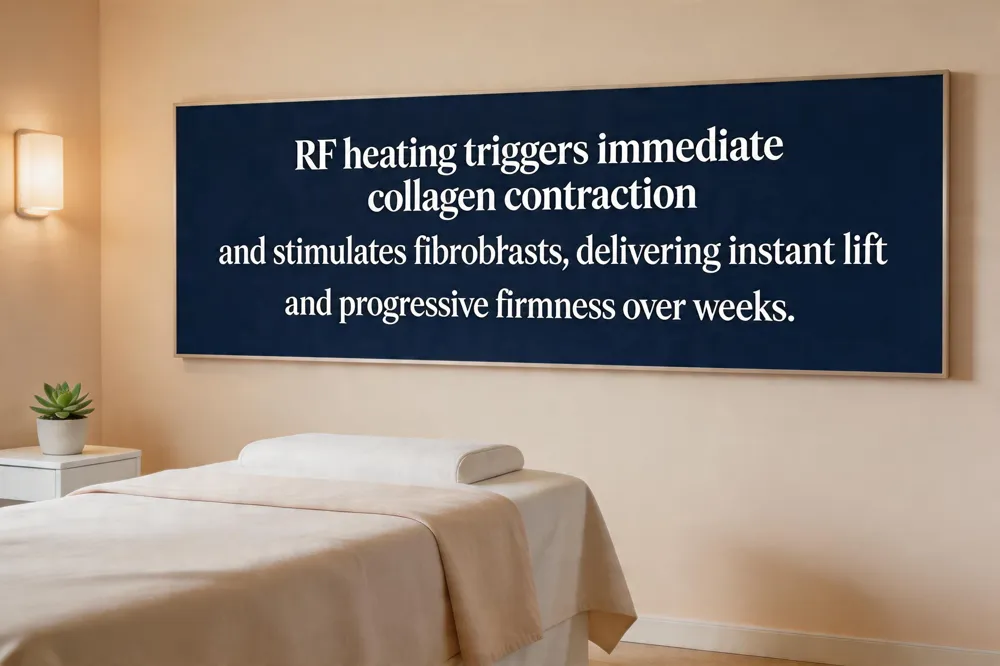 Radiofrequency (RF) skin tightening delivers low‑frequency electromagnetic waves that are absorbed by tissue resistance and converted into heat (Joule heating) within the dermal and sub‑dermal layers of the neck.
By raising dermal temperature to the therapeutic window of 40‑45 °C (104‑113 °F), the energy produces a controlled thermal injury that causes immediate collagen fiber contraction; the heat‑denatured triple helices unwind and shrink, giving an instant tightening effect and a subtle lift of sagging skin.
The thermal stimulus also activates fibroblasts, which begin producing new collagen (type I and III) and elastin during the wound‑healing cascade. Heat‑shock proteins and growth factors such as TGF‑β are up‑regulated, driving neocollagenesis and elastin remodeling over a 4‑6‑week period. New collagen fibers are more tightly packed and organized, while elastin fibers regain their elastic recoil, resulting in progressive improvement in skin firmness and texture.
For the neck, these mechanisms translate into specific benefits: reduction of horizontal neck lines, attenuation of platysmal bands, and overall tightening of mild to moderate laxity. Because RF energy is independent of melanin absorption, it is safe for all Fitzpatrick skin types and can be administered with monopolar (deeper) or bipolar (more superficial) configurations to target the deep reticular dermis where the bulk of collagen resides. Multiple low‑energy passes across 6‑8 sessions are typically recommended to maximize collagen turnover while minimizing discomfort and downtime.
RF Microneedling: What to Expect Before and After
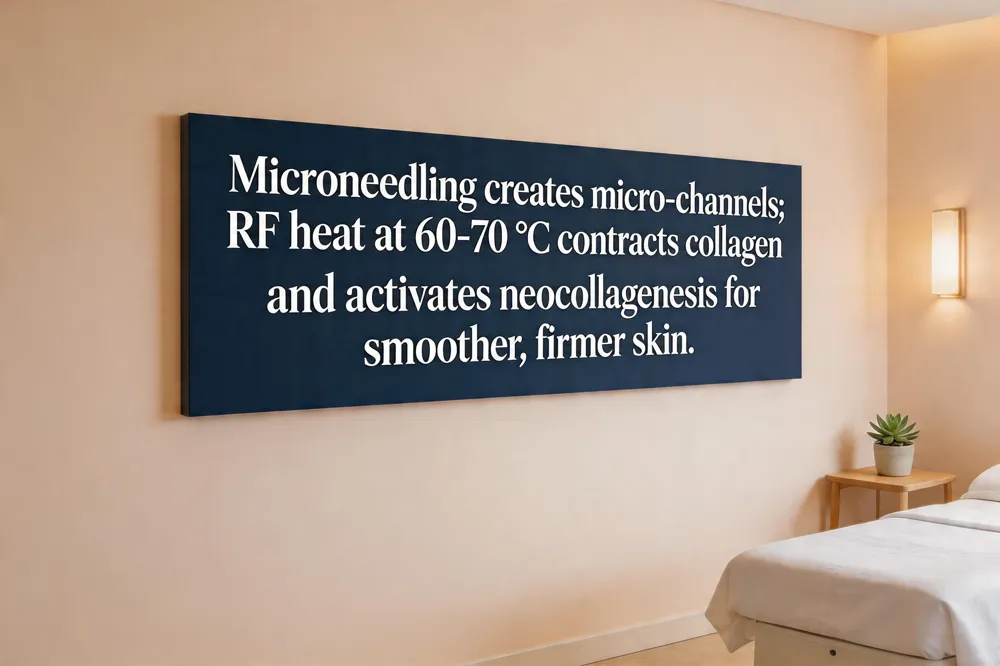 RF microneedling combines insulated needles with RF energy to deliver controlled heat deep into the dermis, creating precise micro‑channels. The tiny channels initiate a natural wound‑healing cascade, and the RF‑induced temperature rise (typically 60‑70 °C) causes immediate collagen fiber contraction and triggers fibroblast activation. This dual action results in neocollagenesis and elastin remodeling over weeks.
Before treatment patients usually present with acne scars, fine lines, uneven texture, or mild laxity that appears dull and uneven. A typical protocol involves 3‑6 sessions spaced 4‑6 weeks apart, each lasting 30‑60 minutes, with minimal downtime (transient erythema and edema resolve within 24‑48 hours).
Collagen timeline: the inflammatory phase starts within days, but peak collagen synthesis occurs around 3‑4 weeks post‑session, continuing for an additional 2‑4 weeks. The remodeling phase can extend to 6‑8 weeks, during which newly formed type I and III collagen fibers reorganize, improving firmness and texture.
Typical visual outcomes include smoother, firmer skin with a more even tone, reduced scar depth, and a subtle lift. Improvements become noticeable by the third week, peak at 4‑6 weeks, and can be maintained with annual touch‑ups. Because the procedure targets the dermal matrix rather than the surface, results are durable and suitable for all Fitzpatrick skin types when performed by a qualified provider.
Benefits of RF Tightening for Facial Rejuvenation
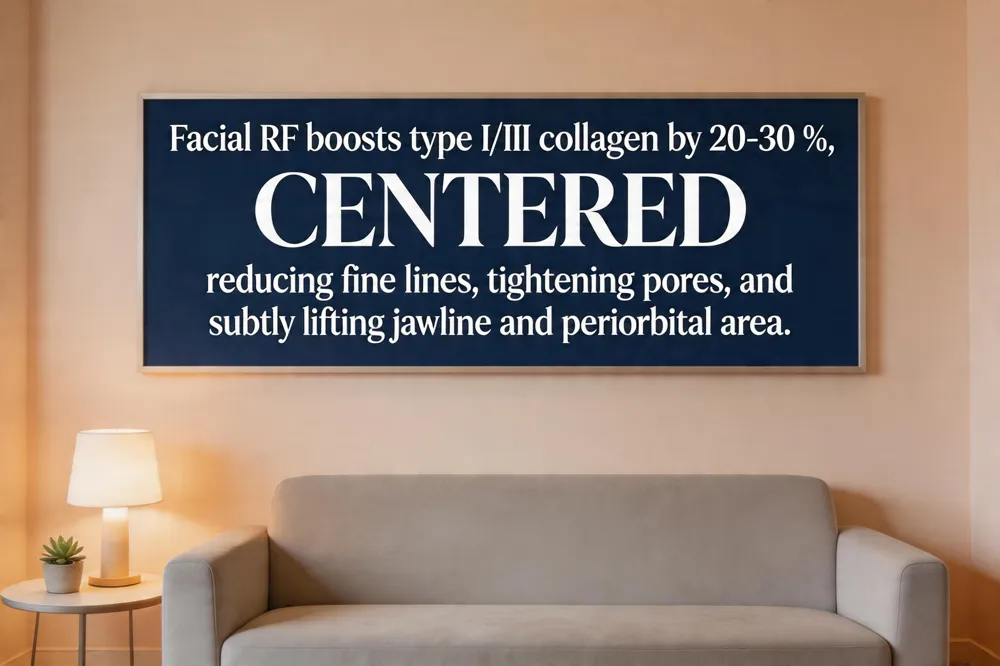 Radio‑frequency (RF) facial tightening delivers controlled thermal energy to the mid‑ and deep dermis, raising tissue temperature to 40‑45 °C. This heat denatures existing collagen helices, causing immediate fiber contraction that patients an instant tightening effect. The subsequent wound‑healing cascade activates fibroblasts, up‑regulating heat‑shock proteins and growth factors such as TGF‑β, which drive neocollagenesis. Over the next 2‑6 months, type I and type III collagen synthesis increases by 20‑30 %, thickening the dermis, reorganizing elastin, and improving skin hydration. Clinically, patients observe a progressive reduction of fine lines, smoother texture, tighter pores, and a subtle lift of the jawline and periorbital area; studies report up to 83 % improvement in periorbital rhytides and a 0.5 mm or greater eyebrow elevation after multiple sessions. Because RF works beneath the epidermis and is independent of melanin absorption, it is safe for all skin types and carries a low risk of pigmentary change. Compared with surgical facelifts, RF offers minimal downtime—only transient erythema and edema resolve within 24‑48 hours—allowing patients to resume normal activities immediately. The gradual, natural‑looking results, combined with a favorable safety profile, make RF tightening a compelling non‑invasive alternative to facelift surgery for facial rejuvenation.
Body Applications: Tummy, Abdomen, and Beyond
 Radiofrequency (RF) body tightening harnesses controlled electromagnetic heat to stimulate collagen denaturation, immediate fiber contraction, and a wound‑healing cascade that drives neocollagenesis over 2‑6 months. Radio frequency tummy tightening before and after – Patients typically see a smoother, firmer abdominal surface within 1‑2 months, with the most pronounced waistline reduction around 3 months. Clinical data report a 1‑3‑inch decrease in abdominal circumference and a flatter midsection as newly formed collagen stabilizes by 6‑12 months. Before photos show loose, textured skin and a “muffin‑top” bulge; after photos reveal tighter, more even skin without downtime. RF skin tightening before and after – On the face, neck, or body, lax skin, texture irregularities, and fine lines improve after a series of 3‑6 sessions. The treatment delivers heat that contracts existing collagen and triggers fibroblasts to produce new type I/III collagen and elastin, resulting in firmer, smoother skin that continues to refine for months after the final session. Radio frequency skin tightening – Modern monopolar, bipolar, and multipolar devices allow clinicians to customize depth (up to 20 mm for deep dermal remodeling) while monitoring temperature to avoid burns. The procedure is non‑invasive, safe for all Fitzpatrick skin types, and offers natural‑looking lift with minimal downtime, making it an attractive alternative for mild‑to‑moderate laxity. For abdominal skin tightening and waistline contour, RF delivers uniform dermal heating (40‑45 °C) that contracts collagen and initiates fibroblast activity, producing gradual tightening. Similar protocols are applied to arms, thighs, and buttocks, where multiple low‑energy passes (≥400 pulses per area) improve firmness and texture. Typical protocols involve 6‑8 weekly sessions of 20‑30 minutes, each spaced 2‑3 weeks apart, with maintenance every 12‑18 months. Compared with surgical options, RF yields 10‑30 % improvement in skin firmness, avoids scars and anesthesia, and offers a recovery time of under 24 hours, though surgical lifts remain superior for severe laxity.
Safety, Risks, and Common Concerns
 Radiofrequency (RF) skin‑tightening works by heating the dermis to 40‑45 °C, triggering collagen denaturation and neocollagenesis. Most patients experience only mild, short‑lived reactions such as transient erythema, mild edema, a warm or sunburn‑like sensation, and occasional pinpoint bleeding. These effects typically resolve within 24–48 hours and indicate normal tissue response. Rare but serious complications can occur when energy settings are excessive or the operator lacks experience: superficial to deep thermal burns, hypertrophic or atrophic scarring, localized lipoatrophy, nerve injury causing numbness or dysesthesia, and, in extreme cases, permanent pigmentary changes. The International Agency for Research on Cancer classifies RF as “possibly carcinogenic” (Group 2B) based on limited occupational data; however, the low‑dose, brief, non‑ionizing exposure used in cosmetic RF does not damage DNA, and large epidemiologic studies have found no credible link to cancer. If adverse events arise—persistent pain, blistering, discoloration, or prolonged swelling—patients should seek prompt evaluation from a board‑certified dermatologist or qualified aesthetic physician. Early intervention may involve gentle wound care, topical agents, laser or light‑therapy, and, if needed, surgical revision. Selecting an experienced, FDA‑cleared device provider and following pre‑ and post‑treatment protocols dramatically reduces risk and ensures safe, effective collagen remodeling.
Patient Experience, Reviews, and Maintenance
 Real‑world patient satisfaction and review trends
Patients consistently report smoother, firmer skin with noticeably fewer fine lines after RF skin‑tightening. Reviews show the most dramatic collagen remodeling improvements between three and six months post‑procedure, and many experience lasting firmness for 12‑18 months. Satisfaction is highest when providers tailor settings to individual skin type and concerns, underscoring the importance of clinician expertise.
Duration of results and maintenance schedules
RF‑induced collagen remodeling continues for up to six months, delivering gradual tightening that can be sustained for 12‑24 months. Maintenance sessions—typically every 6‑12 months—help preserve and extend the effect. Patients who follow diligent sun‑protection and skincare regimens tend to enjoy the longest‑lasting outcomes.
Home‑use RF options versus professional devices
At‑home RF units (e.g., EvenSkyn® Lumo) deliver low‑frequency energy that heats deeper dermal layers, stimulating collagen and elastin production. They are more affordable, painless, and convenient for mild laxity, but operate at lower temperatures (≤43 °C) and require longer exposure times. Professional systems (monopolar, bipolar, fractional) provide deeper, controlled heating (40‑70 °C) for more pronounced remodeling, with real‑time temperature monitoring and superior safety features.
Finding qualified providers near Troy, Michigan
Patients should seek board‑certified dermatologists, plastic surgeons, or licensed aestheticians with FDA‑cleared RF devices. Clinics such as La Vida Aesthetics Institute (Troy, MI) offer personalized protocols, temperature‑controlled monopolar and bipolar systems, and combined modalities (e.g., RF + microneedling) to maximize collagen synthesis while minimizing downtime. A thorough consultation ensures safe, effective treatment tailored to each patient’s aesthetic goals.
Conclusion
In this final section we bring together the scientific foundations, clinical outcomes, safety considerations, and practical next steps that define modern radio‑frequency (RF) skin‑tightening treatments. By recapping the collagen‑remodeling cascade, highlighting the breadth of aesthetic benefit, emphasizing patient‑selection criteria, and inviting readers to schedule a personalized evaluation at Iconic Laser in Troy, Michigan, we provide a concise but comprehensive roadmap for anyone considering this non‑invasive, science‑backed option.
Recap of Collagen‑Remodeling Mechanisms RF energy, whether delivered via monopolar, bipolar, multipolar, or fractional platforms, converts electromagnetic waves into controlled thermal injury within the dermis. When tissue temperature reaches the therapeutic window of roughly 40‑45 °C for low‑energy protocols and 60‑70 °C for high‑energy regimens, several tightly knit biological events unfold. First, native collagen helices denature, breaking hydrogen bonds and causing immediate fiber shrinkage—this is the instant tightening that patients notice during and shortly after treatment. Second, the heat‑shock response up‑regulates proteins such as HSP47 and growth factors like TGF‑β, PDGF, and VEGF, which recruit fibroblasts to the site of injury. Third, fibroblasts enter a proliferative phase, synthesizing new type III collagen within the first 4‑6 weeks and gradually replacing it with mature type I collagen over the next 2‑6 months. This neocollagenesis is accompanied by elastin remodeling, hyaluronic‑acid production, and re‑organization of the extracellular matrix, collectively restoring skin firmness, elasticity, and a smoother texture. The process is three‑phased: (1) immediate thermal contraction, (2) early‑phase fibroblast activation (days 1‑7), and (3) long‑term remodeling (weeks 2‑24). Histologic studies consistently report a 20‑30 % increase in dermal collagen density and a measurable thickening of the epidermis after a series of 3‑6 RF sessions, confirming that the biochemical cascade translates into tangible structural change.
Key Clinical Benefits Across Facial and Body Areas Because the dermis houses the bulk of type I and III collagen, RF‑induced remodeling improves a wide spectrum of aesthetic concerns. In the face, patients experience reduction of periorbital rhytides, lift of the brows, smoothing of nasolabial folds, and tightening of jowl contour. Multicenter trials have documented up to 83 % improvement in periorbital wrinkles and a non‑surgical eyebrow elevation of ≥0.5 mm in 62 % of subjects after multiple sessions. Neck, décolletage, and mandibular lines also benefit from the deep‑penetration capability of monopolar devices (up to 20 mm) or the more controlled, superficial heating of bipolar systems (2‑4 mm), which is ideal for delicate cervical skin. Body‑wide applications—arms, abdomen, thighs, and buttocks—show enhanced firmness, reduced laxity, and even modest cellulite improvement, reflecting the uniform reduction of dermal thickness and the tightening of sub‑cutaneous fibrous septae. Patient‑reported outcomes consistently reveal a 10‑30 % increase in skin elasticity (Cutometer R2, R6, R7 values) and a 30‑50 % improvement in firmness scores after 3‑5 spaced treatments. Importantly, these benefits are durable: the newly synthesized collagen matrix can sustain results for 1‑3 years, with maintenance sessions (every 12‑18 months) helping to preserve the gains.
Safety, Patient Selection, and the Importance of Experienced Providers RF technology is intrinsically safe across the Fitzpatrick spectrum because it does not rely on melanin absorption, thereby minimizing the risk of pigmentary complications that plague many laser modalities. Nevertheless, safety hinges on precise temperature monitoring, appropriate energy settings, and adherence to evidence‑based protocols. The most common transient adverse events—mild erythema, edema, and a warm sensation—resolve within 24‑48 hours. Rare complications such as vesiculation or burns are almost always linked to operator error, excessive power, or inadequate cooling. Consequently, a thorough pre‑procedure assessment is mandatory: clinicians must verify that the patient is not pregnant, does not have active skin infections, and has no implanted electronic devices (e.g., pacemakers). Skin‑type analysis, pain‑threshold evaluation, and a review of medical history guide the choice of monopolar versus bipolar versus fractional configurations, as well as the decision to incorporate adjuncts such as optical pre‑heating (electro‑optical synergy) or microneedling. Experienced providers—board‑certified dermatologists, plastic surgeons, or licensed aesthetic physicians—are equipped to calibrate devices, employ real‑time thermometry, and adjust parameters on the fly, thereby ensuring that tissue temperatures remain within the therapeutic window (≤45 °C for surface safety, 60‑70 °C for deeper remodeling) while delivering patient comfort.
Call to Action for Consultation at Iconic Laser, Troy, Michigan If you are seeking a scientifically validated, minimally invasive solution for facial sagging, neck laxity, or body‑wide firmness, Iconic Laser offers a personalized RF program that integrates the latest monopolar and fractional technologies with evidence‑based treatment protocols. Our team conducts a comprehensive skin analysis, discusses realistic expectations, and designs a customized session schedule—typically 4‑8 passes per treatment, spaced 4‑6 weeks apart—to maximize collagen turnover while minimizing discomfort. We also provide post‑treatment guidance, including SPF protection, hydration strategies, and optional adjunctive therapies (e.g., retinoids or LED light) to amplify results. Schedule a one‑on‑one consultation today to learn how RF‑driven collagen remodeling can restore your skin’s elasticity, texture, and youthful contour—safely, effectively, and with the expertise that only a dedicated Troy,based aesthetic practice can deliver.
In summary, radio‑frequency skin tightening leverages a well‑characterized thermal cascade to trigger immediate collagen contraction and long‑term neocollagenesis, delivering measurable improvements in skin firmness across both facial and body regions. The procedure’s safety profile, when performed by skilled clinicians, is excellent, and the longevity of results makes it a compelling alternative to surgical facelifts for patients with mild to moderate laxity. Iconic Laser stands ready to guide you through a tailored, science‑backed journey toward rejuvenated skin. Contact us now to begin your personalized RF treatment plan.