Understanding Hyperpigmentation and Modern Laser Science
Hyperpigmentation refers to darkening of skin areas caused by excess melanin production. Common triggers include ultraviolet exposure, hormonal fluctuations (e.g., pregnancy‑related melasma), inflammatory injury such as acne‑scar PIH, certain medications, genetic predisposition, and vitamin or thyroid deficiencies. The underlying mechanism is photothermolysis: laser or light energy of a wavelength is absorbed preferentially by melanin, converting light into heat that fragments pigment granules while sparing surrounding tissue. This principle allows clinicians to target epidermal, dermal, or depth lesions with damage.
Modern laser platforms exploit this concept through several modalities. Q‑switched Nd:YAG (1064 nm) delivers nanosecond pulses that shatter melanin particles dermis and is used for skin types. Picosecond lasers (e.g., 755 nm alexandrite, 1064 nm Nd:YAG) emit pulses, creating an effect that clears pigment faster with fewer side effects. Fractional ablative (CO₂, Er:YAG) and ablative (1550 nm glass) lasers create thermal zones that remodel collagen while fading discoloration. IPL and BBL devices treat brown spots, and hybrid systems such as HALO combine ablative and wavelengths for pigment and texture improvement. Tailoring wavelength, pulse duration, fluence, and spot size to patient’s type ensures safety and outcomes.
Laser Solutions Near Troy, Michigan
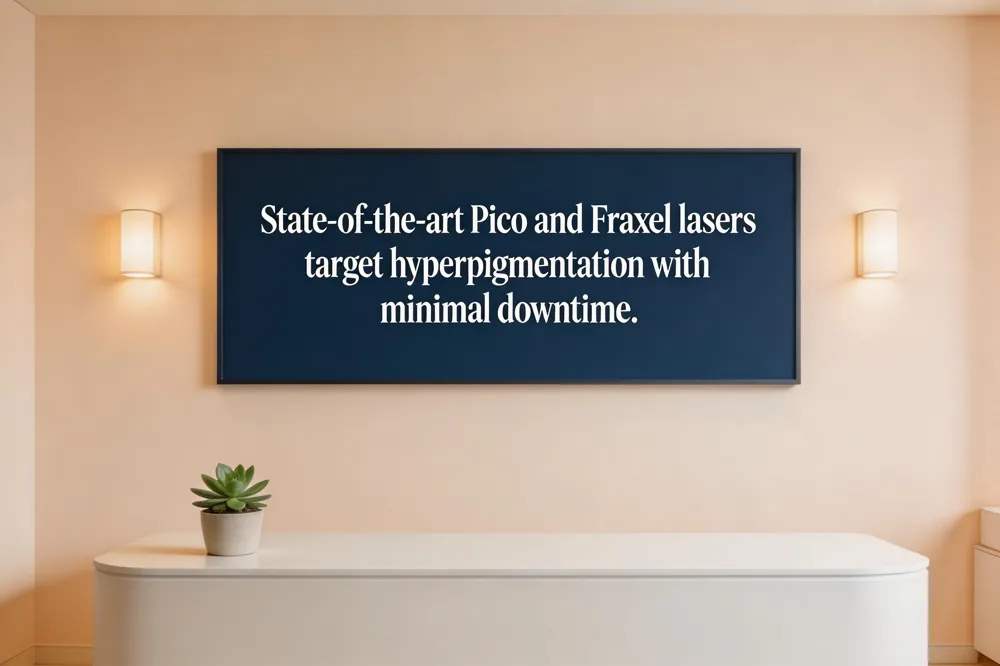 If you’re searching for effective laser treatment for hyperpigmentation near Troy, Michigan, Iconic Laser offers state‑of‑the‑art Pico and Fraxel laser solutions that target age spots, sun damage, melasma, and other pigment issues with minimal downtime. Our board‑certified dermatologists customize each session to your skin type and the depth of the pigment, using picosecond technology to shatter pigment particles that the body naturally clears. The non‑ablative Fraxel® DUAL laser stimulates collagen while safely treating surface and deeper lesions, delivering smoother, more even skin tone. We provide a complimentary consultation to assess your concerns, develop a personalized treatment plan, and answer any questions about recovery and results. Schedule your appointment today at our Troy clinic and start on the path to a brighter, clearer complexion.
If you’re searching for laser skin rejuvenation near you in Troy, Michigan, Iconic Laser offers advanced technologies that safely improve texture, tone, and overall youthful appearance. Treatments such as Sofwave, Clear + Brilliant laser resurfacing, and IPL photofacials target fine lines, sun damage, hyperpigmentation, and uneven skin tone with minimal downtime. All procedures are performed by board‑certified dermatologists and experienced aesthetic professionals who tailor each session to your unique skin type and goals. Conveniently located in Troy, we provide personalized consultations to determine the best treatment plan and financing options for every budget. Call us today or book online to start your journey toward smoother, radiant skin right in your community.
Patient Feedback & Clinic Reputation
 Iconic Medical Skin & Laser Center, operating for over 16 years, is listed on the BBB (non‑accredited). While most online feedback commends Dr. Sangita Patel’s expertise and the clinic’s range of dermatology and laser services, a few customers have voiced concerns about appointment scheduling and post‑treatment communication. The BBB profile includes one complaint from a client named Ronald C, indicating that not every experience is flawless. Overall Iconic Laser Clinic in Troy, Michigan enjoys strong reviews on Yelp, where patients frequently mention Dr. Patel’s careful, personalized approach, state‑of‑the‑art technology, and noticeable skin improvements. Ten Yelp reviews overwhelmingly describe comfortable, well‑informed visits and high satisfaction with outcomes.
Complaints are rare. The BBB file shows only one documented complaint (Ronald C), and no recurring issues such as safety lapses or data‑privacy breaches appear in public records. Thus, while isolated dissatisfaction exists, the majority of feedback portrays Iconic Laser as a trusted, premium‑quality medical aesthetic provider in Troy, Michigan.
Advanced Laser Technologies and Efficacy
Advanced laser treatments for hyperpigmentation – targeted solutions and side effects
Selective photothermolysis is the backbone of modern pigment‑targeting lasers. Devices such as Q‑switched Nd:YAG, picosecond, and fractional CO₂/Er:YAG systems deliver energy that fragments melanin while sparing surrounding tissue. The pigment particles are then cleared by the immune system, often producing visible lightening after a few controlled sessions. Common,‑effects include transient erythema, mild swelling, and a brief period of post‑inflammatory hyperpigmentation (PIH), especially in darker Fitzpatrick types. Rare complications—hypopigmentation, scarring, or infection—are mitigated by proper test‑spot analysis, cooling, low‑fluence settings, and diligent post‑procedure care (sunscreen, soothing moisturizers, and topical steroids when needed).
Best laser hyperpigmentation treatment
For most patients the most effective approach combines a non‑ablative fractional platform (e.g., CUTERA Excel V+ or Fraxel Dual) with a longer‑wavelength Nd:YAG (1064 nm) for deeper lesions. Fractional micro‑treatment zones break up pigment and stimulate collagen, while the Nd:YAG safely reaches dermal melanin in darker skin. Typical protocols involve 4‑6 sessions spaced 4‑6 weeks apart, paired with rigorous sun protection and supportive topical regimens.
Best laser for hyperpigmentation on Asian skin
Asian skin benefits from picosecond or low‑fluence Q‑switched Nd:YAG (1064 nm) lasers, which provide high‑energy bursts with minimal heat diffusion. A 1400‑nm non‑ablative fractional laser (Clear + Brilliant Permea) also works well, delivering dermal penetration and collagen remodeling with little surface damage. Test‑spot verification and cooling are essential to avoid PIH and keloid formation.
What is the strongest laser for hyperpigmentation?
The picosecond laser, particularly the PicoSure Pro (755 nm), is considered the most powerful option. Its ultra‑short, high‑energy pulses create a photo‑acoustic effect that shatters melanin particles more efficiently than nanosecond or fractional systems, resulting in faster, deeper clearance of melasma, sun spots, and post‑inflammatory pigment with minimal downtime. In clinical practice, PicoSure Pro consistently delivers the most dramatic fading of stubborn hyperpigmentation.
Treatment Planning, Costs & Aftercare
 When considering laser therapy for hyperpigmentation, the financial and regimen often guide patient decisions. At a premium Troy, Michigan clinic, a single hyperpigmentation laser session—whether IPL, Q‑switched Nd:YAG, or picosecond—typically costs between $250 and $800, with most patients requiring 2‑4 visits for noticeable improvement. Consequently, the total out‑of‑pocket expense usually falls in the $600‑$3,200 range, and insurance generally does not cover cosmetic procedures.
If you search for “laser hyperpigmentation treatment cost near me,” clinics such as Iconic Laser in Troy report session fees of $150‑$300. A standard course of 3‑6 treatments brings the overall investment to roughly $500‑$1,500. Prices vary according to skin type, pigment depth, and any bundled services like chemical peels or topical regimens. Most providers offer a complimentary, no‑obligation consultation to deliver a personalized quote.
Patients with darker Fitzpatrick skin (IV‑VI) require special attention. The cornerstone is rigorous photoprotection—broad‑spectrum SPF 30+ sunscreens that also block visible light. First‑line topicals include hydroquinone (≤4 %), azelaic acid, retinoids, vitamin C, and niacinamide. For resistant lesions, low‑fluence Q‑switched Nd:YAG, picosecond, or carefully calibrated IPL can be employed, but settings must be conservative to avoid triggering post‑inflammatory hyperpigmentation. Adjunctive oral tranexamic acid or hormonal therapy may be added for melasma under medical supervision.
Overall, a complete laser treatment plan in Troy, Michigan typically costs $250‑$600 per session, with package discounts that can lower per‑session fees by 10‑20 % when purchasing 3‑5 treatments. An initial skin‑analysis consultation is usually free, helping to determine the exact number of sessions needed and ensuring a tailored, safe, and cost‑effective approach to achieving clearer, more even skin.
Comprehensive Care & Complementary Therapies
 Laser‑based pigment reduction is most effective when it is part of a multi‑modal regimen that blends in‑office technology with diligent home care.
How to remove facial pigmentation permanently – A board‑certified dermatologist usually begins with prescription‑strength topicals (hydroquinone, azelaic acid, tretinoin) to suppress melanogenesis, followed by chemical peels (glycolic, salicylic) that exfoliate pigmented cells. For deeper or recalcitrant lesions, selective‑photothermolysis using Q‑switched Nd:YAG (1064 nm) or picosecond devices shatters melanin while sparing surrounding tissue. Large‑spot, low‑fluence “laser toning” and sequential combination modalities (e.g., QS Nd:YAG + pixelated Er:YAG) have demonstrated lasting pigment clearance in skin‑of‑color patients, especially when sessions are spaced 6–8 weeks apart. Strict photoprotection (broad‑spectrum SPF 30 +) and nutritional optimization (adequate vitamins and minerals) are essential to lock in results and prevent rebound.
Can laser treatment permanently remove pigmentation? – Laser energy permanently fragments existing melanin, and the skin replaces it with new, unpigmented cells. However, the skin’s capacity to produce new melanin remains; therefore, ongoing sun protection and topical maintenance are required to preserve the achieved clarity. Series of 3‑6 sessions, often combined with topical agents (hydroquinone, tranexamic acid) provide long‑lasting—occasionally permanent—improvement, while periodic touch‑ups address new lesions.
Does laser treatment for hyperpigmentation hurt? – Most patients report only a brief, mild sensation—a rubber‑band snap or light pinching—during the pulse delivery. Topical anesthetic creams, built‑in cooling, and larger spot sizes further reduce discomfort. Post‑treatment erythema and mild swelling resolve within hours to a few days, making the procedure tolerable for most skin types.
Does CO₂ laser help with glycation? – Fractional CO₂ resurfacing stimulates collagen and elastin remodeling, masking the cosmetic signs of advanced glycation (fine lines, loss of firmness). It does not break down glycation end‑products; lifestyle measures (low‑AGE diet, antioxidant serums, diligent sunscreen) remain the primary strategy to limit glycation at its source.
Advanced skin rejuvenation techniques – Modern non‑invasive platforms—picosecond lasers, Fraxel® Dual, UltraPulse® CO₂, IPL, and radio‑frequency microneedling—simultaneously address pigment, texture, and laxity. Combining these with topical brightening agents and rigorous sun protection creates a personalized, science‑backed pathway to durable skin radiance.
A Clear Path Forward with Iconic Laser
Modern hyperpigmentation treatment offers a spectrum of laser technologies, each selected for its unique interaction with melanin. Q‑switched Nd:YAG lasers (1064 nm) provide deep dermal penetration with minimal epidermal heating, making them a staple for darker Fitzpatrick skin. Picosecond platforms, such as PicoSure® and PicoWay® Resolve, deliver ultra‑short pulses that shatter pigment through a photo‑acoustic effect, achieving faster clearance and fewer sessions. Fractional non‑ablative (1550 nm) and hybrid systems like HALO® blend ablative and non‑ablative wavelengths to remodel collagen while fading pigment. Intense Pulsed Light (IPL) and broadband light (BBL® HEROic) address superficial discoloration with minimal downtime. Selecting the optimal device requires a board‑certified dermatologist or laser‑trained physician who evaluates pigment depth, skin type, and medical history. Professional guidance ensures test‑spot analysis, customized fluence, spot size, and interval timing, thereby reducing the risk of post‑inflammatory hyperpigmentation. Iconic Laser’s protocol emphasizes pre‑treatment priming, cooling, and post‑procedure photoprotection, together with adjunctive topical agents, to maximize safety and sustain results. This personalized, evidence‑based approach delivers reliable pigment reduction while preserving skin health.