Understanding the Basics
Microcurrent therapy delivers ultra‑low electrical currents (20‑500 µA) that mimic the body’s natural bio‑electric signals. By stimulating fibroblasts, it boosts ATP production, increasing collagen and elastin synthesis, enhancing muscle tone, circulation, and lymphatic drainage. Results appear after a single session, with cumulative benefits after 10‑12 treatments.
Radiofrequency (RF) skin tightening uses controlled electromagnetic waves to heat the dermis to 40‑70 °C. This thermal stimulus causes collagen denaturation, triggering neocollagenesis and elastin remodeling, which firm and lift sagging skin. Clinical data show visible tightening after one session and optimal results after 6‑12 sessions.
When combined, microcurrent primes cells by raising ATP and conductivity, allowing RF heat to penetrate more uniformly. The sequential protocol—microcurrent followed by RF—delivers faster collagen remodeling, greater wrinkle reduction, and longer‑lasting firmness than either modality alone, while maintaining minimal downtime. Patients also enjoy a quick recovery, making the combo ideal for busy lifestyles.
Microcurrent Therapy: Mechanisms and Benefits
 Microcurrent therapy physiotherapy is a non‑invasive treatment that delivers ultra‑low‑level electrical currents (typically < 1 mA) to facial muscles and dermal cells. By mimicking the body’s natural bio‑electric signals (which boosts ATP production up to three‑fold, which fuels fibroblast activity, enhances collagen and elastin synthesis (15 by14 % collagen, up to 45 % elastin fiber count and improves microcirculation. The result is firmer, smoother skin with reduced fine lines and a lifted contour. Patients usually feel only a mild tingling; occasional transient redness, warmth or brief swelling may occur, but serious adverse events are rare. Contraindications include pregnancy, pacemakers, active skin infections and severe epilepsy. Beyond skin rejuvenation, microcurrent relieves musculoskeletal and neuropathic pain by increasing ATP‑driven tissue repair, reducing inflammation, and modulating nerve‑signal transmission. Early pilot data suggest low‑intensity neurofeedback may lower depressive scores, although larger studies are needed. Overall, microcurrent offers a painless, quick‑recovery option that improves skin elasticity, enhances product absorption, supports lymphatic drainage, and provides modest analgesic and mood‑supportive effects—all with minimal downtime.
Radiofrequency Skin Tightening: Efficacy and Safety
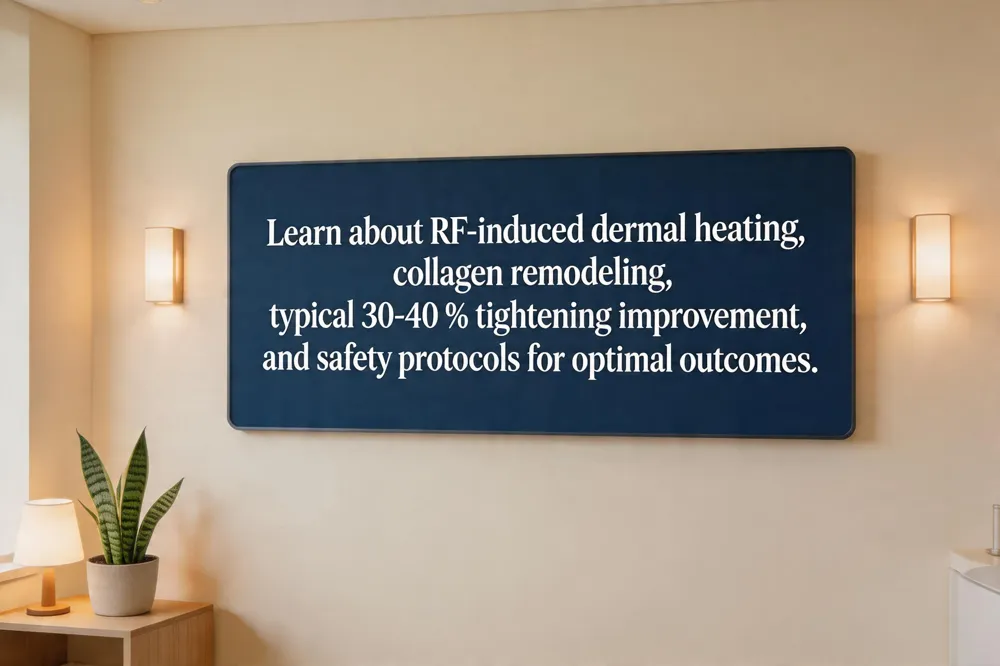 Radiofrequency (RF) skin tightening works by delivering low‑frequency electromagnetic waves that heat the dermis to 40‑75 °C. This controlled thermal injury triggers heat‑shock protein release, collagen denaturation and neocollagenesis, and elastin remodeling, resulting in firmer, smoother skin. Clinical trials consistently show 30‑40 % improvement in skin tightening after 6‑12 sessions, with patient satisfaction rates exceeding 85 % and durability of 1‑3 years when proper after care is maintained. The procedure is generally safe when performed by board‑certified dermatologists or licensed aesthetic nurses using FDA‑cleared devices. Common, mild side effects include transient redness, swelling, and a tingling sensation that resolve within 24‑48 hours. Rare adverse events—burns, scarring, or nerve injury—are usually linked to overly aggressive settings or inexperienced operators. Our Troy, MI clinic conducts a thorough skin assessment, uses real‑time temperature monitoring, and custom‑tunes energy levels to each patient’s skin type, minimizing risk. Patients typically notice an immediate tightening sensation, with progressive collagen remodeling over the next 2‑6 months, delivering a natural‑looking lift without surgical downtime.
Home Use vs. Professional Treatments
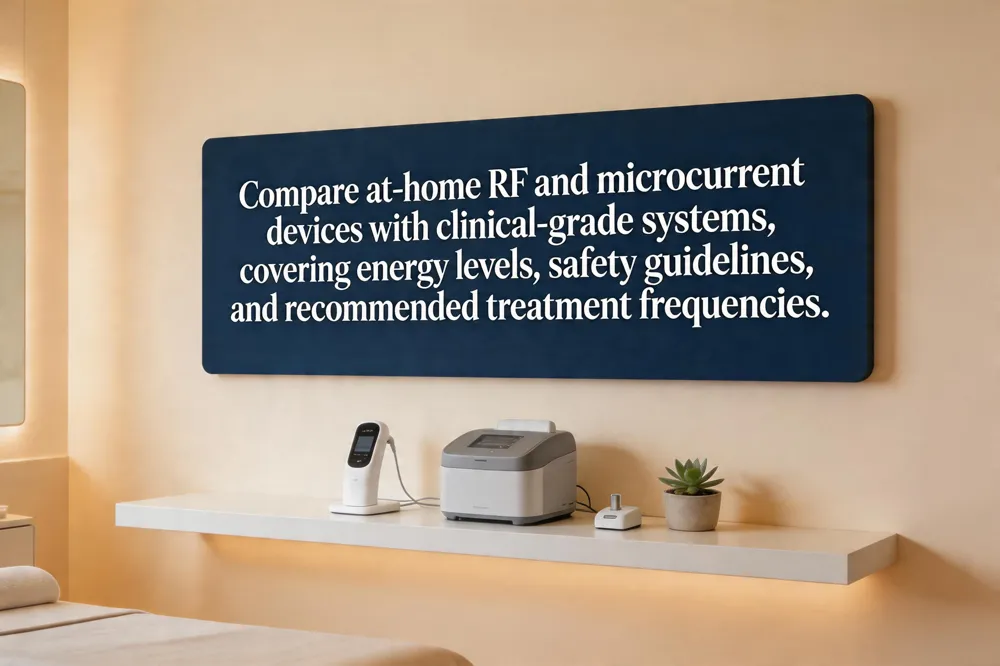 RF‑frequency devices: At‑home RF units are low‑energy, FDA‑cleared tools for modest, maintenance‑type tightening. They heat the dermis only lightly (≈40‑45 °C) and cannot achieve the deep collagen remodeling of professional systems, which reach 50‑75 °C. Misuse can cause burns or uneven results, so clinicians in Troy, Michigan remain the safest option for significant rejuvenation.
Clinical‑grade microcurrent: Certified clinics rely on FDA‑cleared platforms such as NuFACE Trinity+, MyoLift, and FIX MicroWand. These devices deliver precise, low‑amperage currents (50‑600 µA) with programmable waveforms, allowing deeper muscle stimulation and enhanced ATP production.
Safety guidelines: Both modalities require screening for pacemakers, pregnancy, active skin infection, or recent laser work. Use conductive gel, follow manufacturer‑approved settings, and discontinue if excessive redness, pain, or irritation occurs.
Treatment frequency: Professional protocols typically involve 4‑6 combined RF‑microcurrent sessions spaced 2‑4 weeks, followed by maintenance every 2‑3 months. At‑home microcurrent is best done 5 minutes daily for 60 days, then 2‑3 sessions per week for upkeep.
Combined Microcurrent and RF Protocols
 The synergistic sequence starts with a brief Radio‑Frequency (RF) session that heats the dermis to 50‑75 °C, triggering heat‑shock proteins and collagen denaturation. Immediately after, low‑level microcurrent (20‑500 µA, 1‑5 Hz) is applied to stimulate ATP production, enhance fibroblast activity, and tone facial muscles. Clinical trials report 25‑30 % greater wrinkle‑depth reduction and higher patient‑satisfaction scores versus RF alone, with effects becoming visible after one session and peaking at 4‑6 weeks. In Troy, Michigan a combined RF‑microcurrent facial typically costs $250‑$600 per session; packages of 4‑6 sessions reduce the per‑treatment price by 10‑20 %. Maintenance involves a touch‑up every 4‑6 weeks, using gentle cleansing, moisturization, and broad‑spectrum sunscreen to preserve collagen remodeling. The protocol is safe for all Fitzpatrick skin types and with only transient redness or mild tingling as occasional side effects, making it a popular non‑invasive option in premium aesthetic clinics.
Patient Experience, Maintenance, and Frequently Asked Questions
 Maintenance schedule: For optimal results, patients typically follow a 6‑month protocol of 4‑6 combined RF‑microcurrent sessions spaced 2‑4 weeks apart, then transition to maintenance every 4‑6 weeks. Home microcurrent is recommended 5 minutes daily, five days a week for the first 60 days, then 2‑3 sessions weekly.
Post‑treatment care: Keep the skin clean and moisturized, avoid harsh exfoliants for 24‑48 hours, and apply broad‑spectrum sunscreen SPF 30+ daily. Gentle facial massage can enhance lymphatic drainage; hydration and a balanced diet support collagen synthesis.
Additional health benefits: Microcurrent boosts ATP, improves circulation, reduces puffiness, and may aid mood and neuropathic pain. RF stimulates heat‑shock proteins for long‑term skin firmness.
FAQ: How often should I do microcurrent therapy at home? For best results, we recommend a 5‑minute microcurrent session each day, five days per week, for a continuous 60‑day period. This “60‑Day Challenge” helps establish a habit and delivers noticeable lifting and tone. After the initial phase, you can reduce the frequency to two or three sessions per week to maintain the gains. Consistency is more important than occasional longer sessions, and the at‑home device should be used on clean, dry skin. Pairing the routine with periodic professional treatments can further enhance and prolong the benefits.
Can microcurrent therapy help with depression? Yes, microcurrent therapy—particularly microcurrent neurofeedback—has shown promise in reducing depressive symptoms. A 2023 pilot study involving 20 adults who completed 20 sessions reported statistically significant decreases in Beck Depression Inventory scores compared with baseline. While these findings suggest that the low‑intensity, transcranial electrical stimulation can improve mood, the research is still early, with small sample sizes and no control groups. Consequently, microcurrent should be viewed as a complementary option rather than a primary treatment for depression. It is best used under the supervision of a qualified healthcare professional who can integrate it with conventional therapies.
Can microcurrent help with neuropathy? Microcurrent delivers specific electrical pulses that can decrease neuropathic pain, stimulate circulation, and support nerve fiber regeneration, offering relief for peripheral neuropathy sufferers.
What do patients say about radiofrequency skin rejuvenation? Patients consistently report that radiofrequency skin rejuvenation leaves their skin noticeably firmer and smoother, with a visible reduction in fine lines and wrinkle depth. Many appreciate the gradual, natural‑looking improvement that continues for weeks after the procedure, rather than an abrupt change. The treatment’s minimal downtime is frequently highlighted, allowing them to resume daily activities almost immediately. Some users note a subtle tightening effect on the jawline and neck, contributing to an overall more youthful contour. Overall, the feedback emphasizes a balance of effective results and a comfortable, low‑recovery experience.
Your Path to Radiant Skin
Every successful rejuvenation journey begins with a personalized consultation. In a Troy‑based clinic, a board‑certified dermatologist evaluates skin tone, laxity, and medical history to determine the optimal sequence—often RF pre‑heating the dermis to 40‑70 °C followed by low‑amplitude microcurrent that raises ATP production and elastin synthesis. The combined protocol leverages RF‑induced collagen denaturation and microcurrent‑driven fibroblast activation, delivering up to 30 % greater wrinkle reduction than RF alone. Maintenance routines include 4‑6 weekly sessions for the first two months, then touch‑ups every 4‑6 weeks, and optional at‑home devices that repeat the microcurrent phase safely. Clinicians also monitor skin hydration and pigment response to fine‑tune settings, ensuring each session maximizes results while protecting the epidermis properly. Looking ahead, emerging technologies such as AI‑guided energy delivery, integrated LED‑photobiomodulation, and multi‑frequency microcurrent promise even tighter, more durable results while preserving the non‑invasive, downtime‑free experience patients expect.