Understanding RF Skin Tightening
Radiofrequency (RF) skin tightening uses low‑frequency electromagnetic waves to heat the dermis and sub‑dermal layers to 40‑45 °C. The controlled thermal rise denatures collagen fibers, triggers immediate contraction, and stimulates fibroblasts to produce new collagen and elastin (neocollagenesis) over weeks, resulting in firmer, smoother skin. Cellulite originates from fibrous septae that tether the dermis to underlying fascia, creating dimples when sub‑cutaneous fat pushes upward. The same RF‑induced collagen remodeling and modest lipolysis can loosen these septae and thicken the dermis, reducing the visual severity of cellulite. Patients pursue RF treatments to address mild‑to‑moderate skin laxity and cellulite without surgery, seeking a non‑invasive option with minimal downtime, low risk of scarring, and gradual, natural‑looking improvement that can be maintained with periodic sessions.
Mechanisms Behind RF and Cellulite
 Radiofrequency (RF) skin tightening works by delivering controlled thermal energy to the dermis and sub‑cutaneous tissue. At temperatures of 40‑45 °C (often up to 67 °C in microneedling protocols), collagen fibers denaturate and immediately contract, while fibroblasts initiate neocollagenesis over the ensuing weeks. This remodeling thickens the dermis, tightens the skin, and improves elasticity. Heat also loosens the vertical fibrous septae that tether the dermis to underlying fascia, allowing the skin to smooth over the fatty lobules that cause dimpling. In deep‑tissue RF, temperatures stimulate mild lipolysis and enhance lymphatic drainage, reducing the volume of superficial adipocytes and further flattening the surface.
How effective is radiofrequency for cellulite? Clinical series consistently report a 20‑40 % reduction in cellulite severity scores after 4‑12 weekly sessions, with improvements in skin smoothness, laxity, and morphology. Devices that combine RF with pulsed electromagnetic fields (e.g., Venus Legacy) achieve even greater collagen and microcirculation gains. Results are temporary, lasting 6‑12 months before maintenance is needed.
What causes cellulite? Dimpling arises when enlarged fat lobules push against weakened, vertically oriented fibrous septae—structures that are especially vulnerable to hormonal (estrogen) and age‑related collagen loss. Genetic predisposition, lifestyle factors, and reduced skin elasticity amplify the appearance of dimpling.
Does RF skin tightening help with cellulite? Yes. By heating the dermis and hypodermis, RF contracts existing collagen, remodels septae, and induces mild adipocyte lipolysis, producing firmer skin and a smoother surface. A typical protocol of 4‑6 sessions, spaced 2‑4 weeks apart, yields noticeable reduction in dimple depth and overall skin firmness, with minimal downtime and a favorable safety profile.
Clinical Evidence and Treatment Protocols
 Study outcomes
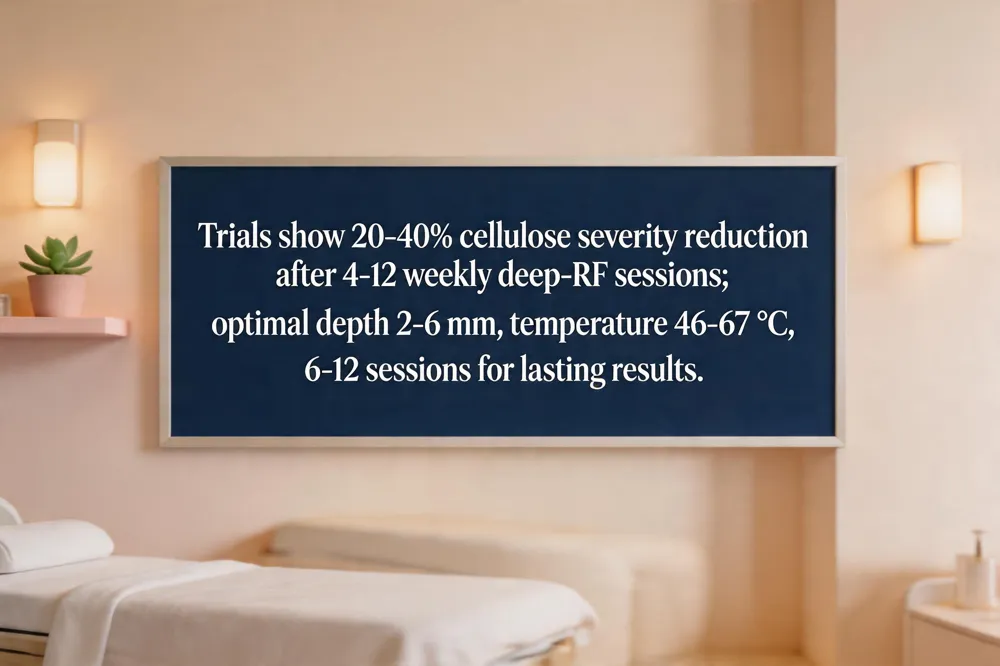
Multiple peer‑reviewed trials demonstrate that deep‑acting radiofrequency (RF) reduces cellulite severity by 20‑40 % and improves skin laxity by 24‑35 % after 4‑6 sessions. In a case study using the PROFOUND™ device, a 39‑year‑old woman’s Hexsel score fell from 14 to 9 points (a 5‑point reduction) after two sub‑cutaneous microneedling treatments at 5.8 mm depth and 67 °C. Larger series report mean skin‑tightening gains of 35‑40 % at six months for facial laxity, with modest yet measurable improvements in thigh and buttock cellulite.
Study outcomes
Multiple peer‑reviewed trials demonstrate that deep‑acting radiofrequency (RF) reduces cellulite severity by 20‑40 % and improves skin laxity by 24‑35 % after 4‑6 sessions. In a case study using the PROFOUND™ device, a 39‑year‑old woman’s Hexsel score fell from 14 to 9 points (a 5‑point reduction) after two sub‑cutaneous microneedling treatments at 5.8 mm depth and 67 °C. Larger series report mean skin‑tightening gains of 35‑40 % at six months for facial laxity, with modest yet measurable improvements in thigh and buttock cellulite.
Session numbers Effective protocols typically involve 6‑12 deep‑tissue RF sessions spaced 2‑4 weeks apart; a shorter 3‑4‑session boost may be used for special occasions, but sustained results favor the full 6‑12‑session course. Maintenance touch‑ups every 6‑12 months help preserve collagen remodeling.
Depth and temperature Optimal dermal remodeling occurs at temperatures of 46‑67 °C (115‑155 °F) for at least three minutes. Devices such as PROFOUND™ deliver RF pulses at 5.8 mm depth, while other platforms target 2‑5 mm. Temperature‑controlled systems ensure the target range, minimizing superficial burns.
Safety features Modern RF units are FDA‑cleared, incorporate real‑time temperature monitoring, automatic shut‑off, and conductive gels to protect the epidermis. Reported adverse effects are mild (erythema, ecchymosis, swelling) and resolve within 3‑5 days. Rare complications, such as third‑degree burns, are linked to improper settings or tattooed skin and are avoided by trained clinicians.
How long does RF skin tightening last? Results generally persist 12‑24 months, with collagen remodeling continuing for up to six months post‑treatment. Maintenance every 12‑18 months sustains firmness.
How many RF sessions are needed for cellulite? Most patients achieve noticeable smoothing after 6‑12 sessions; severe cases may require up to 24.
Radiofrequency for cellulite cost In the United States, a single RF session costs $150‑$350; a full 6‑12‑session series totals $900‑$3,600, typically not covered by insurance.
RF skin tightening before and after Before‑and‑after images reveal 10‑30 % reduction in laxity, smoother texture, and immediate tissue contraction, with progressive collagen‑driven improvement over 2‑3 months.
Safety Profile and Risks
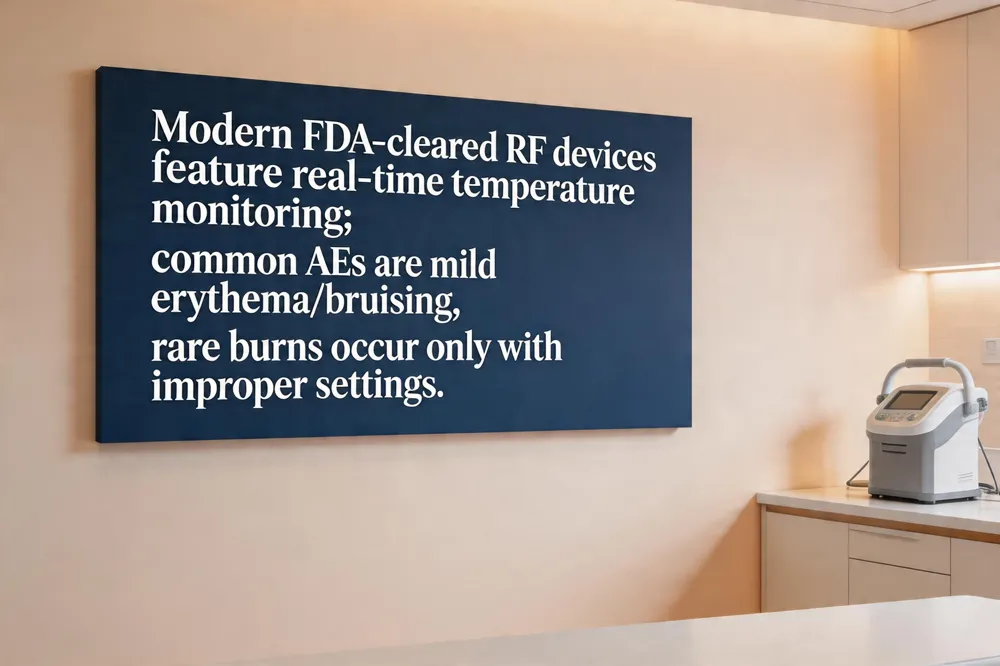 Radiofrequency (RF) skin tightening is a non‑invasive, low‑frequency modality that heats the dermis and subdermal layers to stimulate collagen remodeling. Common side effects are mild and transient, including erythema, warmth, mild swelling, and occasional bruising that resolve within 24‑48 hours. Rare complications arise when device settings exceed safe temperature thresholds or cooling is inadequate, leading to superficial burns, blistering, and, in extreme cases, scarring or nerve injury. Patients with darker Fitzpatrick skin types may experience temporary hyper‑ or hypopigmentation if energy delivery is not properly adjusted. Contraindications include active skin infections, recent surgical procedures, pregnancy, implanted electronic devices (e.g., pacemakers), and severe dermatologic conditions such as eczema or psoriasis in the treatment area. Regarding cancer concerns, scientific evidence shows that the non‑ionizing RF energy used in aesthetic devices does not cause DNA damage or increase malignancy risk; regulatory agencies such as the FDA have cleared these devices as Class II medical devices with no carcinogenic warnings. Proper patient screening, calibrated equipment, and treatment by board‑certified professionals are essential to minimize adverse events and ensure safe, effective outcomes.
Specific Uses: Face, Body, and Tummy
 Radiofrequency skin tightening benefits for the face
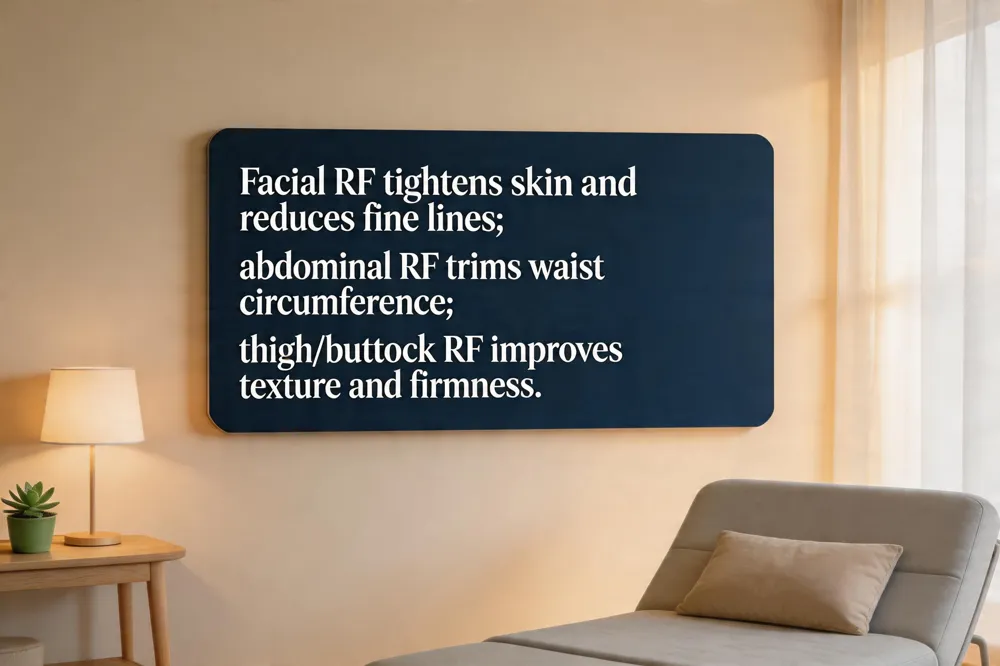
RF facial tightening delivers controlled heat to the deep dermis (≈40‑45 °C), triggering collagen denaturation, immediate fiber contraction, and neocollagenesis. Within weeks patients notice firmer, smoother skin, reduced fine lines, and tighter pores. Remodeling continues for 2‑6 months, yielding a youthful complexion without incisions or downtime. Because the energy bypasses the epidermis, it is safe for all Fitzpatrick skin types and can be combined with adjunctive modalities for comprehensive facial rejuvenation.
Radiofrequency skin tightening benefits for the face
RF facial tightening delivers controlled heat to the deep dermis (≈40‑45 °C), triggering collagen denaturation, immediate fiber contraction, and neocollagenesis. Within weeks patients notice firmer, smoother skin, reduced fine lines, and tighter pores. Remodeling continues for 2‑6 months, yielding a youthful complexion without incisions or downtime. Because the energy bypasses the epidermis, it is safe for all Fitzpatrick skin types and can be combined with adjunctive modalities for comprehensive facial rejuvenation.
Radio frequency tummy tightening before and after Abdominal RF treatments stimulate collagen remodeling and contract existing fibers, producing a flatter, tighter midsection. Clinical series report waist‑circumference reductions of 1‑2 cm after 3‑5 sessions, with visible smoothing evident in before‑and‑after photos. Results evolve for several weeks as new collagen matures, and patients resume normal activities immediately, reflecting the minimally invasive nature of the procedure.
RF skin tightening machine Professional platforms such as Thermage, Accent, and Venus Legacy are FDA‑cleared, delivering precise thermal energy to the dermis while protecting the epidermis. These devices are operated by board‑certified physicians who follow strict safety protocols, minimizing risks of burns, scarring, or nerve injury. The clinic selects the appropriate system based on individual anatomy, ensuring personalized, evidence‑based care.
Adjunctive Strategies and Lifestyle
 Combining optimal lifestyle habits with professional radio‑frequency (RF) treatments yields the most durable cellulite improvement.
Exercise – Regular cardio and lower‑body strength training (squats, lunges, deadlifts, glute bridges) increase muscle tone, improve circulation, and enhance skin elasticity, making dimpling less apparent.
Nutrition – A balanced diet rich in lean protein, whole grains, antioxidant‑dense fruits and vegetables, and omega‑3 fatty acids supports healthy dermal matrix and reduces excess fat storage. Staying well‑hydrated keeps the dermis supple.
Topical agents – Daily application of caffeine‑ or retinol‑based creams can transiently tighten skin and promote collagen synthesis; dry‑brushing or lymphatic massage further improves fluid drainage.
Combination therapies – RF microneedling, acoustic‑wave therapy, high‑intensity focused ultrasound, or subcision can be layered with the above habits for synergistic remodeling of fibrous septae and neocollagenesis.
Answering key questions
- Best thing to reduce cellulite: A multimodal approach of consistent exercise, a nutrient‑dense diet, hydration, and targeted RF or acoustic‑wave treatments.
- Tone legs and rid rid naturally: Combine strength‑training and cardio with a protein‑rich, antioxidant‑focused diet, topical caffeine/retinol, and gentle lymphatic massage.
- Cellulite reduction treatment options: Minimal‑invasive modalities include RF skin tightening, ablative lasers, acoustic wave therapy, high‑intensity focused ultrasound, subcision, and injectable collagenase, all enhanced by lifestyle optimization.
Patient Scenarios and Special Considerations
 Hashimoto’s disease and cellulite – Can Hashimoto's cause cellulite? Yes. Hashimoto’s disease leads to hypothyroidism, which slows metabolism and reduces blood flow to the skin, weakening connective tissue and decreasing collagen production. These changes make the skin more lax and allow fat cells to push against the dermis, creating the dimpled appearance of cellulite. In addition, hypothyroidism promotes fluid retention and hormonal imbalances that favor fat storage over fat burning, further increasing cellulite visibility. Properly treating the thyroid with medication, a protein‑rich anti‑inflammatory diet, and lifestyle measures such as regular exercise, red‑light therapy, and collagen supplementation can lessen these effects and improve the skin’s texture.
Skin‑type considerations – RF devices are safe for all Fitzpatrick types when calibrated correctly, but darker skin may be more prone to transient hyperpigmentation. Temperature‑controlled platforms (e.g., PROFOUND™, Thermage) incorporate safety sensors that prevent overheating, ensuring uniform energy delivery across varied melanin levels.
Post‑procedure care – Patients should keep the treated area clean, apply a soothing moisturizer, avoid excessive heat (saunas, hot tubs) for 48 hours, and use broad‑spectrum sunscreen. Light activity is permitted immediately, but vigorous exercise should be delayed 24‑48 hours to reduce swelling.
Addressing adverse outcomes – Mild redness, ecchymosis, and edema usually resolve within 3‑5 days. In rare cases of deeper injury, prompt evaluation and supportive care are essential. Providers must follow manufacturer‑temperature protocols to avoid burns, especially in patients with tattoos or implanted devices.
Why do plastic surgeons not like RF microneedling? Some surgeons caution that aggressive RF can damage deeper structures (fat, nerves, vessels) if misused. They emphasize the need for precise depth control and proper patient selection to avoid complications such as fat necrosis or scarring.
Is RF microneedling worth it? RF microneedling combines mechanical micro‑injury with controlled heat, leading to deeper collagen remodeling than traditional microneedling. Patients often notice tighter, smoother skin after 3‑4 sessions, making it a worthwhile investment for facial rejuvenation.
Real‑World Results: Before‑And‑After
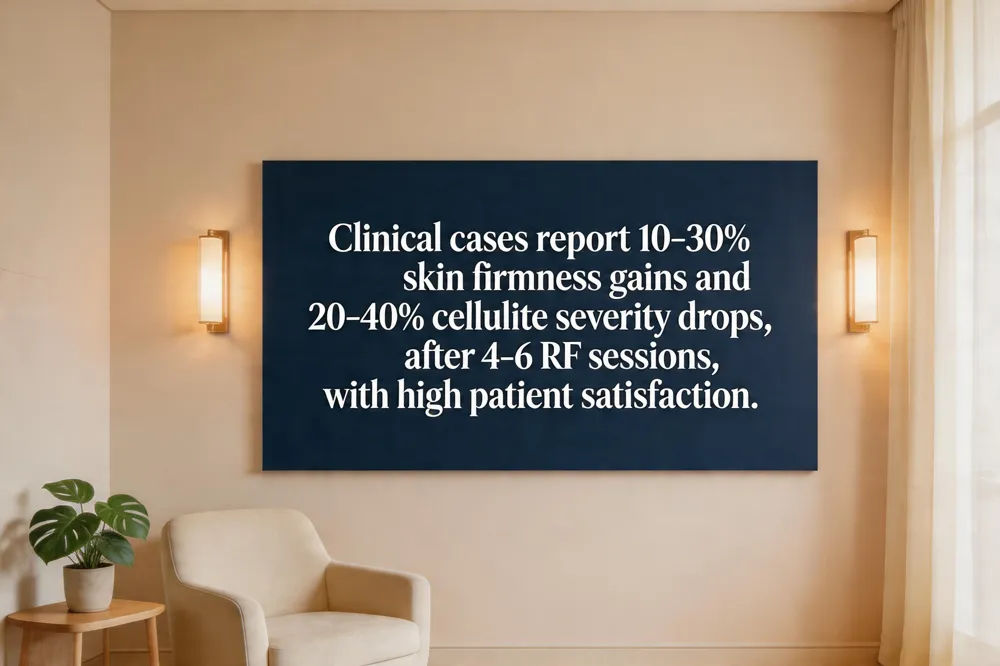 Visual outcomes from RF microneedling and skin‑tightening are striking. In a 39‑year‑old woman who lost 105 lb, two sub‑cutaneous PROFOUND™ sessions (5.8 mm depth, 67 °C) lowered her Hexsel/Cellulite score from 14 to 9, reflecting a 30 % reduction in depression depth and skin laxity. Before‑and‑after photos from our Troy clinic routinely show a 15 %–25 % decrease in measured fat thickness and a smoother, more contoured surface after four to six microneedling treatments. For pure RF skin‑tightening, patients experience a 10‑30 % improvement in skin firmness after three to five sessions, with immediate collagen contraction and progressive remodeling over 8‑12 weeks.
Patient satisfaction is high; the weight‑loss case reported full aesthetic satisfaction, and most clients rate their results 4‑5 / 5. Maintenance is straightforward—periodic touch‑up sessions every 6‑12 months preserve collagen turnover and prevent regression. Overall, these data underscore that RF microneedling and skin‑tightening deliver measurable, lasting improvements with minimal downtime, making them a safe, evidence‑based choice for non‑invasive body contouring.
Future Directions and Final Thoughts
 Emerging technologies are poised to reshape radiofrequency (RF) cellulite treatment. Deep‑tissue, high‑power RF platforms combined with adjunctive modalities such as high‑intensity focused ultrasound, acoustic wave therapy, and LED phototherapy are already demonstrating synergistic benefits, and next‑generation devices that integrate real‑time temperature mapping and AI‑driven energy modulation promise even tighter safety margins and more consistent collagen remodeling.
Research gaps remain despite a growing evidence base. Large, randomized controlled trials comparing RF monotherapy to combination protocols (e.g., RF + subcision or RF + lipolysis) are needed, as are long‑term studies that track durability beyond the typical 12‑month follow‑up. Standardized outcome metrics—beyond subjective grading scales—such as ultrasound‑measured dermal thickness and histologic collagen density would enable more precise efficacy comparisons.
Patient expectations must be managed through transparent counseling. While RF can markedly improve skin firmness and reduce dimple depth, results are modest, temporary, and dependent on lifestyle factors; most individuals achieve a 20‑40 % reduction in cellulite severity after a series of 4‑6 sessions, with maintenance required every 6‑12 months.
Our clinic’s approach reflects these realities: we employ FDA‑cleared, temperature‑controlled RF devices (e.g., PROFUND™ microneedling) with individualized treatment plans, combine RF with evidence‑based adjuncts such as manual lymphatic drainage, and provide thorough pre‑ and post‑procedure education to ensure realistic goals, safety, and optimal, lasting outcomes.
Putting It All Together
Evidence‑based expectations for radiofrequency (RF) and microneedling stem from multiple peer‑reviewed studies that show modest, yet measurable, reductions in cellulite severity (20‑40% improvement after 3‑6 sessions) and increased dermal thickness of 10‑30%. Patients should be counseled that results are gradual, peak between 2‑4 months after treatment, and may require annual maintenance. Personalized treatment planning begins with a thorough assessment of cellulite grade, skin laxity, and individual risk factors such as tattoos, implanted devices, or active skin infections. Selecting the appropriate RF modality—deep‑tissue, temperature‑controlled microneedling (e.g., PROFOUND™), or multipolar systems—ensures the energy reaches the subdermal septae while minimizing superficial irritation. Long‑term skin health is supported by maintaining collagen remodeling through lifestyle measures (regular exercise, balanced diet, adequate hydration) and adjunctive therapies (massage, topical retinoids). Ongoing monitoring and periodic touch‑up sessions help preserve firmness, elasticity, and the overall aesthetic outcome.